Tag Archives: ToolShell

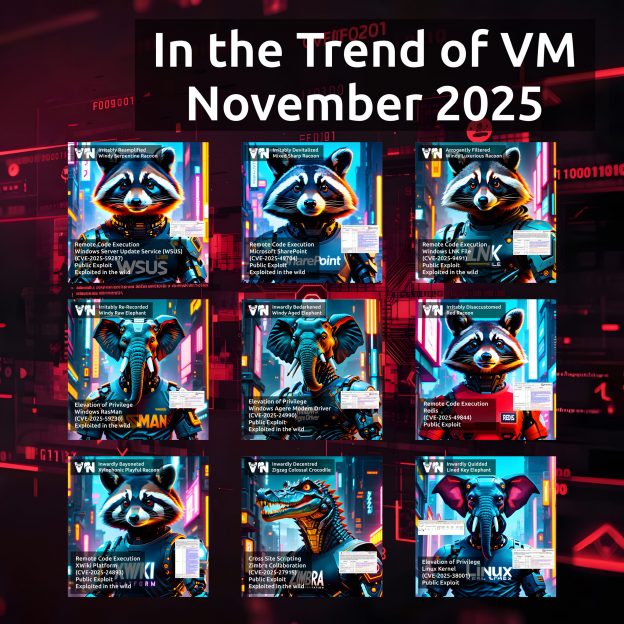
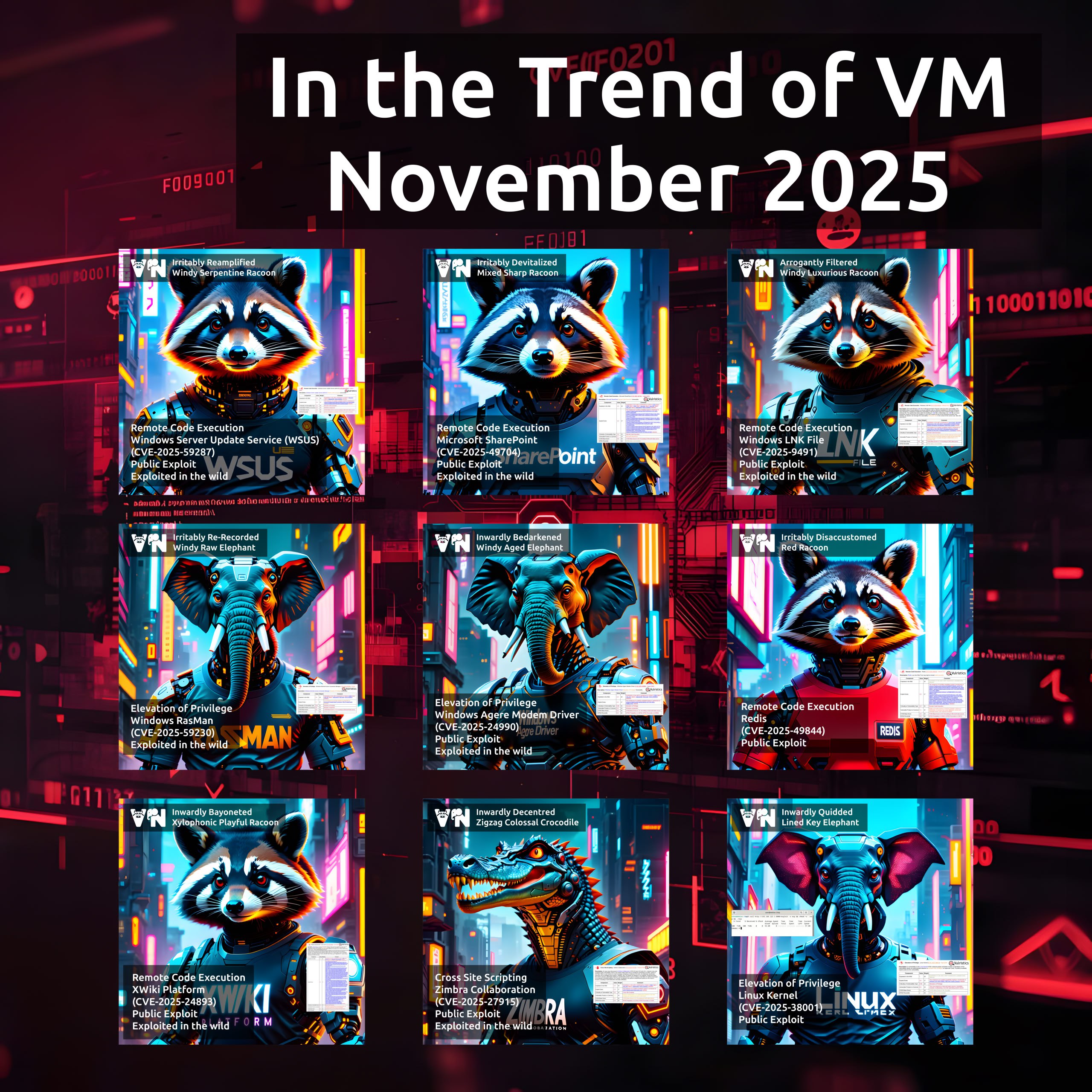
November “In the Trend of VM” (#21): vulnerabilities in Windows, SharePoint, Redis, XWiki, Zimbra Collaboration, and Linux

November In the Trend of VM (#21): vulnerabilities in Windows, SharePoint, Redis, XWiki, Zimbra Collaboration, and Linux

November “In the Trend of VM” (#21): vulnerabilities in Windows, SharePoint, Redis, XWiki, Zimbra Collaboration, and Linux. The usual monthly roundup. After several months, here’s a big one. 🔥

🗞 Post on Habr (rus)
🗞 Post on SecurityLab (rus)
🗒 Digest on the PT website (rus)

A total of nine vulnerabilities:

🔻 RCE – Windows Server Update Services (WSUS) (CVE-2025-59287)
🔻 RCE – Microsoft SharePoint “ToolShell” (CVE-2025-49704)
🔻 RCE – Windows LNK File (CVE-2025-9491)
🔻 EoP – Windows Remote Access Connection Manager (CVE-2025-59230)
🔻 EoP – Windows Agere Modem Driver (CVE-2025-24990)
🔻 RCE – Redis “RediShell” (CVE-2025-49844)
🔻 RCE – XWiki Platform (CVE-2025-24893)
🔻 XSS – Zimbra Collaboration (CVE-2025-27915)
🔻 EoP – Linux Kernel (CVE-2025-38001)


🟥 Trending Vulnerabilities Portal

На русском

About Remote Code Execution – Microsoft SharePoint “ToolShell” (CVE-2025-49704) vulnerability

About Remote Code Execution - Microsoft SharePoint ToolShell (CVE-2025-49704) vulnerability

About Remote Code Execution – Microsoft SharePoint “ToolShell” (CVE-2025-49704) vulnerability. This vulnerability is from the Microsoft’s July Patch Tuesday. SharePoint is a web application developed by Microsoft for corporate intranet portals, document management, and collaborative work. Deserialization of untrusted data in the DataSetSurrogateSelector class leads to remote code execution in the context of the SharePoint web server process. Exploitation requires authentication, obtainable for example via CVE-2025-49706 (“ToolShell” chain).

🔬 The “ToolShell” chain was demonstrated by the Viettel Cyber Security team at Pwn2Own Berlin, May 15–17, 2025 (prize $100,000).

👾 Signs of exploitation in the wild have been observed since July 7. The vulnerability was added to CISA KEV on July 22.

🛠 Public exploits available on GitHub since July 21.

➡️ Later “ToolShell” vulnerabilities: CVE-2025-53770 and CVE-2025-53771.

На русском

August “In the Trend of VM” (#18): vulnerabilities in Microsoft Windows and SharePoint

August In the Trend of VM (#18): vulnerabilities in Microsoft Windows and SharePoint

August “In the Trend of VM” (#18): vulnerabilities in Microsoft Windows and SharePoint. A traditional monthly roundup – this time, it’s extremely short.

🗞 Post on Habr (rus)
🗒 Digest on the PT website (rus)

Only two trending vulnerabilities:

🔻 Remote Code Execution – Microsoft SharePoint Server “ToolShell” (CVE-2025-53770). The vulnerability is being widely exploited; attackers may even have gained access to U.S. nuclear secrets. The vulnerability is also relevant for Russia.
🔻 Elevation of Privilege – Windows Update Service (CVE-2025-48799). The vulnerability affects Windows 10/11 installations with at least two hard drives.

На русском

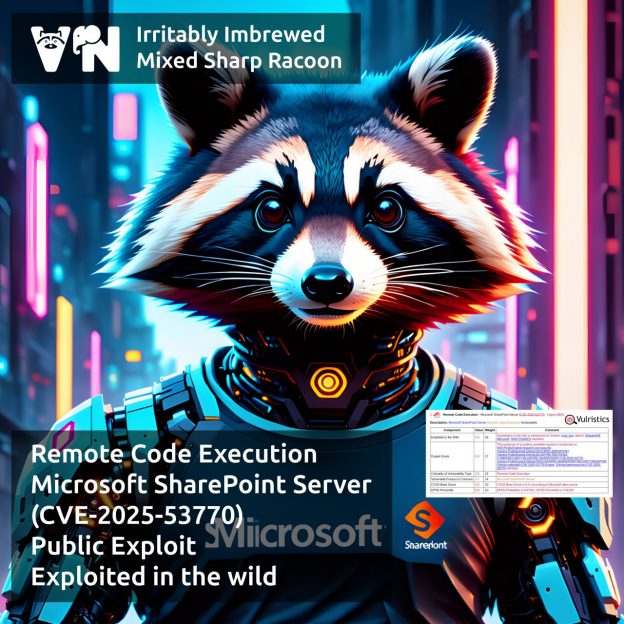
About Remote Code Execution – Microsoft SharePoint Server “ToolShell” (CVE-2025-53770) vulnerability

About Remote Code Execution - Microsoft SharePoint Server ToolShell (CVE-2025-53770) vulnerability

About Remote Code Execution – Microsoft SharePoint Server “ToolShell” (CVE-2025-53770) vulnerability. SharePoint is a web application developed by Microsoft for corporate intranet portals, document management, and collaborative work. A flaw in the deserialization mechanism of an on-premises SharePoint Server instance allows remote unauthenticated attackers to execute arbitrary code.

👾 On July 18, Eye Security researchers reported mass exploitation of this vulnerability in conjunction with the spoofing vulnerability CVE-2025-53771. CVE-2025-53770 and CVE-2025-53771 are evolutions of the vulnerabilities CVE-2025-49704 and CVE-2025-49706 from the July MSPT.

🔻 On July 19, Microsoft released updates for SharePoint Server 2016, 2019, and Subscription Edition. They also recommended integrating with the Antimalware Scan Interface.

🔨 Public exploits have been available on GitHub since July 21.

На русском