
Tag Archives: DNS

Microsoft Patch Tuesday April 2020: my classification script, confusing RCE in Adobe Type Manager and updates for older vulnerabilities

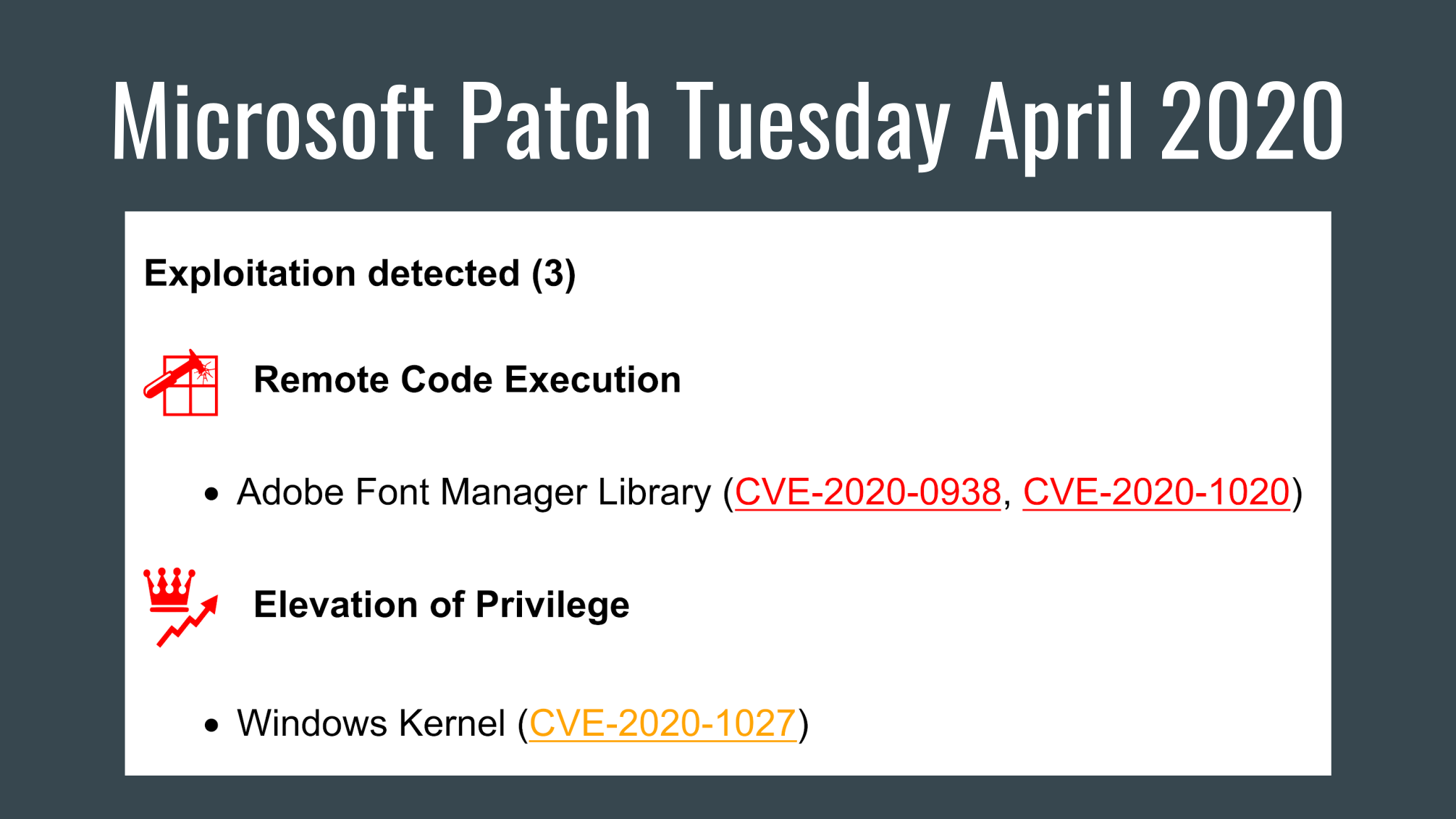
Microsoft Patch Tuesday April 2020: my classification script, confusing RCE in Adobe Type Manager and updates for older vulnerabilities. Making the reviews of Microsoft Patch Tuesday vulnerabilities should be an easy task. All vulnerability data is publicly available. Even better, dozens of reviews have already been written. Just read them, combine and post. Right?
Microsoft Patch Tuesday April 2020: my classification script, confusing RCE in Adobe Type Manager and updates for older vulnerabilities

Not really. In fact it is quite boring and annoying. It may be fun to write about vulnerabilities that were already used in some real attacks. But this is a very small part of all vulnerabilities. What about more than a hundred others? They are like “some vulnerability in some component may be used in some attack (or may be not)”. If you describe each of them, no one will read or listen this.

You must choose what to highlight. And when I am reading the reports from Tenable, Qualys and ZDI, I see that they choose very different groups of vulnerabilities, pretty much randomly.

My classification script

That’s why I created a script that takes Patch Tuesday CVE data from microsoft.com and visualizes it giving me helicopter view on what can be interesting there. With nice grouping by vulnerability type and product, with custom icons for vulnerability types, coloring based on severity, etc.

Continue reading →

CyberThursday: Asset Inventory, IT-transformation in Cisco, Pentest vs. RedTeam

CyberThursday: Asset Inventory, IT-transformation in Cisco, Pentest vs. RedTeam. Two weeks ago I was speaking at a very interesting information security event – CyberThursday. This is a meeting of a closed Information Security practitioners group. The group is about 70 people, mainly from the financial organizations, telecoms and security vendors.

CyberThursday 2018 Asset Inventory

These meetings have a rather unique atmosphere. Almost everyone knows each other. The event has no permanent place. It constantly moves between the offices of large Russian companies. The hoster, usually a CISO, can bring his IT and InfoSec colleagues. For others, only “bring a friend” format is available. This helps keep the event focussed and very informal. Participants propose and approve the topics by voting in the chat group. There is no place for marketing, all topics are practical and relevant.

Continue reading →

Asset Inventory for Network Perimeter: from Declarations to Active Scanning

Asset Inventory for Network Perimeter: from Declarations to Active Scanning. In the previous post, I shared some of my thoughts about the good Asset Inventory system. Of course, for me as a Security Specialist, it would be great if IT will provide such magical system. 🙂 But such an ideal situation is rarely possible. So now let’s see how to build an Asset Inventory system using the resources of Information Security team.

There are no special secrets. It’s necessary to get information about the assets from all available IT systems and then get the rest of the data using our own Assessment tools. I would like to start with hosts on Network Perimeter. The Network Perimeter targets are available at any time for hacker attacks, that’s why this part of the network is the most critical.

Asset Inventory for Network Perimeter

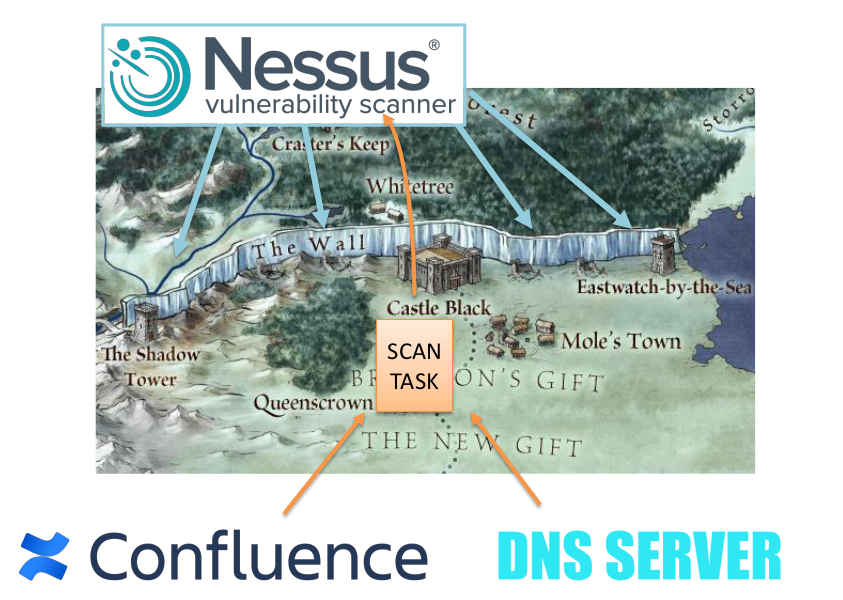
Network Perimeter is like the Wall in the Game of Thrones. The same white walkers are hiding behind the wall and our task is to find the breaches in the wall faster than potential intruders. “Night gathers, and now my watch begins”. (c)

Perimeter is changing constantly. And we should understand at any time what hosts are currently exposed in every office and every external hosting platform.

We can get information about external hosts using some Vulnerability Scanner located on external host in the Internet. I have already wrote about it briefly in  Vulnerability Management for Network Perimeter. Here I would like focus on how we can understand which hosts should be scanned and what useful information we can get from the raw scan results.

Continue reading →