


Tag Archives: InsightVM

The Vulners team has introduced a new AI-powered product - Cube

The Vulners team has introduced a new AI-powered product - CubeThe Vulners team has introduced a new AI-powered product - CubeThe Vulners team has introduced a new AI-powered product - CubeThe Vulners team has introduced a new AI-powered product - CubeThe Vulners team has introduced a new AI-powered product - CubeThe Vulners team has introduced a new AI-powered product - CubeThe Vulners team has introduced a new AI-powered product - CubeThe Vulners team has introduced a new AI-powered product - CubeThe Vulners team has introduced a new AI-powered product - Cube

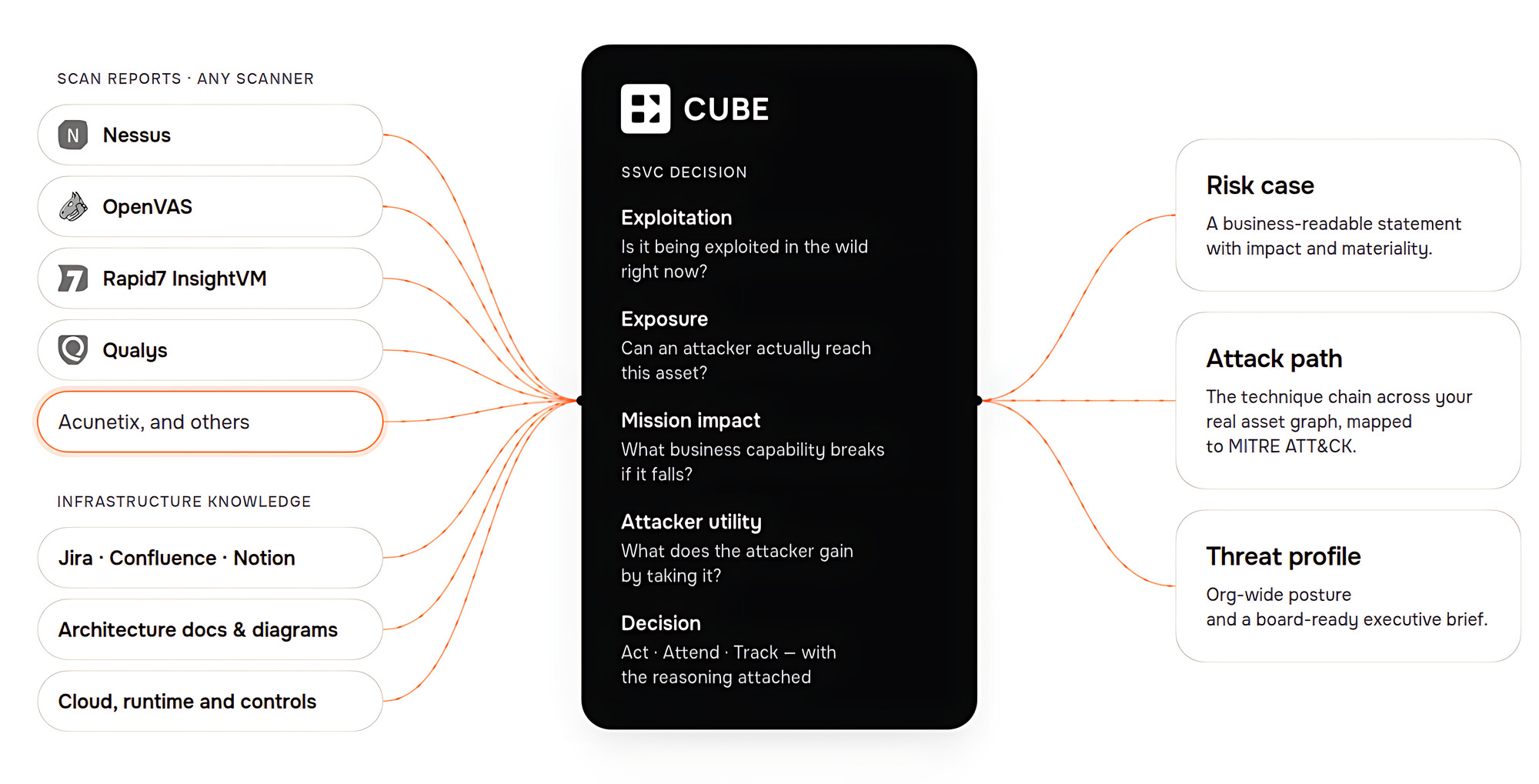
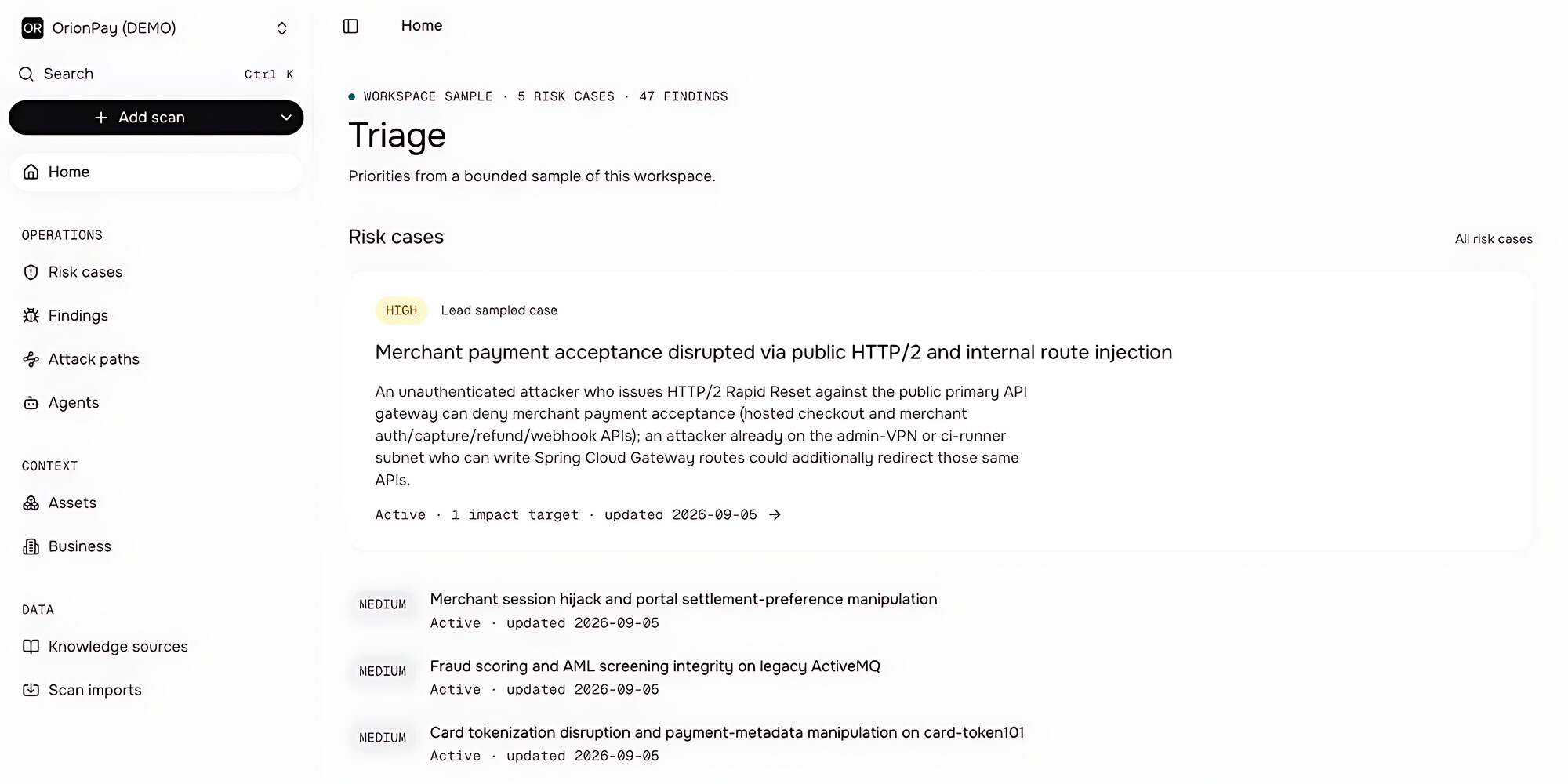
The Vulners team has introduced a new AI-powered product - Cube. The platform provides contextual analysis of vulnerability scan results, correlating technical findings with information about an organization's infrastructure and business processes.

Cube is built around three core layers:

📥 Evidence Layer - collects reports from existing vulnerability scanners, including Nessus, OpenVAS, Qualys, Rapid7 InsightVM, Acunetix, and others. It processes the findings and maps them to actual infrastructure assets.

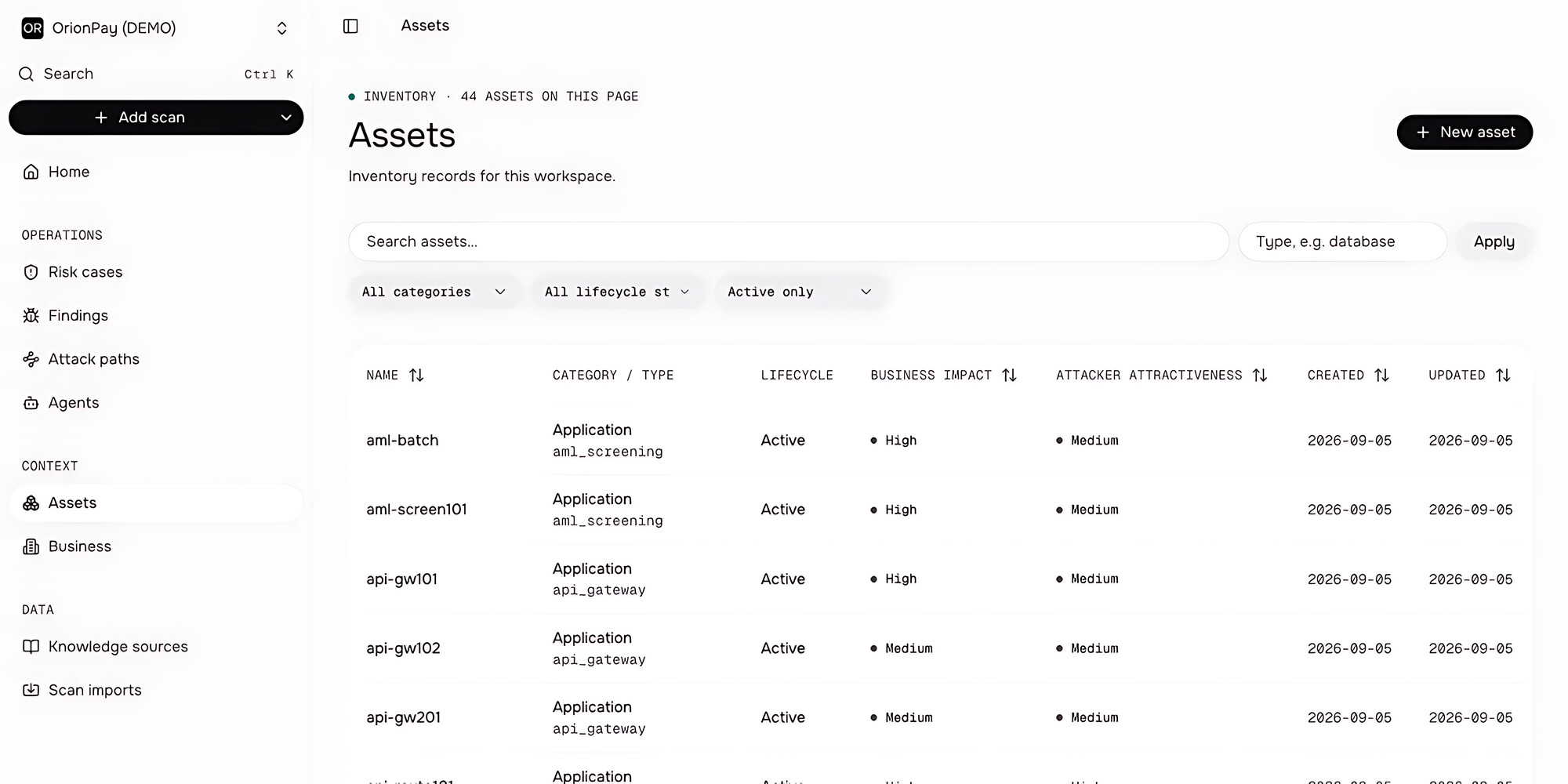
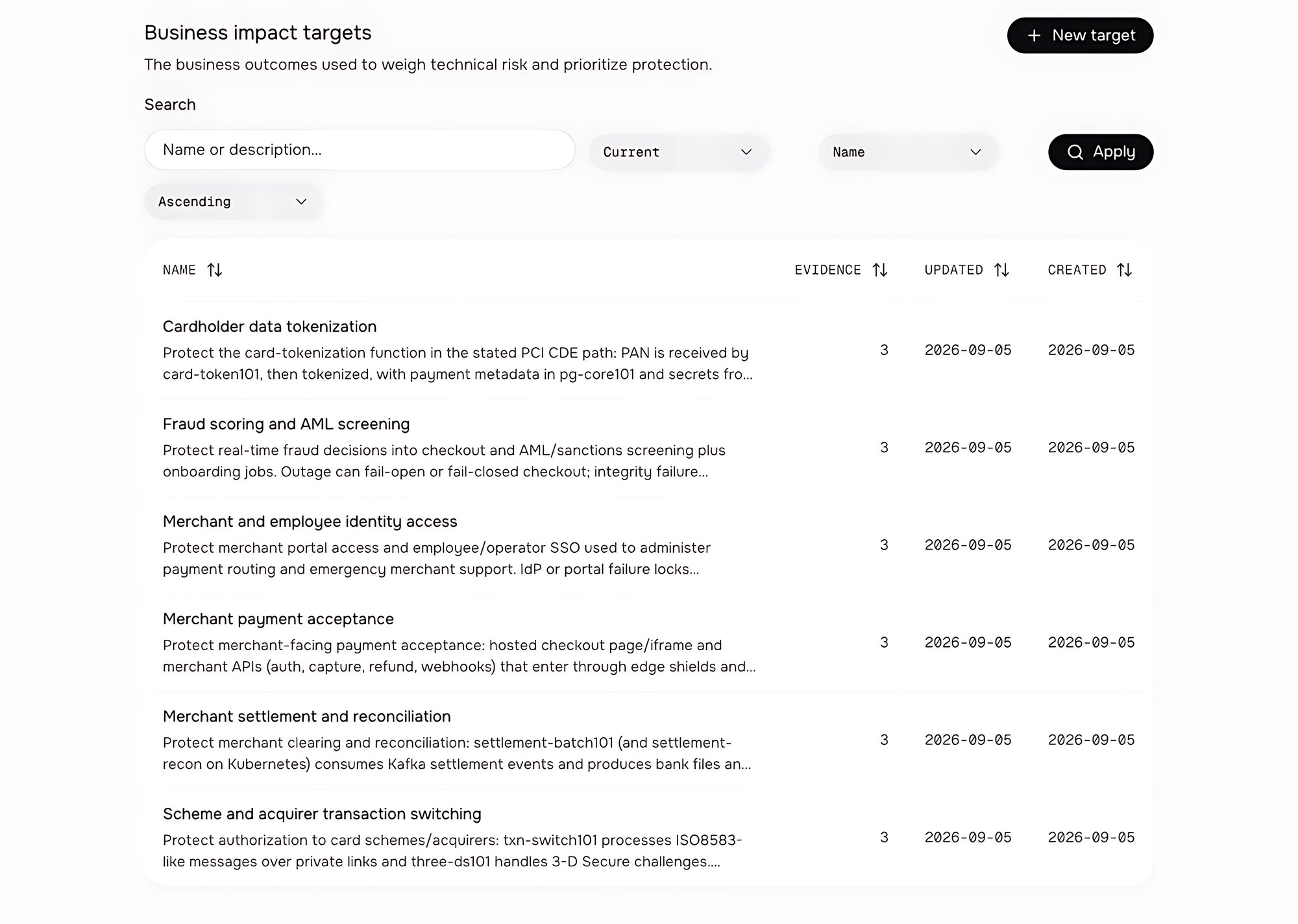
🗺️ Context Layer - enriches scan results with infrastructure data from architectural documentation, diagrams, task tracker tickets, cloud environments, and business processes. It builds a contextual model of the infrastructure, including a CMDB and network graph, helping identify affected assets, evaluate their exposure, and understand their role in business operations.

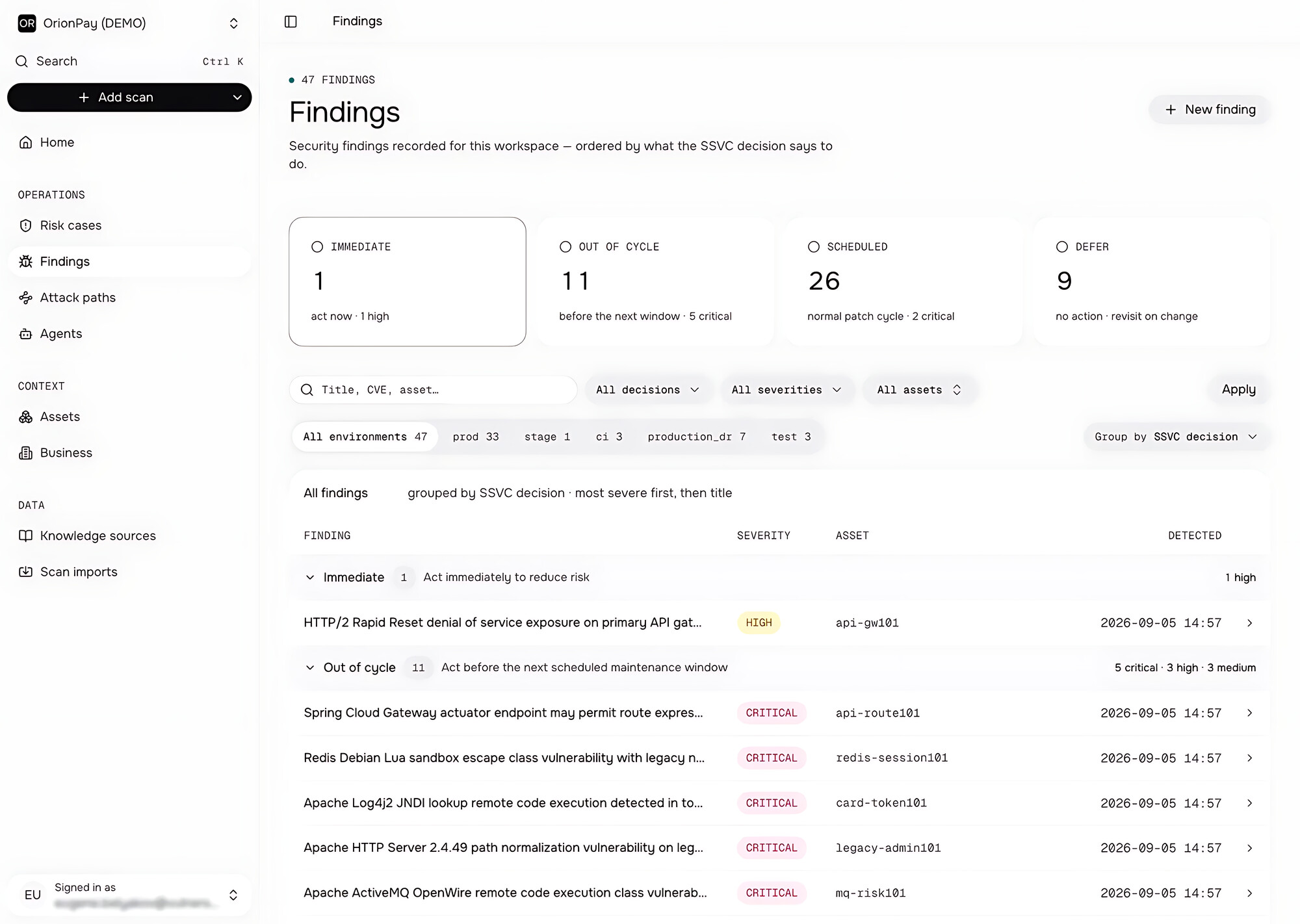
🧠 Decision Layer - uses the CISA SSVC (Stakeholder-Specific Vulnerability Categorization) methodology to prioritize remediation efforts. Unlike CVSS, which focuses on the technical severity of vulnerabilities, SSVC uses a decision tree that takes exploitation conditions and potential business impact into account.

The CISA SSVC model defines four possible decision outcomes:

🟢 Track - vulnerability remediation follows the standard Vulnerability Management process. The vulnerability is monitored and addressed according to standard software update timelines.

🟡 Track* - the vulnerability requires closer monitoring, with its assessment revisited as new information or circumstances emerge.

🟠 Attend - the vulnerability requires increased attention from security teams and relevant management. This may involve bringing in additional experts and notifying key stakeholders. Remediation should be accelerated.

🔴 Act - the vulnerability requires escalation to senior management, with response efforts coordinated across departments. A coordinated action plan is developed, the necessary stakeholders are engaged, and remediation is carried out as soon as possible.

SSVC therefore determines not only which vulnerabilities should be addressed first, but also the level of organizational response required to address them.

Cube provides users with several types of results:

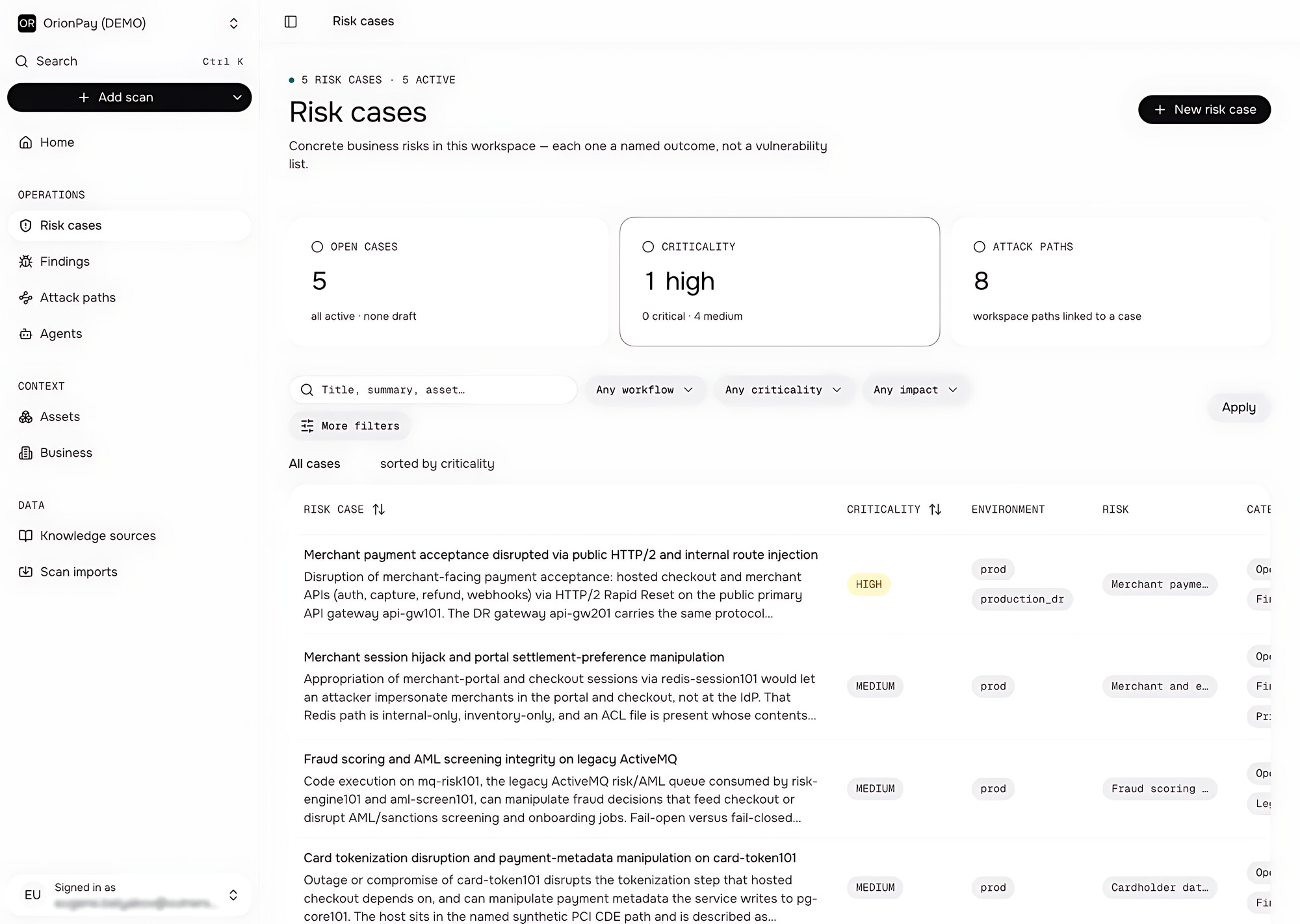
🎯 Risk Cases - grouped findings accompanied by severity ratings and assessments of potential business impact.

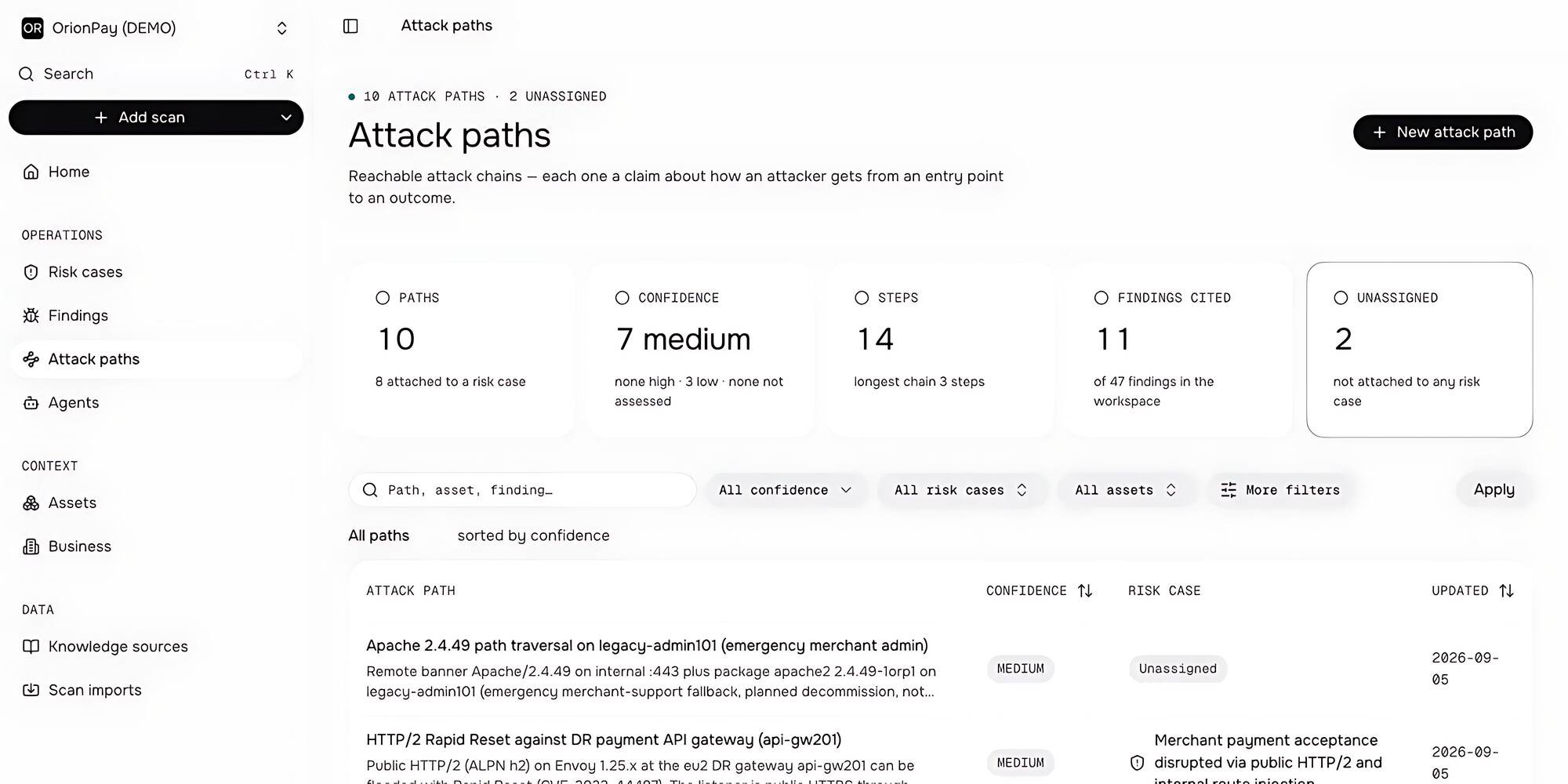
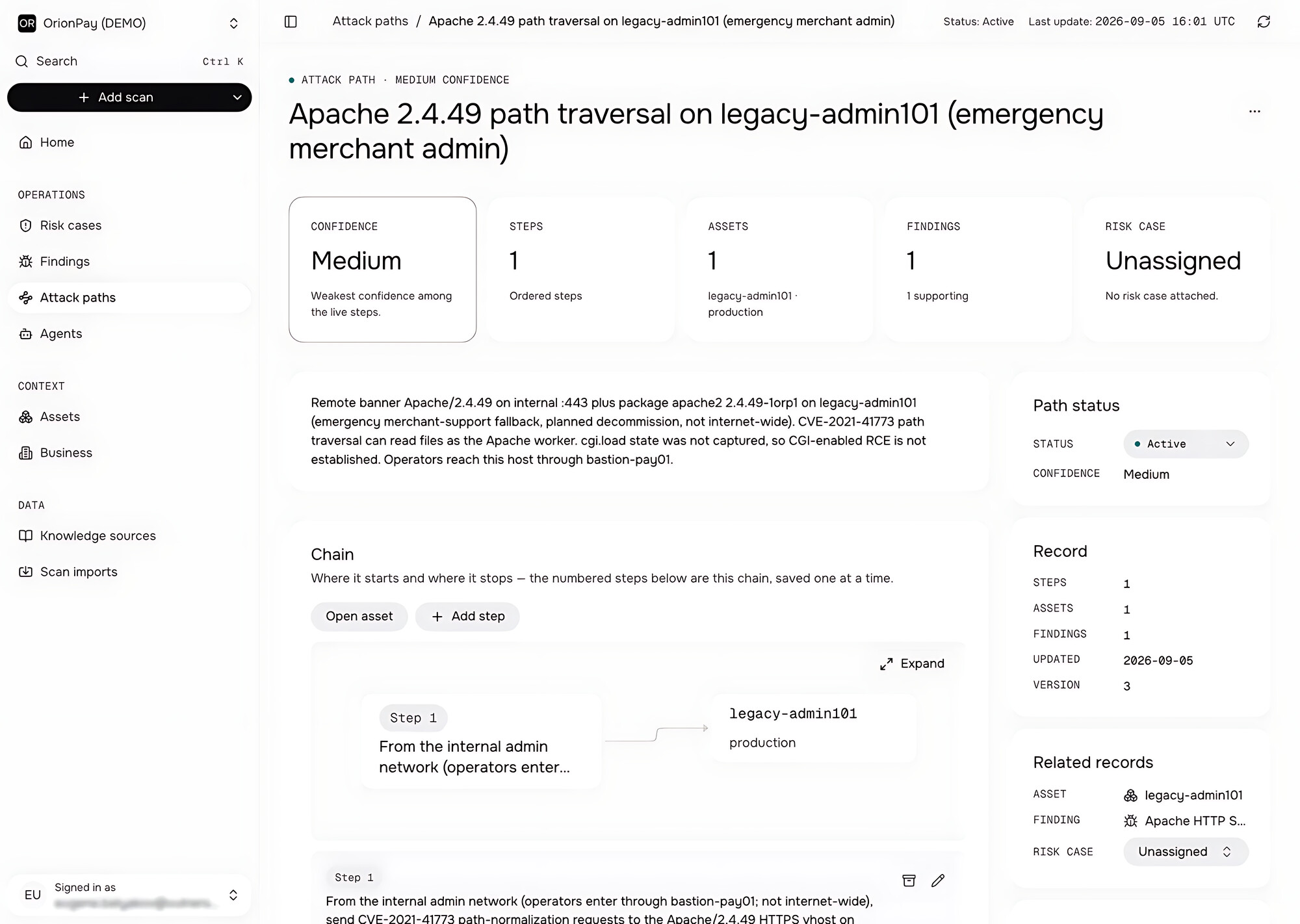
🛤️ Attack Paths - potential attack paths between assets, aligned with the MITRE ATT&CK framework.

🛡️ Threat Profile - an overview of the threat landscape and the current state of the infrastructure.

📋 Decision Rationale - explanations of decisions, linked to the original reports, assessments, and infrastructure data.

For example, a vulnerability with a CVSS score of 9.8 on an isolated internal build server may be assigned a lower priority than a vulnerability with a CVSS score of 7.5 on a publicly accessible payment gateway. In the latter case, the potential business impact is significantly greater.

The platform is deployed within the customer's own infrastructure (on-premises) and supports any LLM with an OpenAI- or Anthropic-compatible API, including proprietary models running on the customer's GPU servers. This means Cube does not lock customers into a specific AI provider. Vulners does not charge for token usage, leaving customers in control of their LLM costs. According to Vulners, running the model in a medium-sized infrastructure costs approximately $1,000 per month.

To summarize, Cube enriches traditional Vulnerability Management by linking technical vulnerabilities to infrastructure assets, operational processes, and potential business impact.
Vulnerability Management news and publications #2

Vulnerability Management news and publications #2. Hello everyone! This is the second episode of Vulnerability Management news and publications. In fact, this is a collection of my posts from the avleonovcom and avleonovrus telegram channels. Therefore, if you want to read them earlier, subscribe to these channels.

The main idea of ​​this episode. Microsoft is a biased company. In fact, they should now be perceived as another US agency. Does this mean that we need to forget about Microsoft and stop tracking what they do? No, it doesn’t. They do a lot of interesting things that can at least be researched and copied. Does this mean that we need to stop using Microsoft products? In some locations (you know which ones) for sure, in some we can continue to use such products if it is reasonable, but it’s necessary to have a plan B. And this does not only apply to Microsoft. So, it’s time for a flexible approaches. Here we do it this way, there we do it differently. It seems that rather severe fragmentation of the IT market is a long-term trend and it’s necessary to adapt to it.

Alternative video link (for Russia): https://vk.com/video-149273431_456239097

What’s in this episode:

  1. Microsoft released a propaganda report, what does this mean for us?
  2. Microsoft released the Autopatch feature, is it a good idea to use it?
  3. Ridiculous Vulnerability: Hardcoded Password in Confluence Questions
  4. The new Nessus Expert and why it’s probably Tenable’s worst release
  5. Rapid7 Nexpose/InsightVM features added in Q2 2022: what’s good and what’s weird
  6. Palo Alto: Malicious scan 15 minutes after CVE is released. Oh really?
  7. 6 groups of vulnerabilities that are most often used in attacks, according to Palo Alto, and the end of IT globalization

Continue reading →

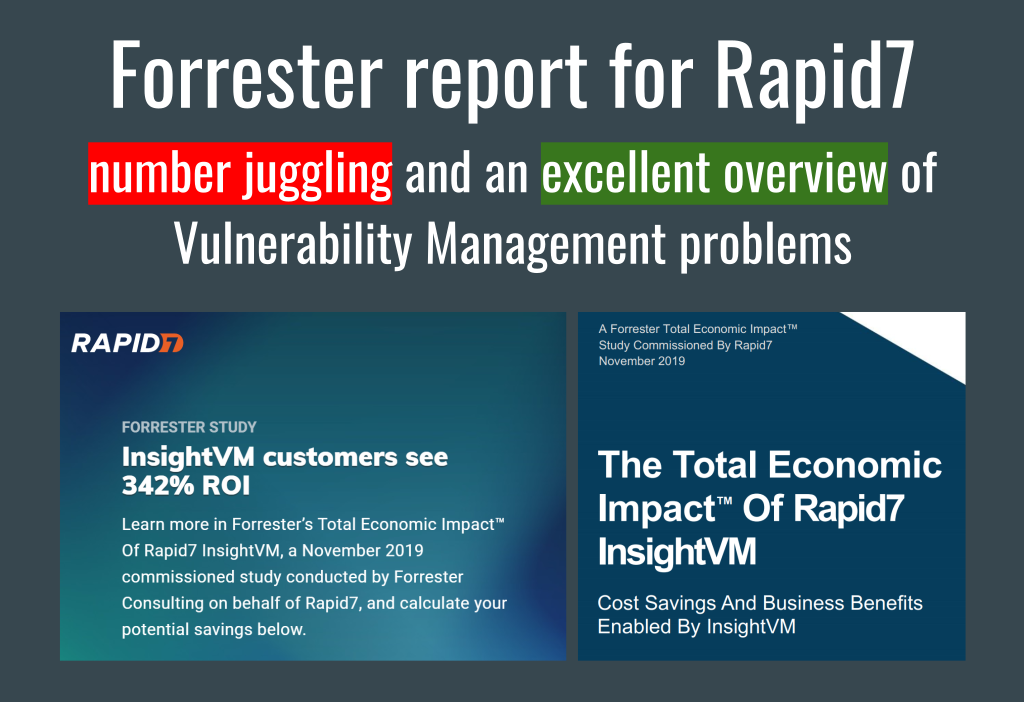
Forrester report for Rapid7: number juggling and an excellent overview of Vulnerability Management problems

Forrester report for Rapid7: number juggling and an excellent overview of Vulnerability Management problems. I recently read Forrester’s 20-page report “The Total Economic Impact™ Of Rapid7 InsightVM“. It is about the Cost Savings And Business Benefits that Vulnerability Management solution can bring to the organizations.

Forrester report for Rapid7

In short, I didn’t like everything related to money. It seems like juggling with numbers, useless and boring. But I really liked the quotes from customers who criticized existing Vulnerability Management solutions, especially the low quality of the remediation data. These are the real pain points of Vulnerability Management process.

How did Forrester count money?

Forrester interviewed five existing customers of Rapid7 and created a “composite organization”.

This “composite organization” has 12,000 IT assets and spends $223,374 per year on Rapid7 InsightVM ($670,123 for 3 years) including integrations and trainings costs. That means $18 per host. Well, quite a lot, especially when compared to unlimited Nessus Professional for just $2,390 per year. A wonderland of Enterprise Vulnerability Management. 🙂

Continue reading →