


Tag Archives: Confluence

The Vulners team has introduced a new AI-powered product - Cube

The Vulners team has introduced a new AI-powered product - CubeThe Vulners team has introduced a new AI-powered product - CubeThe Vulners team has introduced a new AI-powered product - CubeThe Vulners team has introduced a new AI-powered product - CubeThe Vulners team has introduced a new AI-powered product - CubeThe Vulners team has introduced a new AI-powered product - CubeThe Vulners team has introduced a new AI-powered product - CubeThe Vulners team has introduced a new AI-powered product - CubeThe Vulners team has introduced a new AI-powered product - Cube

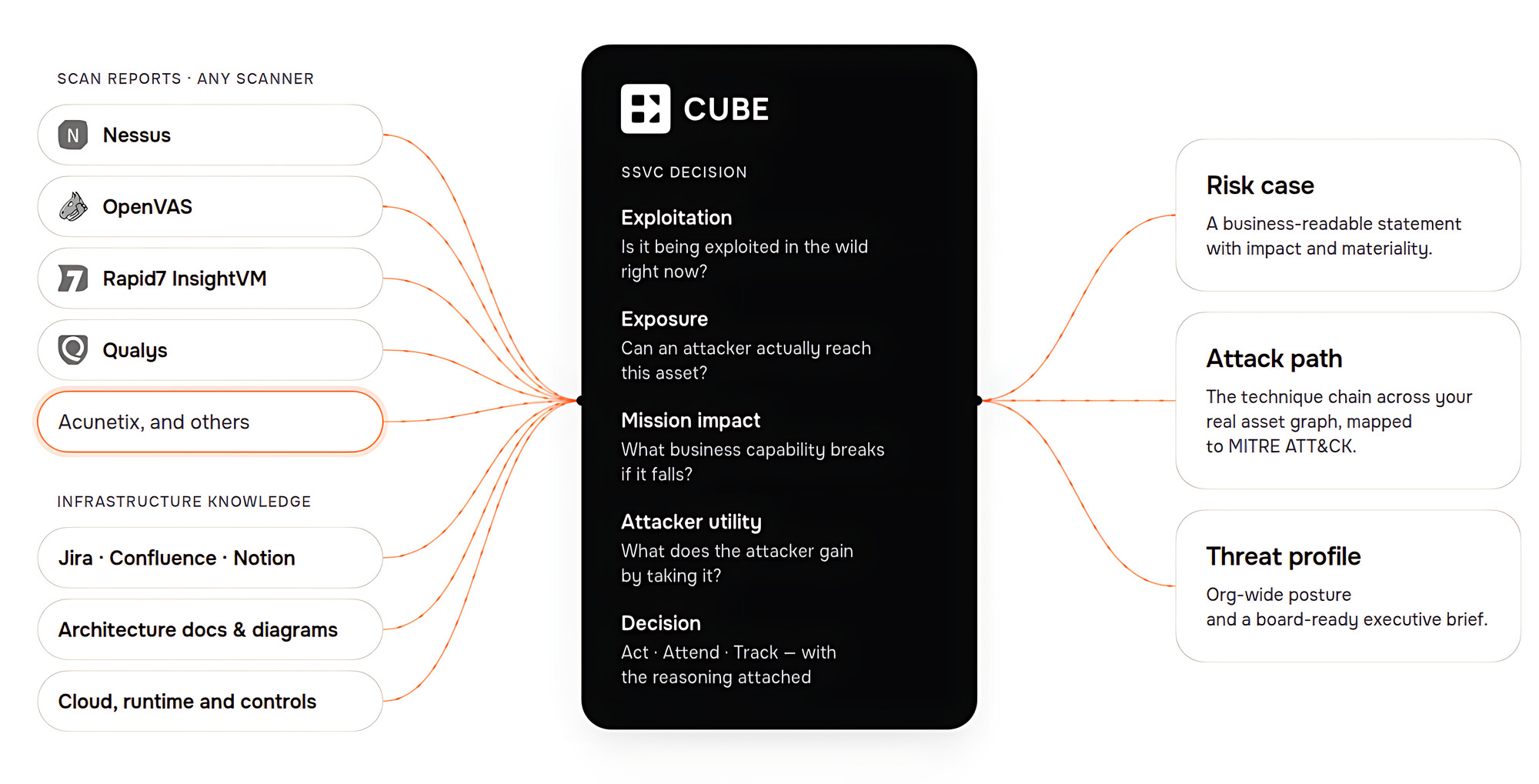
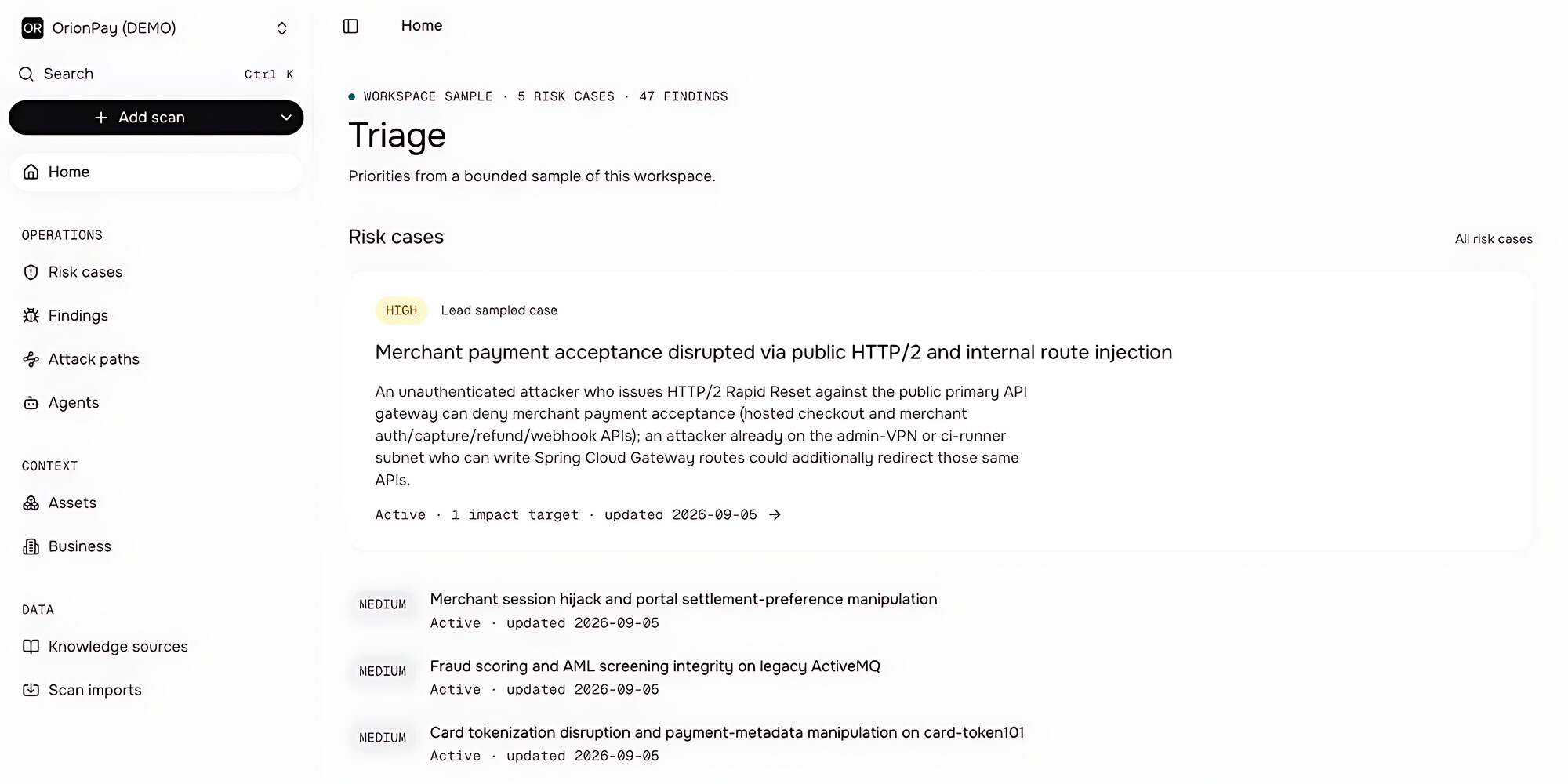
The Vulners team has introduced a new AI-powered product - Cube. The platform provides contextual analysis of vulnerability scan results, correlating technical findings with information about an organization's infrastructure and business processes.

Cube is built around three core layers:

📥 Evidence Layer - collects reports from existing vulnerability scanners, including Nessus, OpenVAS, Qualys, Rapid7 InsightVM, Acunetix, and others. It processes the findings and maps them to actual infrastructure assets.

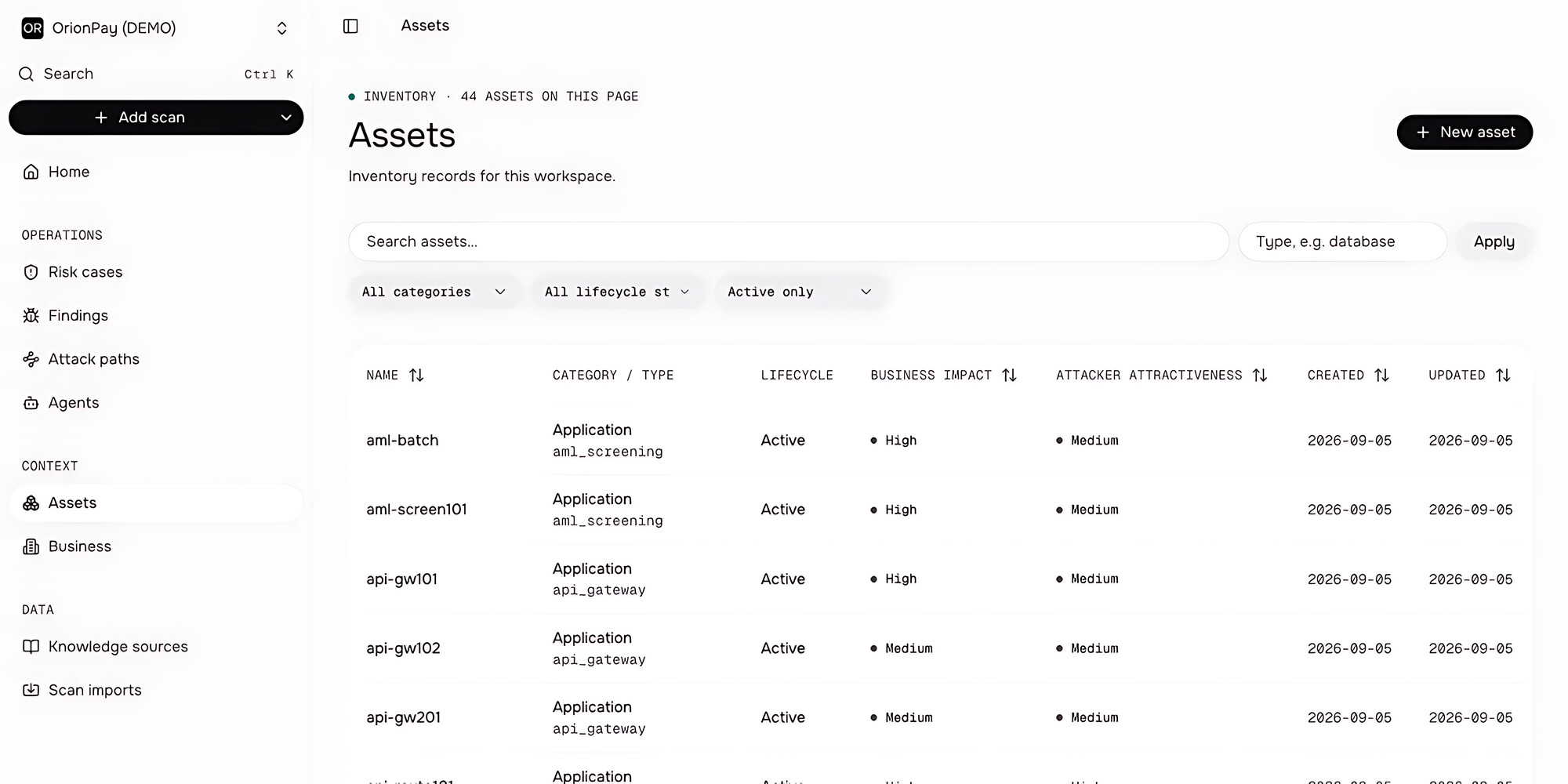
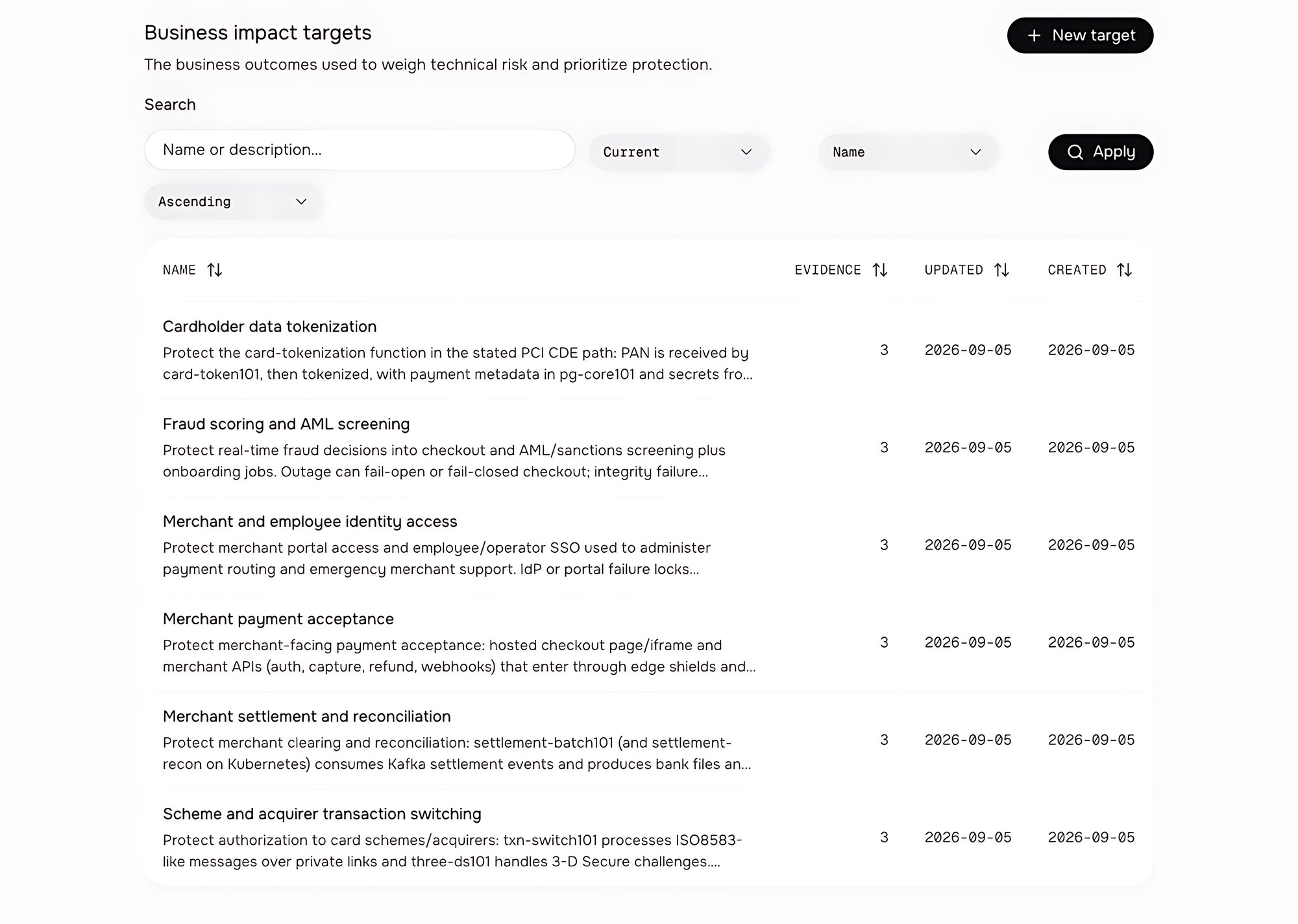
🗺️ Context Layer - enriches scan results with infrastructure data from architectural documentation, diagrams, task tracker tickets, cloud environments, and business processes. It builds a contextual model of the infrastructure, including a CMDB and network graph, helping identify affected assets, evaluate their exposure, and understand their role in business operations.

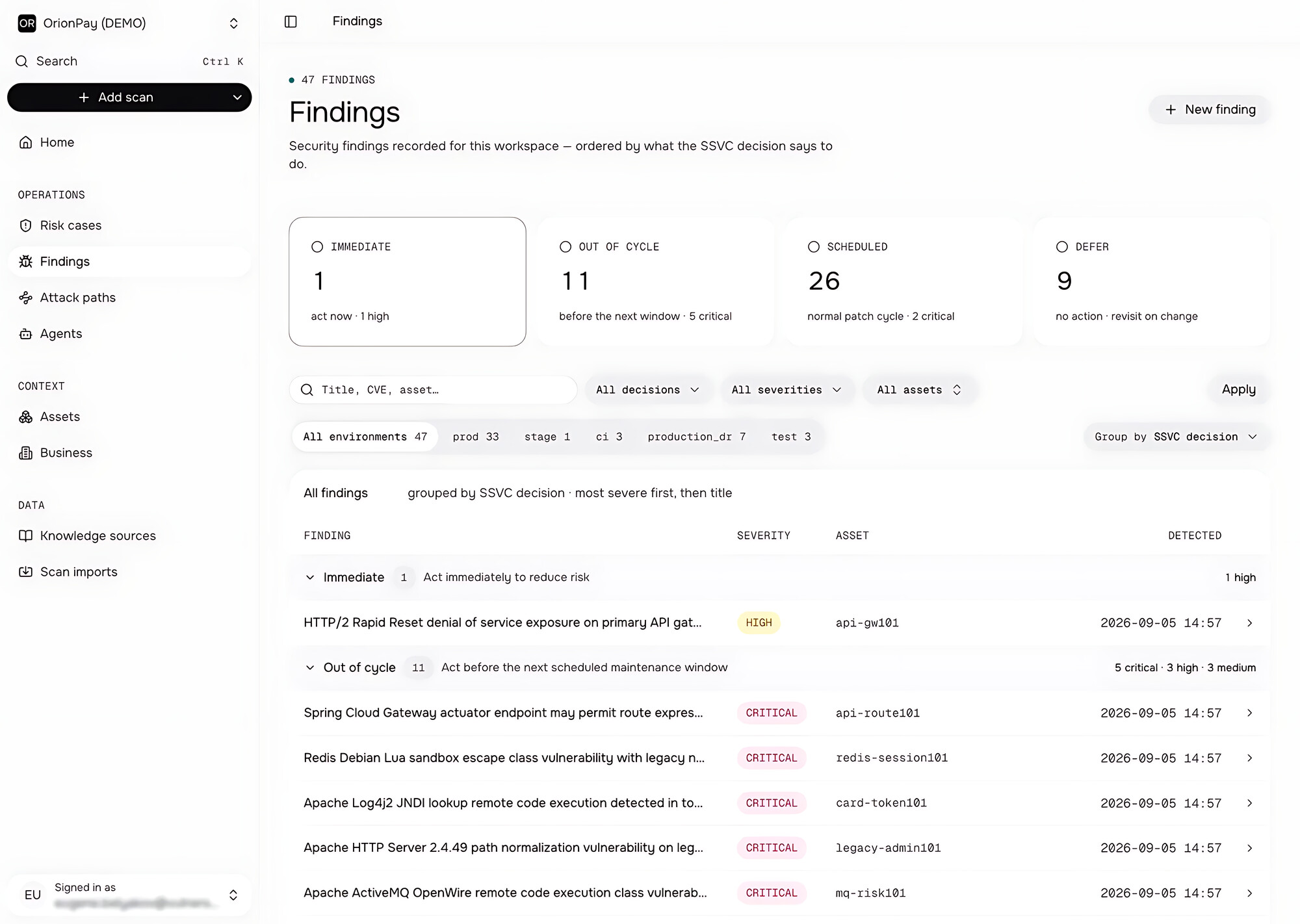
🧠 Decision Layer - uses the CISA SSVC (Stakeholder-Specific Vulnerability Categorization) methodology to prioritize remediation efforts. Unlike CVSS, which focuses on the technical severity of vulnerabilities, SSVC uses a decision tree that takes exploitation conditions and potential business impact into account.

The CISA SSVC model defines four possible decision outcomes:

🟢 Track - vulnerability remediation follows the standard Vulnerability Management process. The vulnerability is monitored and addressed according to standard software update timelines.

🟡 Track* - the vulnerability requires closer monitoring, with its assessment revisited as new information or circumstances emerge.

🟠 Attend - the vulnerability requires increased attention from security teams and relevant management. This may involve bringing in additional experts and notifying key stakeholders. Remediation should be accelerated.

🔴 Act - the vulnerability requires escalation to senior management, with response efforts coordinated across departments. A coordinated action plan is developed, the necessary stakeholders are engaged, and remediation is carried out as soon as possible.

SSVC therefore determines not only which vulnerabilities should be addressed first, but also the level of organizational response required to address them.

Cube provides users with several types of results:

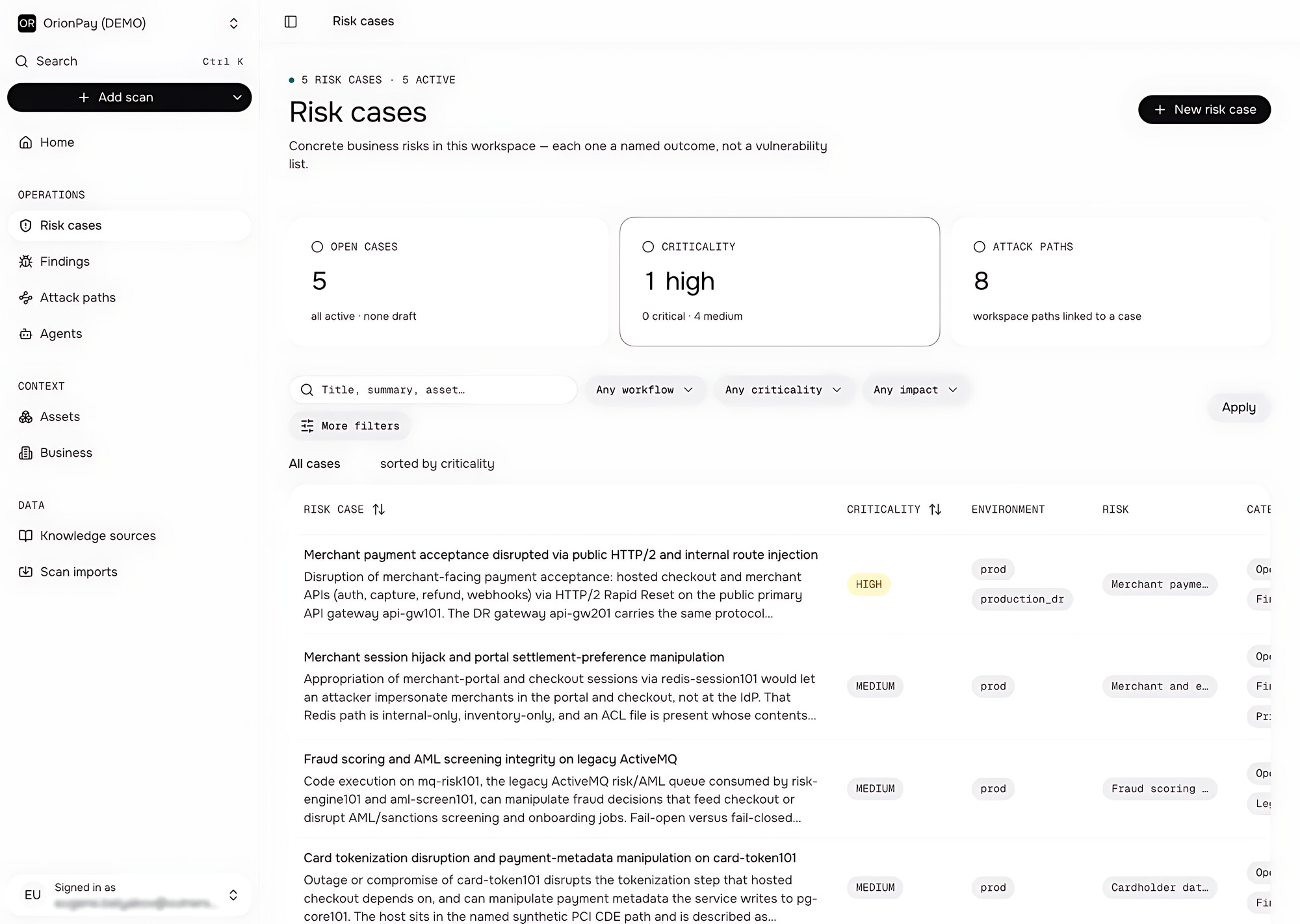
🎯 Risk Cases - grouped findings accompanied by severity ratings and assessments of potential business impact.

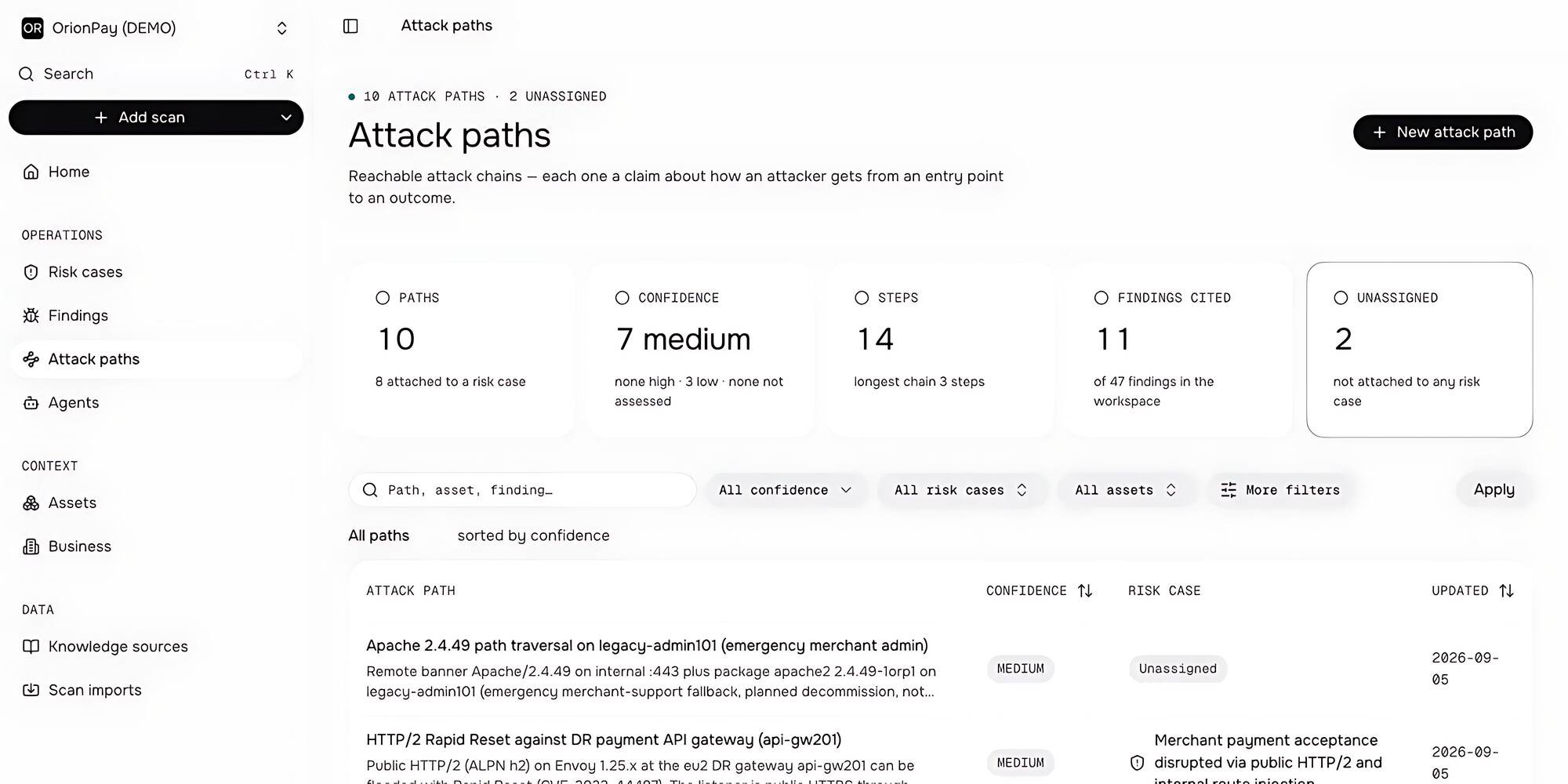
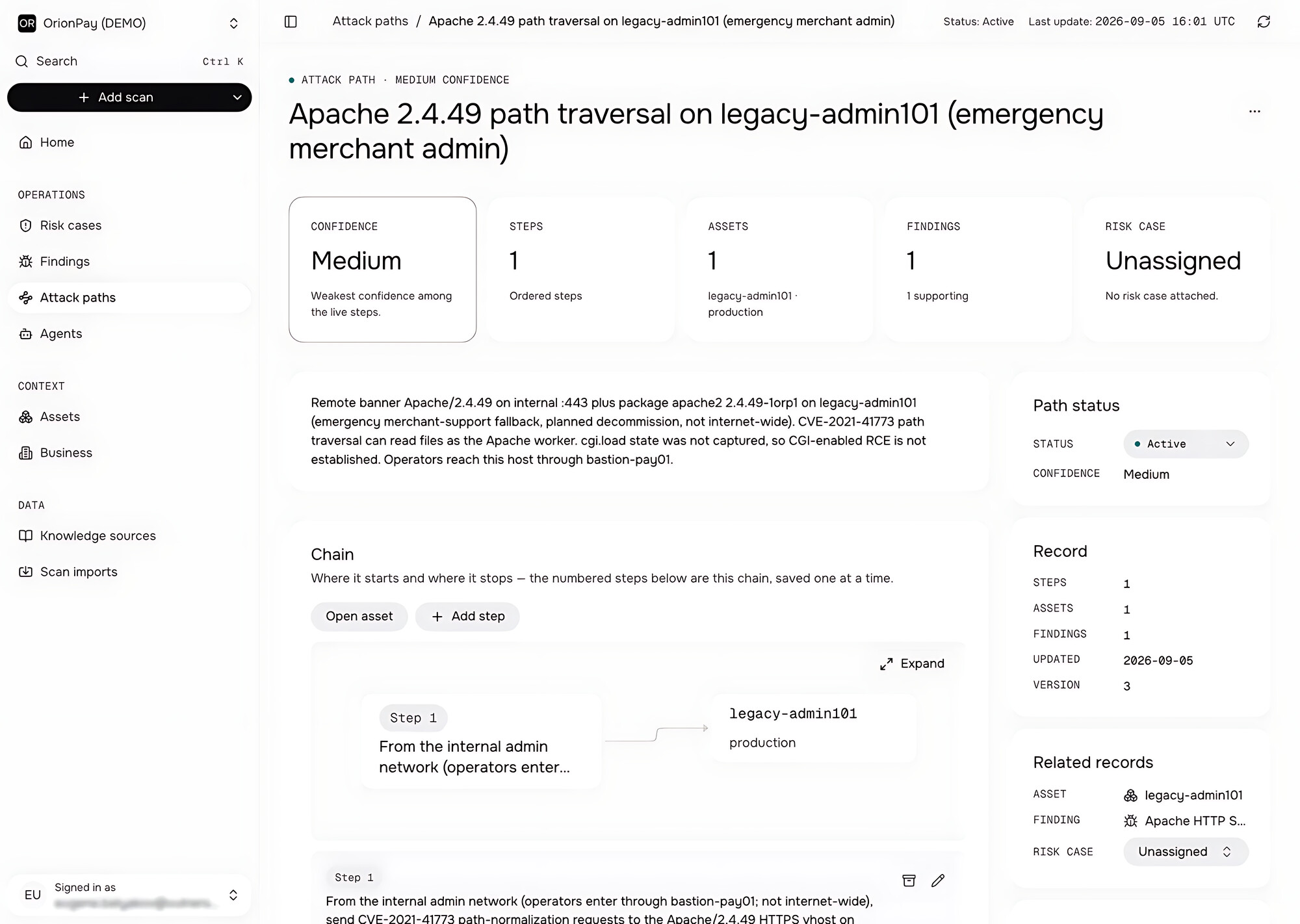
🛤️ Attack Paths - potential attack paths between assets, aligned with the MITRE ATT&CK framework.

🛡️ Threat Profile - an overview of the threat landscape and the current state of the infrastructure.

📋 Decision Rationale - explanations of decisions, linked to the original reports, assessments, and infrastructure data.

For example, a vulnerability with a CVSS score of 9.8 on an isolated internal build server may be assigned a lower priority than a vulnerability with a CVSS score of 7.5 on a publicly accessible payment gateway. In the latter case, the potential business impact is significantly greater.

The platform is deployed within the customer's own infrastructure (on-premises) and supports any LLM with an OpenAI- or Anthropic-compatible API, including proprietary models running on the customer's GPU servers. This means Cube does not lock customers into a specific AI provider. Vulners does not charge for token usage, leaving customers in control of their LLM costs. According to Vulners, running the model in a medium-sized infrastructure costs approximately $1,000 per month.

To summarize, Cube enriches traditional Vulnerability Management by linking technical vulnerabilities to infrastructure assets, operational processes, and potential business impact.


I have finalized the list of trending vulnerabilities for 2024 according to Positive Technologies

I have finalized the list of trending vulnerabilities for 2024 according to Positive Technologies

I have finalized the list of trending vulnerabilities for 2024 according to Positive Technologies. Last year, 74 vulnerabilities were classified as trending (to compare the scale, just over 40,000 were added to NVD in 2024).

All trending vulnerabilities are found in Western commercial products and open source projects. This year, the vulnerabilities of domestic Russian products did not reach the level of criticality required to classify them as trending.

For 55 of all trending vulnerabilities there are currently signs of exploitation in attacks, for 17 there are public exploits (but no signs of exploitation) and for the remaining 2 there is only a possibility of future exploitation.

Vulnerabilities were often added to trending ones before signs of exploitation in the wild appeared. For example, the remote code execution vulnerability in VMware vCenter (CVE-2024-38812) was added to the list of trending vulnerabilities on September 20, 3 days after the vendor's security bulletin appeared. There were no signs of exploitation in the wild or public exploit for this vulnerability. Signs of exploitation appeared only 2 months later, on November 18.

Most of the vulnerabilities in the trending list are of the following types: Remote Code or Command Execution (24) and Elevation of Privilege (21).

4 vulnerabilities in Barracuda Email Security Gateway (CVE-2023-2868), MOVEit Transfer (CVE-2023-34362), papercut (CVE-2023-27350) and SugarCRM (CVE-2023-22952) were added in early January 2024. These vulnerabilities were massively exploited in the West in 2023, and attacks using these vulnerabilities could also tangentially affect those domestic Russian organizations where these products had not yet been taken out of service. The rest of the vulnerabilities became trending in 2024.

34 trending vulnerabilities affect Microsoft products (45%).

🔹 17 of them are Elevation of Privilege vulnerabilities in the Windows kernel and standard components.

🔹 1 Remote Code Execution vulnerability in Windows Remote Desktop Licensing Service (CVE-2024-38077).

2 trending Elevation of Privilege vulnerabilities affect Linux systems: one in nftables (CVE-2024-1086), and the second in needrestart (CVE-2024-48990).

Other groups of vulnerabilities

🔻 Phishing attacks: 19 (Windows components, Outlook, Exchange, Ghostscript, Roundcube)
🔻 Network security and entry points: 13 (Palo Alto, Fortinet, Juniper, Ivanti, Check Point, Zyxel)
🔻 Virtual infrastructure and backups: 7 (VMware, Veeam, Acronis)
🔻 Software development: 6 (GitLab, TeamCity, Jenkins, PHP, Fluent Bit, Apache Struts)
🔻 Collaboration tools: 3 (Atlassian Confluence, XWiki)
🔻 CMS WordPress plugins: 3 (LiteSpeed Cache, The Events Calendar, Hunk Companion)

🗒 Full Vulristics report

🟥 Article on the official website "Vulnerable software and hardware vs. security researchers" (rus)

На русском

RCE - Confluence (CVE-2024-21683) with public exploits on GitHub

RCE - Confluence (CVE-2024-21683) with public exploits on GitHub

RCE - Confluence (CVE-2024-21683) with public exploits on GitHub. Authentication is required. Both Confluence Data Center and Confluence Server are vulnerable.

🔻 Version 8.5.9
LTS, which fixes the vulnerability, was released on May 9.
🔻 On May 23, after the description of the vulnerability in NVD and the Atlassian ticket became public, researcher Huong Kieu studied the patch, described the vulnerability and reported that he was able to make a PoC. On the same day, exploits for this vulnerability appeared on GitHub.

Atlassian likely held back information about fixing this vulnerability so that more organizations could update before active exploitation began. However, they didn’t quite succeed. Apparently they accidentally published the ticket on May 15th, and then hid it until May 23rd. But the vulnerability search engine Vulners remembered it. 😉 So information about the vulnerability was available all this time.

На русском

Joint Advisory AA22-279A and Vulristics

Joint Advisory AA22-279A and Vulristics. Hello everyone! This episode will be about the new hot twenty vulnerabilities from CISA, NSA and FBI, Joint cybersecurity advisory (CSA) AA22-279A, and how I analyzed these vulnerabilities using my open source project Vulristics.

Alternative video link (for Russia): https://vk.com/video-149273431_456239105

Americans can’t just release a list of “20 vulnerabilities most commonly exploited in attacks on American organizations.” They like to add geopolitics and point the finger at some country. Therefore, I leave the attack attribution mentioned in the advisory title without comment.

Continue reading →

Vulnerability Management news and publications #2

Vulnerability Management news and publications #2. Hello everyone! This is the second episode of Vulnerability Management news and publications. In fact, this is a collection of my posts from the avleonovcom and avleonovrus telegram channels. Therefore, if you want to read them earlier, subscribe to these channels.

The main idea of ​​this episode. Microsoft is a biased company. In fact, they should now be perceived as another US agency. Does this mean that we need to forget about Microsoft and stop tracking what they do? No, it doesn’t. They do a lot of interesting things that can at least be researched and copied. Does this mean that we need to stop using Microsoft products? In some locations (you know which ones) for sure, in some we can continue to use such products if it is reasonable, but it’s necessary to have a plan B. And this does not only apply to Microsoft. So, it’s time for a flexible approaches. Here we do it this way, there we do it differently. It seems that rather severe fragmentation of the IT market is a long-term trend and it’s necessary to adapt to it.

Alternative video link (for Russia): https://vk.com/video-149273431_456239097

What’s in this episode:

  1. Microsoft released a propaganda report, what does this mean for us?
  2. Microsoft released the Autopatch feature, is it a good idea to use it?
  3. Ridiculous Vulnerability: Hardcoded Password in Confluence Questions
  4. The new Nessus Expert and why it’s probably Tenable’s worst release
  5. Rapid7 Nexpose/InsightVM features added in Q2 2022: what’s good and what’s weird
  6. Palo Alto: Malicious scan 15 minutes after CVE is released. Oh really?
  7. 6 groups of vulnerabilities that are most often used in attacks, according to Palo Alto, and the end of IT globalization

Continue reading →

Vulnerability Management news and publications #1

Vulnerability Management news and publications #1. Hello everyone! In this episode, I will try to revive Security News with a focus on Vulnerability Management.

On the one hand, creating such reviews requires free time, which could be spent more wisely, for example, on open source projects or original research. On the other hand, there are arguments in favor of news reviews. Keeping track of the news is part of our job as vulnerability and security specialists. And preferably not only headlines.

Alternative video link (for Russia): https://vk.com/video-149273431_456239095

I usually follow the news using my automated telegram channel @avleonovnews. And it looks like this: I see something interesting in the channel, I copy it to Saved Messages so that I can read it later. Do I read it later? Well, usually not. Therefore, the creation of news reviews motivates to read and clear Saved Messages. Just like doing Microsoft Patch Tuesday reviews motivates me to watch what’s going on there. In general, it seems it makes sense to make a new attempt. Share in the comments what you think about it. Well, if you want to participate in the selection of news, I will be glad too.

I took 10 news items from Saved Messages and divided them into 5 categories:

  1. Active Vulnerabilities
  2. Data sources
  3. Analytics
  4. VM vendors write about Vulnerability Management
  5. de-Westernization of IT

Continue reading →

Security News: Microsoft Patch Tuesday September 2021, OMIGOD, MSHTML RCE, Confluence RCE, Ghostscript RCE, FORCEDENTRY Pegasus

Security News: Microsoft Patch Tuesday September 2021, OMIGOD, MSHTML RCE, Confluence RCE, Ghostscript RCE, FORCEDENTRY Pegasus. Hello everyone! This time, let’s talk about recent vulnerabilities. I’ll start with Microsoft Patch Tuesday for September 2021. I created a report using my Vulristics tool. You can see the full report here.

The most interesting thing about the September Patch Tuesday is that the top 3 VM vendors ignored almost all RCEs in their reviews. However, there were interesting RCEs in the Office products. And what is most unforgivable is that they did not mention CVE-2021-38647 RCE in OMI – Open Management Infrastructure. Only ZDI wrote about this.

Continue reading →