Tag Archives: JavaScript

July "In the Trend of VM" (#29): Microsoft Exchange Server vulnerability

July In the Trend of VM (#29): Microsoft Exchange Server vulnerability

July "In the Trend of VM" (#29): Microsoft Exchange Server vulnerability. Here is my traditional monthly roundup of trending vulnerabilities, according to Positive Technologies. The previous June edition featured four vulnerabilities. This time, there's only one.

🗞 Post on Habr (rus)
🗒 Digest on the PT website (rus)

🔻 XSS - Microsoft Exchange (CVE-2026-42897). The vulnerability allows attackers to execute arbitrary JavaScript in a user's browser when the user opens a malicious email in Outlook Web Access (OWA). A public proof-of-concept exploit is available, and the vulnerability has already been exploited in the wild.

🟥 The full list of trending vulnerabilities is available on the portal

About Cross Site Scripting - Microsoft Exchange (CVE-2026-42897) vulnerability

About Cross Site Scripting - Microsoft Exchange (CVE-2026-42897) vulnerability

About Cross Site Scripting - Microsoft Exchange (CVE-2026-42897) vulnerability. The vulnerability was fixed on May 14 outside the regular Microsoft Patch Tuesday cycle. Improper neutralization of input during web page generation (CWE-79, XSS) in Microsoft Exchange Server allows an unauthorized attacker to perform spoofing over a network. In practical terms, this means that a remote attacker could exploit this vulnerability by sending a specially crafted email to a user. If the user opens the email in Outlook Web Access and certain interaction conditions are met, arbitrary JavaScript can be executed in the browser context. As a result, the attacker may gain control of the user's mailbox by using an active user session.

👾 Microsoft experts immediately reported signs of active exploitation in the wild for this vulnerability. The vulnerability was added to the CISA KEV on May 15.

⚒️ A public exploit for the vulnerability was published on GitHub on May 15 as well.

⚙️ Initially, mitigation measures were recommended to address the vulnerability, delivered via the Exchange Emergency Mitigation (EM) service or by using the Exchange on-premises Mitigation Tool (EOMT) script. Security updates that fix the vulnerability in Microsoft Exchange Server Subscription Edition RTM, Exchange Server 2016, and Exchange Server 2019 were released almost a month later, on June 9. Microsoft experts recommended keeping the mitigations enabled even after applying the patch, as they provide an additional layer of protection. However, applying these mitigations may cause issues (for example, errors when printing calendars and displaying images in OWA).

⚠️ Please note that Exchange Server 2016 and 2019, which are out of support, are also affected by this vulnerability. Only customers enrolled in the Period 2 Extended Security Update (ESU) program are eligible to receive Exchange Server 2016 and 2019 security updates released between May and October 2026.

June Linux Patch Wednesday

June Linux Patch Wednesday

June Linux Patch Wednesday. A total of 1,888 vulnerabilities (324 in the Linux kernel, and a whopping 728 in Chromium ❗️). For comparison, there were 1,638 vulnerabilities in May. The increase isn't as dramatic as it was from April to May, but it's still a new record. One of the vulnerabilities has been flagged as actively exploited in the wild:

🔻 RCE - Chromium (CVE-2026-11645). Chromium is the open-source web browser project that serves as the foundation for many modern browsers, including Google Chrome, Microsoft Edge, Brave, Opera, and Vivaldi. A publicly available Metasploit module exploits a vulnerability in the web browser's V8 JavaScript engine. The vulnerability is triggered by a specific code pattern that causes type confusion between internal V8 objects, resulting in out-of-bounds memory access. Successful exploitation may lead to remote code execution in the context of the browser process.

There are also 109 vulnerabilities with public exploits or evidence that exploits exist, although there are no signs of active exploitation in real-world attacks yet. Among them, the following stand out:

🔸 EoP - Linux Kernel "CIFSwitch" (CVE-2026-46243). This vulnerability could allow attackers to forge CIFS authentication key descriptions, abuse the kernel's key request mechanism, and gain root privileges.

🔸 EoP - Linux Kernel "PinTheft" (CVE-2026-43494). On a successfully exploited configuration, the chain completes and hands off to the discovered SUID binary with an overwritten first page - yielding a root shell if the race and kernel state align.

🔸 RCE - Apache ActiveMQ (CVE-2026-42588). ActiveMQ is an open-source message broker written in Java. Exploitation of this vulnerability requires valid credentials for the ActiveMQ Web Console. However, the default credentials are admin/admin.

🔸 InfDisc - Squid "Squidbleed" (CVE-2026-47729). Squid is an open-source caching proxy server. The vulnerability causes Squid's FTP parser to read beyond the boundary of a memory buffer, into a region that may contain a previous user's uncleared HTTP request data.

🔸 AuthBypass - Nextcloud (CVE-2026-45156). Nextcloud is an open source content collaboration platform. A missing signature verification in User OIDC allowed a malicious ID4me authority to identify as any user.

🔸 XSS - Nextcloud (CVE-2025-59788). A vulnerability in a reachable files_pdfviewer example directory in Nextcloud allows attackers to execute arbitrary JavaScript in the context of a user's browser via a crafted PDF file to viewer.html.

🔸 XSS - Roundcube (CVE-2026-48849). Roundcube is a free, open-source webmail application. An unsanitized subject field in the draft restored value could lead to stored XSS/HTML/CSS injection on shared mailboxes.

🔸 DoS - ImageMagick (CVE-2026-46522). ImageMagick is an open-source image processing tool used to create, edit, and convert images. Due to a missing check in the MIFF decoder, a crafted file could cause an infinite loop resulting in CPU exhaustion.

🗒 Full Vulristics report

December "In the Trend of VM" (#22): vulnerabilities in Windows, the expr-eval library, Control Web Panel, and Django

December In the Trend of VM (#22): vulnerabilities in Windows, the expr-eval library, Control Web Panel, and Django

December "In the Trend of VM" (#22): vulnerabilities in Windows, the expr-eval library, Control Web Panel, and Django. A traditional monthly roundup of trending vulnerabilities - this time, a fairly compact one. 💽

🗞 Post on Habr (rus)
🗞 Post on SecurityLab (rus)
🗒 Digest on the PT website (rus)

Four vulnerabilities in total:

🔻 EoP - Windows Kernel (CVE-2025-62215)
🔻 RCE - expr-eval (CVE-2025-12735)
🔻 RCE - Control Web Panel (CVE-2025-48703)
🔻 SQLi - Django (CVE-2025-64459)

🟥 Trending Vulnerabilities Portal

На русском

About Remote Code Execution - expr-eval (CVE-2025-12735) vulnerability

About Remote Code Execution - expr-eval (CVE-2025-12735) vulnerability

About Remote Code Execution - expr-eval (CVE-2025-12735) vulnerability. expr-eval is a JavaScript library for parsing and evaluating mathematical expressions, providing safe handling of user-supplied variables. It is used in online calculators, educational programs, modeling tools, financial applications, AI systems, and natural language processing (NLP). Insufficient input validation may allow arbitrary JavaScript code execution in the application's context.

🛠 The vulnerability was discovered on November 5. A PoC has been on GitHub since November 11.

⚙️ The vulnerability is still in the process of being fixed in the main (effectively abandoned 🤷‍♂️) expr-eval project and is not fully fixed in its fork, expr-eval-fork. Secure versions are expected to appear in the corresponding GHSA.

🌐 The library is popular: expr-eval has 800k weekly downloads on npm, and expr-eval-fork has 88k.

👾 No in-the-wild exploitation has been observed so far.

На русском

The first Zbrunk dashboard and other news

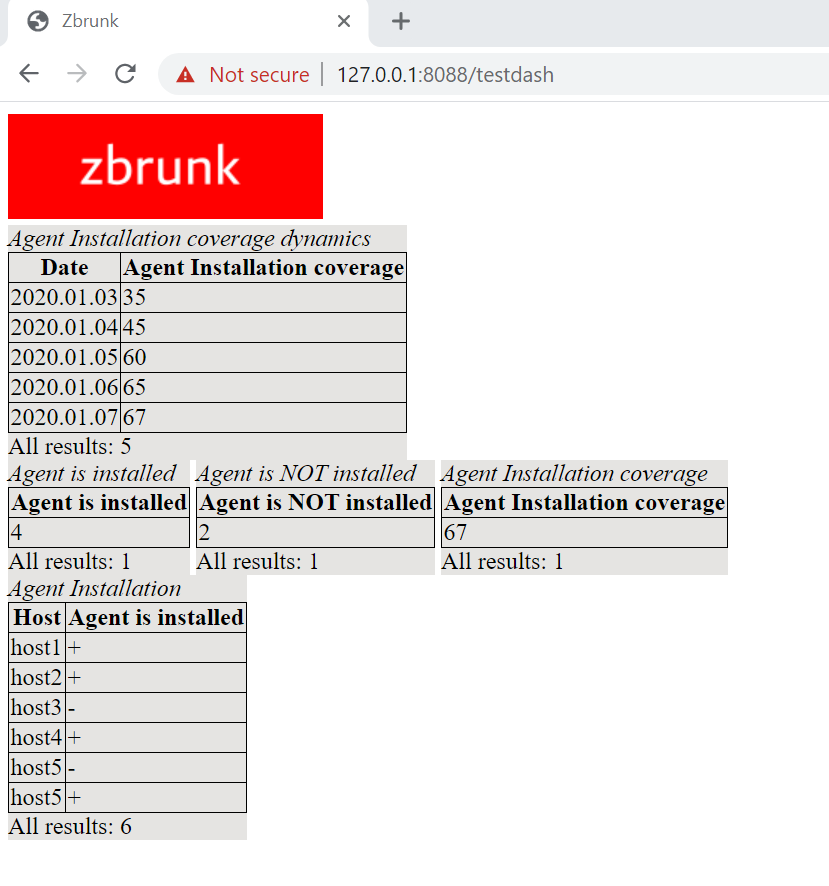
The first Zbrunk dashboard and other news. The long New Year holiday season in Russia was not in vain. I had time to work on Zbrunk. 😉 As you can see, I made my first dashboard and added other features.

The first Zbrunk dashboard

No more timestamps in code

I added functions to get Unix timestamps from lines in human-readable time format, e.g. “2019.12.10 13:00:00”.

Instead of a date, you can use words:

  • Today
  • Yesterday
  • N days ago
  • Beginning of Time
  • End of Time

API requests will continue to support only Unix timestamps.

Continue reading

Detectify Asset Inventory and Monitoring

Detectify Asset Inventory and Monitoring. Continuing the topic about perimeter services. As I mentioned earlier, I don’t think that the external perimeter services should be considered as a fully functional replacement for custom Vulnerability Management processes. I would rather see their results as an additional feed showing the problems your current VM process has. Recently I tested the Detectify’s Asset Inventory (Monitoring) solution, which provides such feed by automatically detecting the issues with your second, third (and more) leveled domains and related web services.

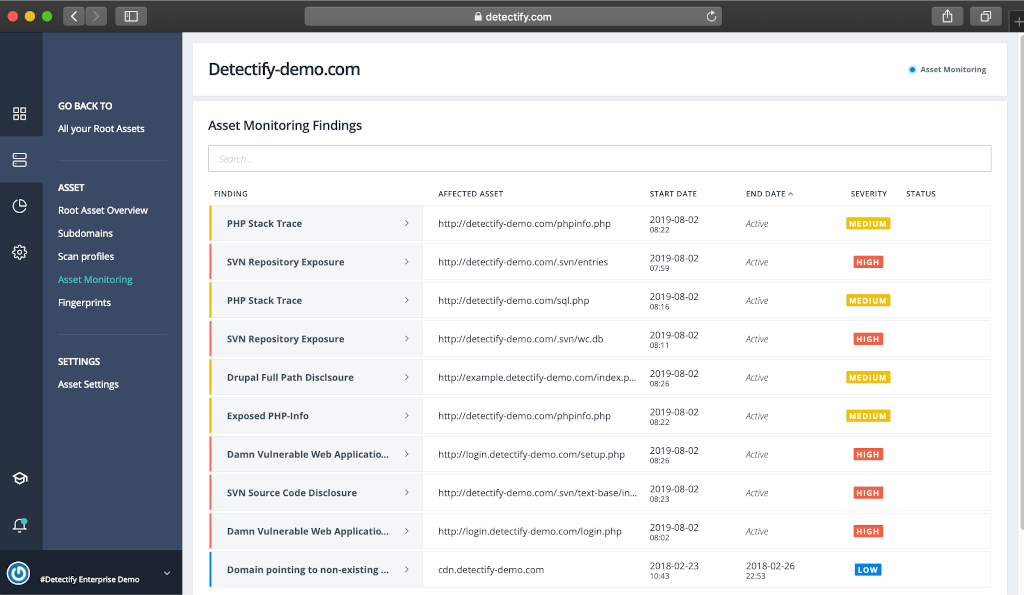
Detectify Asset Inventory screenshot from the official blog

Let say your organization has several second level web domains, over9000 third (and more) level domains, and you even don’t know for what services they are used. This is a normal situation for a large organization. So, you simply add yourorganization.com to Detectify, activate Asset Monitoring, and Detectify automatically discovers third (and more) level domains and related technologies: web services, CMS, JavaScript frameworks and libraries. “It provides thousands of fingerprints and hundreds of tests for stateless vulnerabilities such as code repository exposure for SVN or Git.” This is called fingerprinting.

Continue reading