

Tag Archives: Microsoft

About Remote Code Execution - Windows Shell (CVE-2026-21510) vulnerability

About Remote Code Execution - Windows Shell (CVE-2026-21510) vulnerability

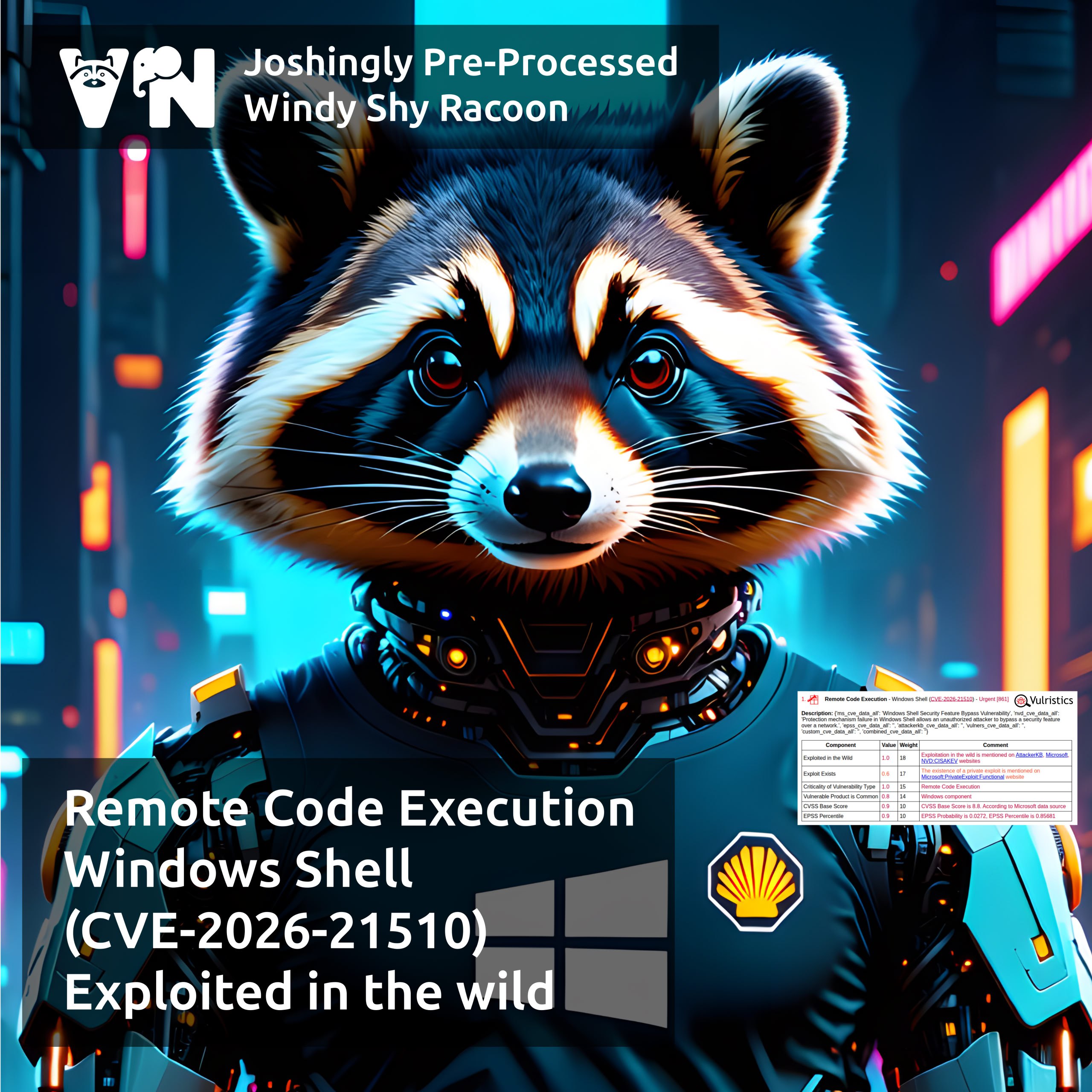
About Remote Code Execution - Windows Shell (CVE-2026-21510) vulnerability. A vulnerability from the February Microsoft Patch Tuesday. The Windows Shell is the primary interface through which users interact with the Windows operating system. It includes visible elements such as the Desktop, Taskbar, and the Start Menu. Protection Mechanism Failure (CWE-693) allows an attacker to execute arbitrary code on the system by bypassing the Windows SmartScreen mechanism and Windows Shell warnings. To exploit the vulnerability, an attacker needs to convince a user to open a specially crafted shortcut file (.LNK) or follow a malicious link.

👾 Microsoft reports exploitation in the wild. The vulnerability has been listed in the CISA KEV since February 10.

💬 Microsoft classified the vulnerability as Security Feature Bypass, however it seems more appropriate to classify it as Remote Code Execution.

🛠 No public exploits are available yet.

На русском

About Remote Code Execution - Microsoft Word (CVE-2026-21514) vulnerability

About Remote Code Execution - Microsoft Word (CVE-2026-21514) vulnerability

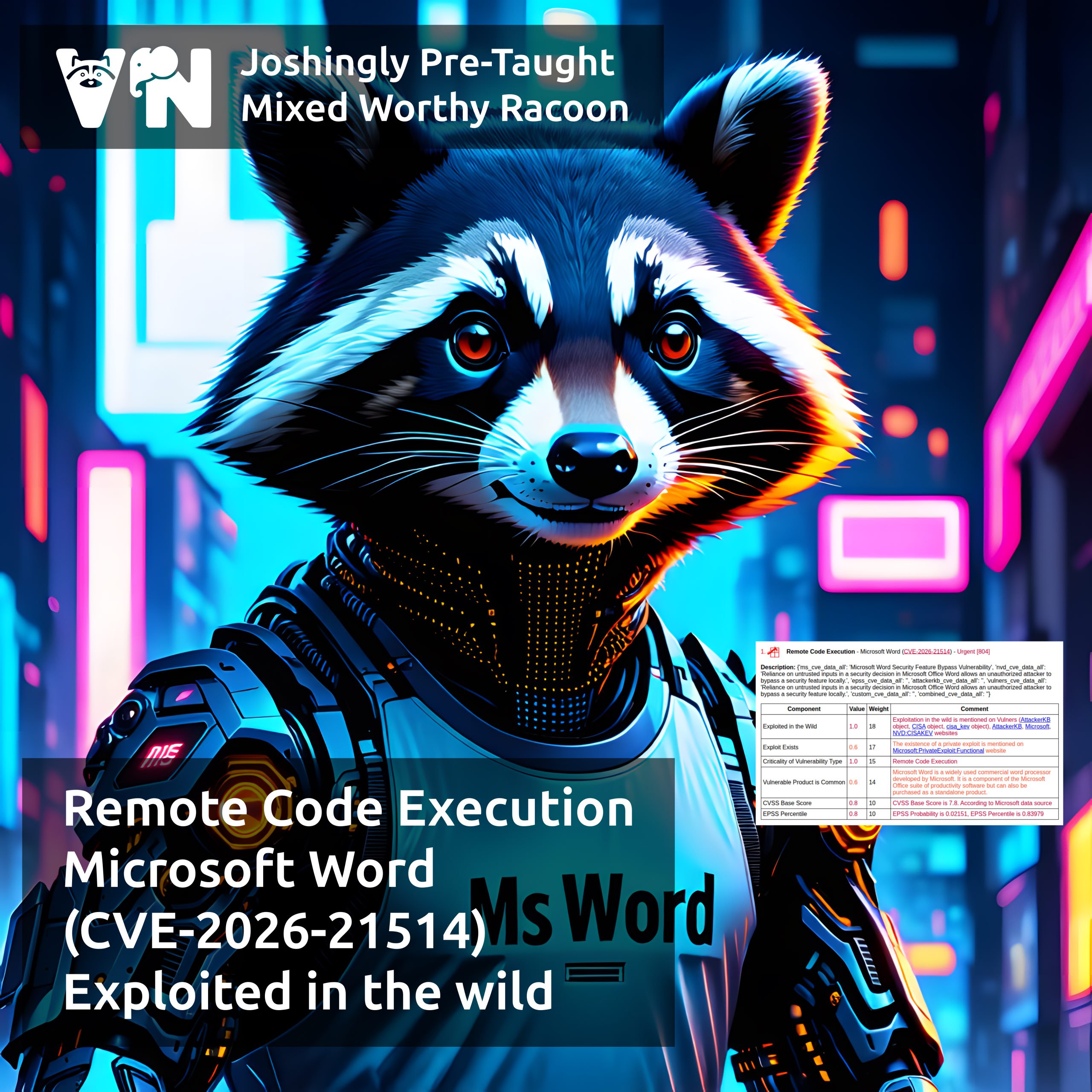
About Remote Code Execution - Microsoft Word (CVE-2026-21514) vulnerability. This vulnerability is from February Microsoft Patch Tuesday. Reliance on Untrusted Inputs in a Security Decision (CWE-807) in Microsoft Office Word allows an unauthenticated attacker to bypass OLE security features when opening a malicious file. The vulnerability is NOT exploitable via the Preview Pane.

👾 Microsoft reports that the vulnerability is being exploited in the wild. It has been listed in CISA KEV since February 10.

💬 Microsoft has classified the vulnerability as a Security Feature Bypass, but given that exploiting such vulnerabilities can lead to arbitrary code execution, it seems reasonable to classify it as Remote Code Execution, similar to the actively exploited CVE-2026-21509.

🛠 No public exploits are available yet.

На русском

February "In the Trend of VM" (#24): vulnerabilities in Microsoft products

February In the Trend of VM (#24): vulnerabilities in Microsoft products

February "In the Trend of VM" (#24): vulnerabilities in Microsoft products. A traditional monthly roundup of trending vulnerabilities. This time, compact and all-Microsoft.

🗞 Post on Habr (rus)
🗒 Digest on the PT website (rus)

In total, two vulnerabilities:

🔻 RCE - Microsoft Office (CVE-2026-21509)
🔻 InfDisc - Desktop Window Manager (CVE-2026-20805)

🟥 Trending Vulnerabilities Portal

На русском

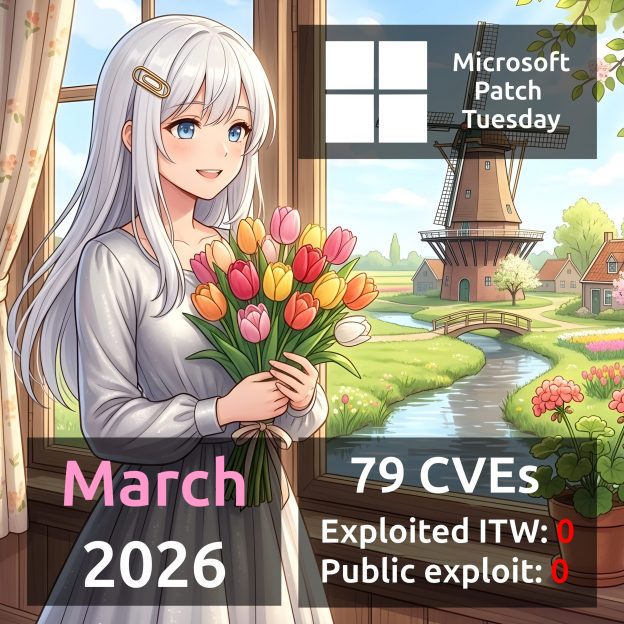
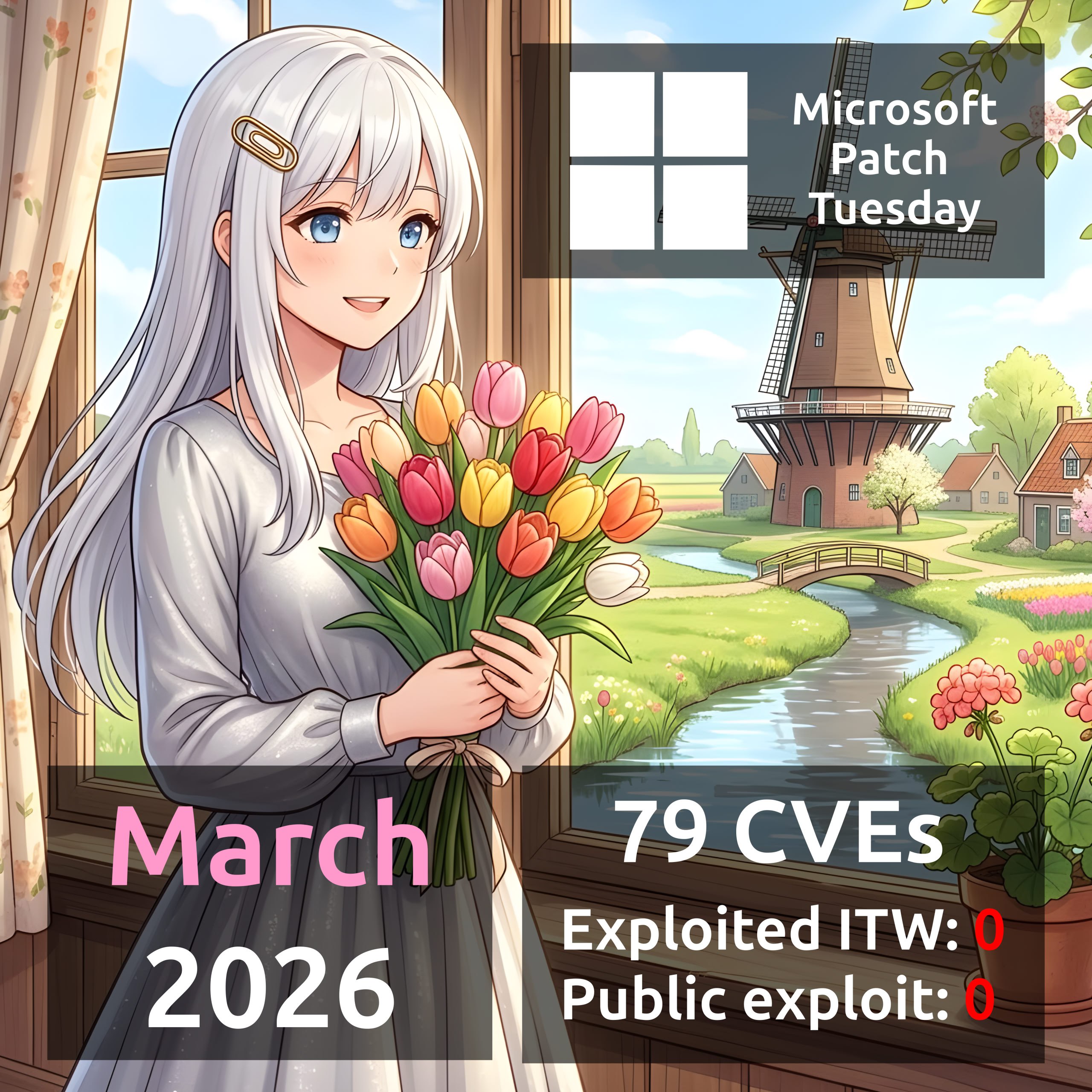
February Microsoft Patch Tuesday

February Microsoft Patch Tuesday

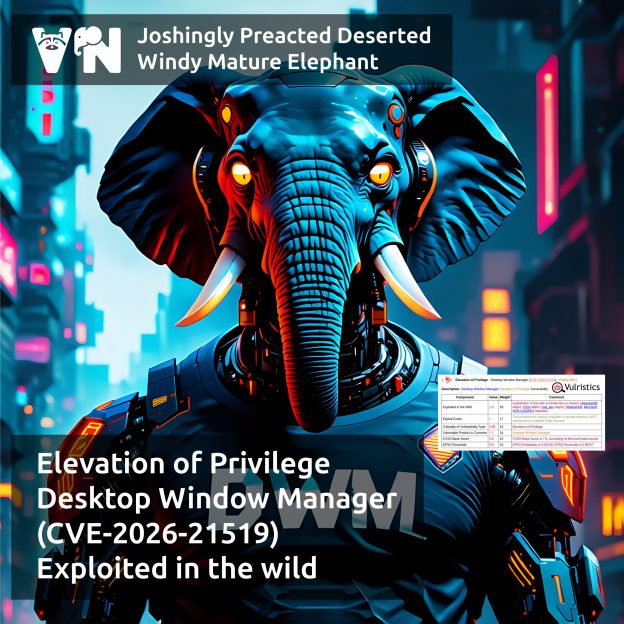
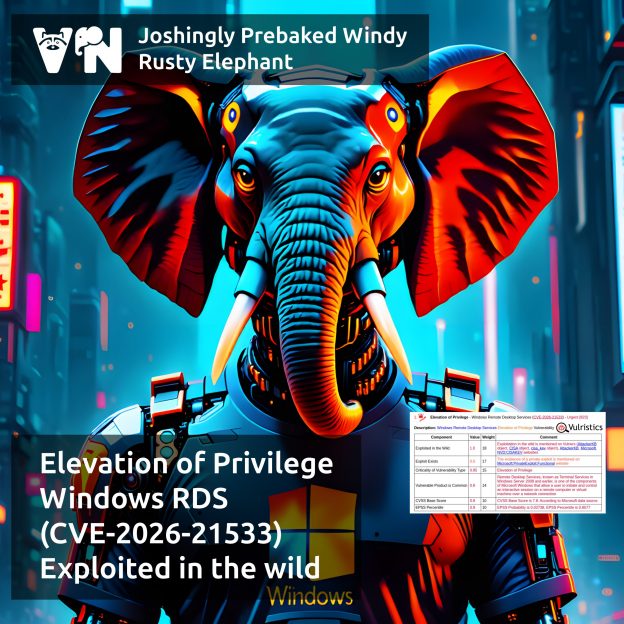
February Microsoft Patch Tuesday. A total of 55 vulnerabilities, half as many as in January. There are as many as six (❗️) vulnerabilities being exploited in the wild:

🔻 SFB/RCE - Windows Shell (CVE-2026-21510)
🔻 SFB/RCE - Microsoft Word (CVE-2026-21514)
🔻 SFB - MSHTML Framework (CVE-2026-21513)
🔻 EoP - Windows Remote Desktop Services (CVE-2026-21533)
🔻 EoP - Desktop Window Manager (CVE-2026-21519)
🔻 DoS - Windows Remote Access Connection Manager (CVE-2026-21525)

There is also one vulnerability with a public exploit:

🔸 DoS - libjpeg (CVE-2023-2804)

Notable remaining vulnerabilities:

🔹 RCE - Windows Notepad (CVE-2026-20841)
🔹 Spoofing - Outlook (CVE-2026-21511)
🔹 EoP - Windows Kernel (CVE-2026-21231, CVE-2026-21239, CVE-2026-21245), Windows AFD.sys (CVE-2026-21236, CVE-2026-21238, CVE-2026-21241)

🗒 Full Vulristics report

На русском

About Remote Code Execution - Microsoft Office (CVE-2026-21509) vulnerability

About Remote Code Execution - Microsoft Office (CVE-2026-21509) vulnerability

About Remote Code Execution - Microsoft Office (CVE-2026-21509) vulnerability. The vulnerability was urgently fixed on January 26, outside the regular Microsoft Patch Tuesday. Microsoft classified it as a Security Feature Bypass, but in fact, it is more of a Remote Code Execution. The vulnerability involves bypassing OLE (Object Linking and Embedding) security features in Microsoft 365 and Microsoft Office. It is exploited when opening malicious Office files (Preview Pane is safe).

⚙️ In Office 2021+, protection is enabled automatically via server-side changes after restarting the applications. For Office 2016/2019, updates must be installed or registry changes applied.

👾 Microsoft reports that the vulnerability is being exploited in the wild.

🛠 No public exploits are available yet.

На русском

January "In the Trend of VM" (#23): vulnerabilities in Windows, React and MongoDB

January In the Trend of VM (#23): vulnerabilities in Windows, React and MongoDB

January "In the Trend of VM" (#23): vulnerabilities in Windows, React and MongoDB. Traditional monthly roundup of trending vulnerabilities. Launching the 2026 season. 🙂

🗞 Post on Habr (rus)
🗒 Digest on the PT website (rus)

In total, three vulnerabilities:

🔻 EoP - Windows Cloud Files Mini Filter Driver (CVE-2025-62221)
🔻 RCE - React Server Components "React2Shell" (CVE-2025-55182)
🔻 InfDisc - MongoDB "MongoBleed" (CVE-2025-14847)

🟥 Trending Vulnerabilities Portal

На русском

About Information Disclosure - Desktop Window Manager (CVE-2026-20805) vulnerability

About Information Disclosure - Desktop Window Manager (CVE-2026-20805) vulnerability

About Information Disclosure - Desktop Window Manager (CVE-2026-20805) vulnerability. Desktop Window Manager is a compositing window manager that has been part of Windows since Windows Vista. Exploitation of the vulnerability, which was addressed in the January Microsoft Patch Tuesday, allows a local attacker to disclose the "section address from a remote ALPC port which is user-mode memory".

👾 Microsoft noted that this vulnerability is being exploited in attacks. The vulnerability was added to CISA’s KEV catalog on January 13. There are no public details about the attacks yet, but Rapid7 experts suggest that the disclosed memory address can be used to bypass ASLR, "increasing the chance of developing a stable elevation of privilege exploit for DWM".

🛠 Public exploit PoCs have been available on GitHub since January 14.

На русском