Author Archives: Alexander Leonov

About Alexander Leonov

Hi! My name is Alexander and I am a Vulnerability Management specialist. You can read more about me here. Currently, the best way to follow me is my Telegram channel @avleonovcom. You can discuss my posts or ask questions at @avleonovchat. А всех русскоязычных я приглашаю подписаться на мой канал @avleonovrus "Управление Уязвимостями и прочее" в MAX или в Telegram.

Free High-Tech Bridge ImmuniWeb Application Discovery service

Free High-Tech Bridge ImmuniWeb Application Discovery service. Today I would like to talk about another service for application security analysis by High-Tech Bridge. It’s called ImmuniWeb Application Discovery.

This service can get information about your web and mobile applications available from the Internet. Believe me, this is not so obvious for a large organization. And, what is especially pleasant, it works automatically and free of charge. 😉

High-Tech Bridge ImmuniWeb Free Application Discovery

ImmuniWeb Application Discovery will also show the basic security problems with SSL connection, web-server headers, potential phishing issues for all founded web services. You can read more about this part in my posts about High-Tech Bridge services and APIs for SSL/TLS server testing and for searching cybersquatting, typosquatting and phishing domains.

From the same interface you can order an advanced audit of your web applications by High-Tech Bridge as well.

Continue reading

Qualys Security Conference Virtual 2018. New Agents, Patch Management and Free Services

Qualys Security Conference Virtual 2018. New Agents, Patch Management and Free Services. Today I attended a very interesting online event – Qualys Security Conference Virtual 2018. It consisted of 11 webinars, began at 18:00 and will end at 03:45 Moscow time. Not the most convenient timing for Russia, but it was worth it. 🙂

Qualys Security Conference 2018

Last time I was at offline QSC event in 2016, so for me it was especially interesting to learn about the new features of Qualys platform.

Continue reading

U.S. sanctions against Russian cybersecurity companies

U.S. sanctions against Russian cybersecurity companies. I never thought that I will write here about state sanctions. Usually I try to ignore political topics. But now it’s necessary. Yesterday OFAC introduced sanctions against 5 Russian companies.

Treasury Sanctions Russian Federal Security Service Enablers

I would like to mention 3 of them:

Continue reading

PHDays8: Digital Bet and thousands tons of verbal ore

PHDays8: Digital Bet and thousands tons of verbal ore. It’s time to write about Positive Hack Days 8: Digital Bet conference, which was held May 15-16 at the Moscow World Trade Center. It was the main Russian Information Security event of the first half of 2018. More than 4 thousand people attended! More than 50 reports, master classes and round tables held in 7 parallel streams. And, of course, impressive CTF contest for security experts and hackers with an fully-functioning model of the city.

Hack Days 8: Digital Bet

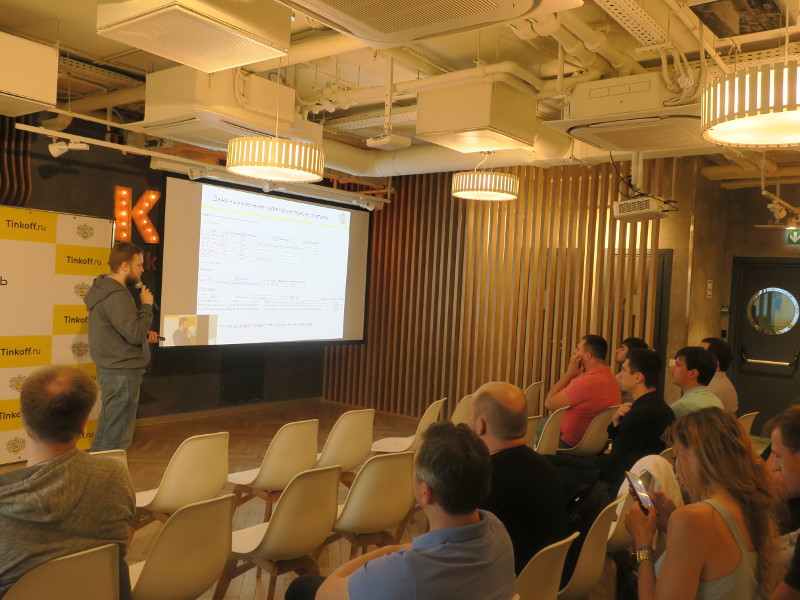
I was very pleased that there was a separate section dedicated to Vulnerability Management. Something similar happened only at ISACA meetup last year. But here we had an event for several thousand people!

The session was held in Fast Track format: 20 minutes for the presentation and questions. I was the first to speak. My report was called “Vulnerability Databases: sifting thousands tons of verbal ore”. Here is the video:

And here’s a link to the version with only Russian sound track.

Continue reading

Vulnerability Databases: Classification and Registry

Vulnerability Databases: Classification and Registry. What publicly available Vulnerability Databases do we have? Well, I can only say that there are a lot of them and they are pretty different. Here I make an attempt to classify them.

It’s quite an ungrateful task. No matter how hard you try, the final result will be rather inaccurate and incomplete. I am sure someone will be complaining. But this is how I see it. 😉 If you want to add or change something feel free to make a comment bellow or email me@avleonov.com.

The main classifier, which I came up with:

  • There are individual vulnerability databases in which one identifier means one vulnerability. They try to cover all existing vulnerabilities.
  • And others are security bulletins. They cover vulnerabilities in a particular product or products. And they usually based on on patches. One patch may cover multiple vulnerabilities.

I made this diagram with some Vulnerability Databases. Note that I wanted to stay focused, so there are no exploit DBs, CERTs, lists of vulnerabilities detected by some researchers (CISCO Talos, PT Research, etc.), Media and Bug Bounty sites.

Vulnerability Databases classification

For these databases the descriptions of vulnerabilities are publicly available on the site (in html interface or downloadable data feed), or exist in a form of paid Vulnerability Intelligence service (for example, Flexera).

On one side there are databases of individual vulnerabilities, the most important is National Vulnerability Database. There are also Chinese, Japanese bases that can be derived from NVD or not.

On the other side we have security bulletins, for example RedHat Security Advisories.

And in the middle we have a Vulnerability Databases, for which it is not critical whether they have duplicated vulnerability IDs or not.

Continue reading

Outpost24 Appsec Scale for Web Application Scanning

Outpost24 Appsec Scale for Web Application Scanning. Today I would like to write about yet another Outpost24 product – cloud Web Application Scanner Appsec Scale.

Outpost24 Appsec Scale scan results

It is available in the same interface as Outpost24 Outscan, that I reviewed earlier. Select APPSEC SCALE in the start menu and you can scan web applications:

Outpost24 Appsec Scale

Continue reading

Potential RCE in Nessus 7 and attacks on Vulnerability Scanners

Potential RCE in Nessus 7 and attacks on Vulnerability Scanners. A few days ago I saw an interesting youtube video (UPD. 14.05.18 Not available anymore). It is demonstrating the exploitation of the RCE vulnerability in Tenable Nessus Professional 7.0.3. Currently we have very few information about this vulnerability: only youtube video, which is mentioned only on ExploitWareLabs.

Nessus 7.0.3 RCE

While there is no exploit in public access, it’s hard to say how it actually works. It’s also not clear what versions of Nessus are affected. 7.0.3 is the latest version currently. Because of API disabling in Nessus 7 many users are still on 6.11.3. It is not clear whether they are affected or not.

This even can be a fake video. Therefore, I specifically write “potential RCE”. I will update this post when more data is available.

UPD. 14.05.18 In the comments to my post anonymous account Destring Portal posted a comment with the second video of Nessus RCE exploitation and it seems, that it was made by the same author. In this video, the author runs a remote shell on the Nessus host and executes various commands. I will add review of this second video bellow.

Nessus RCE second video

UPD. 10.05.18 Renaud Deraison, Co-Founder and CTO of Tenable, commented on my post at Linkedin:

Our research team studied the video and we have several reasons to doubt its authenticity. We’ve conducted a thorough audit over the last 48 hours based the few details that are in the video and didn’t find anything. We reached out the researcher and instead of replying he removed the video*. We’ll communicate if indeed there is a risk.

In general, you are right though – the security of scanners is of paramount importance. This actually is a topic I’ve been extremely worried about ever since the early days of Nessus. We have a number of security mechanisms in place (interpreted language for the detection scripts, ciphered temporary files, very limited runtime environment) which really aim to limit the risk of being exploited but also to mitigate the risk should the scanner be compromised. I actually did a few talks in the past about scanning “rogue hosts” and we continue to treat all input as hostile.

Again, we’re continuing to investigate the matter and will let you know if we find anything.

* currently video is still available on the same address; it could be probably blocked for some time. (UPD. 14.05.18 Not available anymore)

In any case, it’s a good reason to talk about vulnerabilities of such kind, how they appear and how to protect Vulnerability Scanners from attackers.

Continue reading