Category Archives: Productology

Martian Vulnerability Chronicles

Martian Vulnerability Chronicles. Well, there should have been an optimistic post about my vulnerability analysis & classification pet-project. Something like “blah-blah-blah the situation is pretty bad, tons of vulnerabilities and it’s not clear which of them can be used by attackers. BUT there is a way how to make it better using trivial automation“. And so on. It seems that it won’t be any time soon. ¯\_(ツ)_/¯

I’ve spent several weekends on making some code that takes vulnerability description and other related formalized data to “separate the wheat from the chaff”. And what I get doesn’t look like some universal solution at all.

Pretty frustrating, but still an interesting experience and great protection from being charmed by trendy and shiny “predictive prioritization”.
Martian Vulnerability Chronicles

Literally, when you start analyzing this vulnerability-related stuff every your assumption becomes wrong:

  • that vulnerability description is good enough to get an idea how the vulnerability can be exploited (let’s discuss it in this post);
  • that CVSS characterizes the vulnerability somehow;
  • that the links to related objects (read: exploits) can be actually used for prioritization.

Actually, there is no reliable data that can be analyzed, trash is everywhere and everybody lies 😉

Let’s start from the vulnerability description. Great example is the last week critical Linux kernel vulnerability CVE-2019-8912.

Continue reading

First look at Tenable.io Web Application Scanner (WAS)

First look at Tenable.io Web Application Scanner (WAS). When Tenable firstly announced Web Application Security scanner as a part of their new Tenable.io platform, it was quite intriguing. Certainly, they already had some WAS functionality before in Nessus. For example, path traversal check was pretty good. But this functionality was quite fragmental and barely manageable. How Tenable now write in their docs: “Nessus is incompatible with modern web applications that rely on Javascript and are built on HTML5”.

First look at Tenable.io Web Application Scanner (WAS)

That’s why Nessus couldn’t be called fully functioning Web Application Scanning solution. However, Tenable.io WAS is a completely new story. The full description is available on official site. Here I will make a very fast review and give some comments.

Continue reading

No left boundary for Vulnerability Detection

No left boundary for Vulnerability Detection. It’s another common problem in nearly all Vulnerability Management products. In the post “What’s wrong with patch-based Vulnerability Management checks?” I wrote about the issues in plugin descriptions, now let’s see what can go wrong with the detection logic.

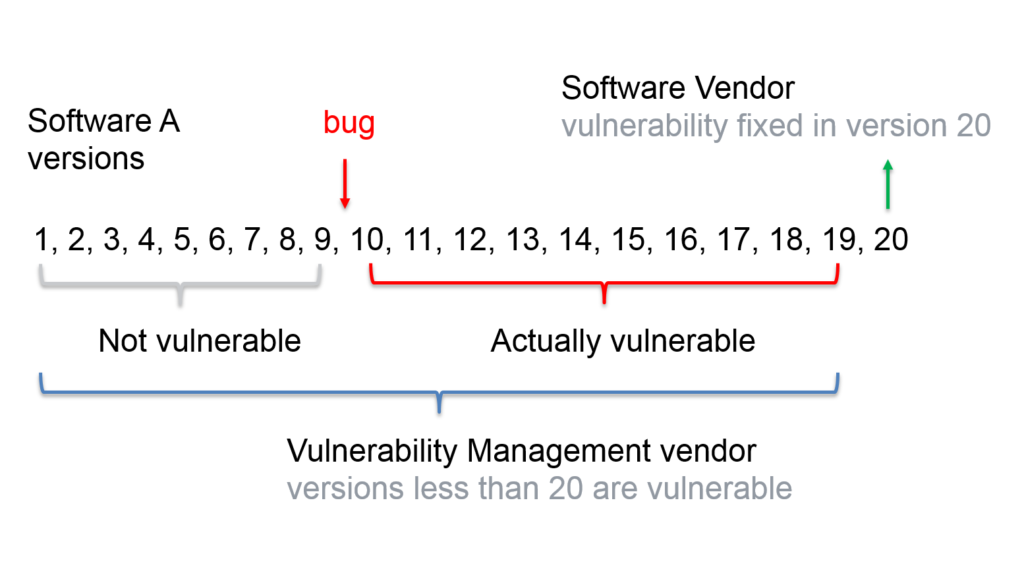
The problem is that Vulnerability Management vendors, in many cases, have no idea which versions of the Software were actually vulnerable.

OMG?! How this can be true? 🙂 Let’s take an example.

Each vulnerability at some points in time:

  • was implemented in the program code as a result of some mistake (intentional or not)
  • existed in some versions of the program
  • was detected and fixed

Read more about this in “Vulnerability Life Cycle and Vulnerability Disclosures“.

No left boundary in Vulnerability Detection

Let’s suppose that we have some Software A with released versions 1, 2 … 20.

Just before the release of version 10, some programmer made a mistake (bug) in the code and since the version 10 Software A has become critically vulnerable. Before the release of version 20, Software Vendor was informed about this vulnerability and some programmer fixed it in version 20. Then Software Vendor released a security bulletin: “Critical vulnerabilities in the Software A. You are not vulnerable if you have installed the latest version 20.”

And what does Vulnerability Management vendor? This vendor only sees this security bulletin. It is logical for him to decide that all versions of Software A starting from 1 are vulnerable. So, it will mark installed versions 1 … 9 of the Software A as vulnerable, even so actually they are NOT.

Continue reading

Retrieving data from Splunk Dashboard Panels via API

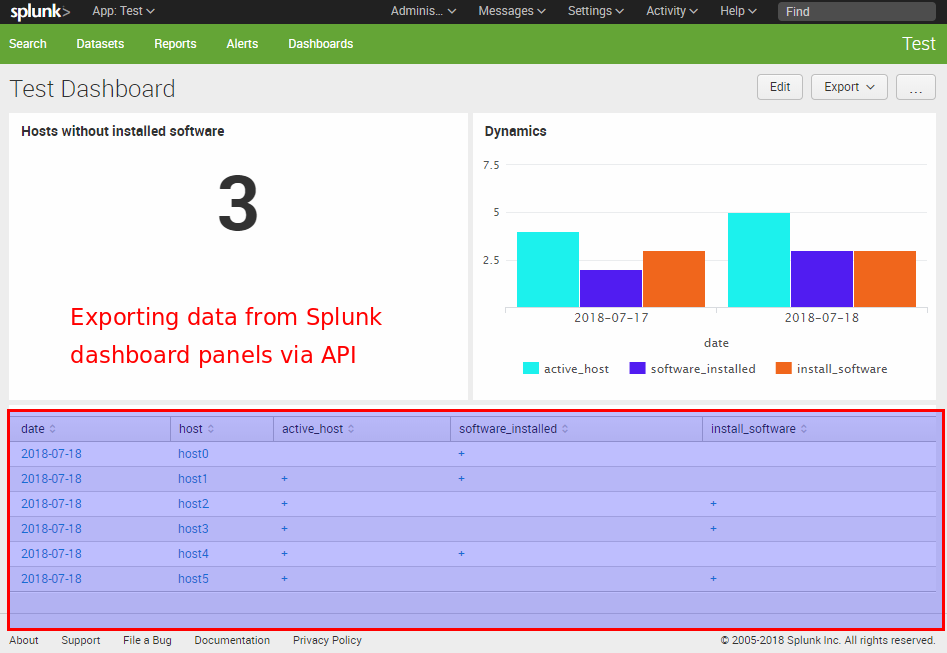
Retrieving data from Splunk Dashboard Panels via API. Fist of all, why might someone want to get data from the panels of a dashboard in Splunk? Why it might be useful? Well, if the script can process everything that human analyst sees on a Splunk dashboard, all the automation comes very natural. You just figure out what routine operations the analyst usually does using the dashboard and repeat his actions in the script as is. It may be the anomaly detection, remediation task creation, reaction on various events, whatever. It really opens endless possibilities without alerts, reports and all this stuff. I’m very excited about this. 🙂

Exporting data from Splunk dashboard

Let’s say we have a Splunk dashboard and want to get data from the table panel using a python script. The problem is that the content of the table that we see is not actually stored anywhere. In fact it is the results of some search query, from the XML representation of the dashboard, executed by Splunk web GUI. To get this data we should execute the same search request.

That’s why we should:

  1. Get XML code of the dashboard
  2. Get the search query for each panel
  3. Process searches based on other searches and get complete search query for each panel
  4. Launch the search request and get the results

First of all, we need to create a special account that will be used for getting data from Splunk. In Web GUI “Access controls -> Users”.

Continue reading

Open Positioner: my new project for tracking IT and security jobs

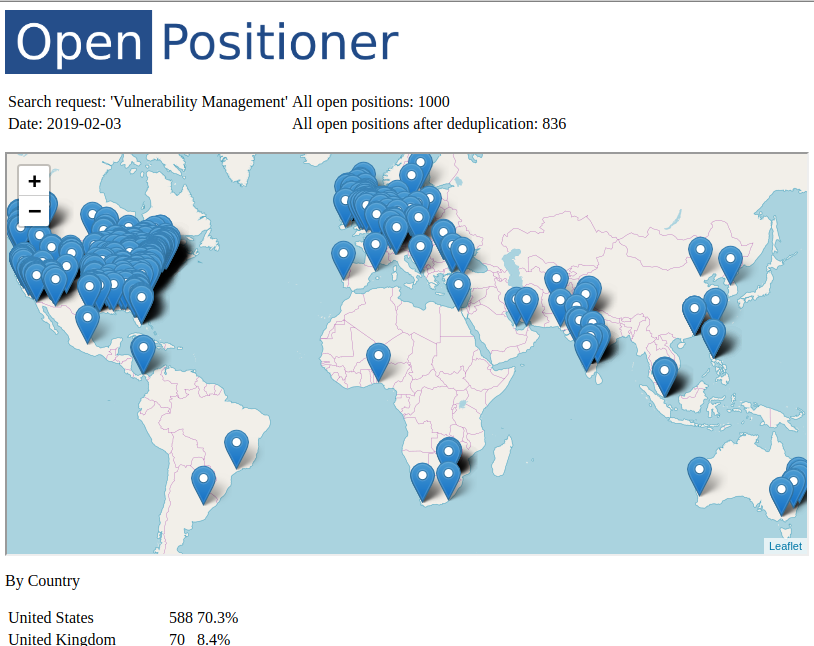
Open Positioner: my new project for tracking IT and security jobs. The idea of my new project is to retrieve the data from job-searching websites and provide better filtering, searching and visualization.

I think for the most people who read this, searching for a job in Internet is a pretty common activity. Even if you are not going to change job right now, it might be quite interesting to know what skills are currently the most valuable for your specialization and what is going on on the Global labor market.

Continue reading

Vulnerability Life Cycle and Vulnerability Disclosures

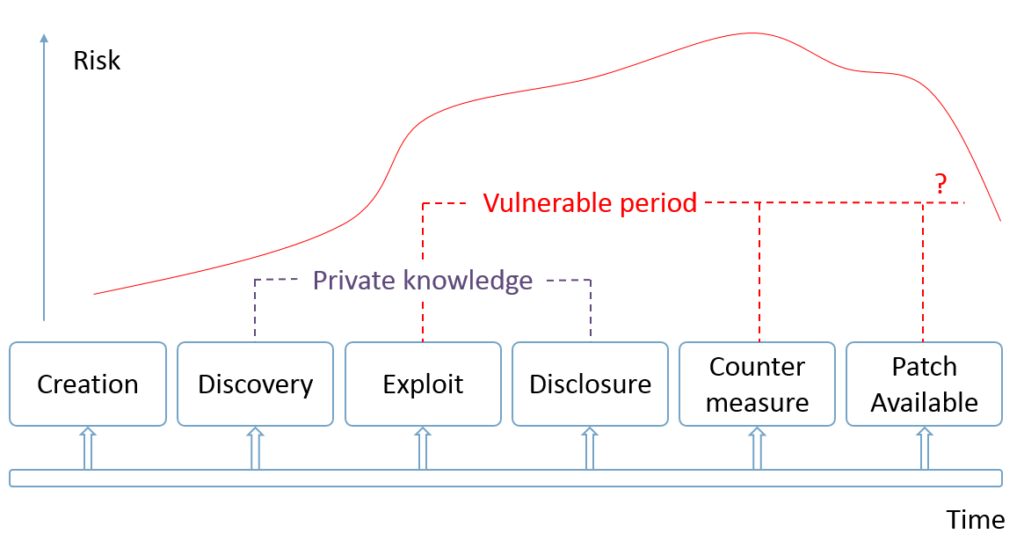
Vulnerability Life Cycle and Vulnerability Disclosures. Vulnerability Life Cycle diagram shows possible states of the vulnerability. In a previous post I suggested to treat vulnerabilities as bugs. Every known vulnerability, as same as every bug, was implemented by some software developer at some moment of time and was fixed at some moment of time later. What happens between this two events?

Vulnerability life-cycle

Right after the vulnerability was implemented in the code by some developer (creation) nobody knows about it. Well, of course, if it was done unintentionally. By the way, making backdoors look like an ordinary vulnerabilities it’s a smart way to do such things. 😉 But let’s say it WAS done unintentionally.

Time passed and some researcher found (discovery) this vulnerability and described it somehow. What’s next? It depends on who was that researcher.

Continue reading

What is a vulnerability and what is not?

What is a vulnerability and what is not? It looks like a pretty simple question. I used it to started my MIPT lecture. But actually the answer is not so obvious. There are lots of formal definitions of a vulnerability. For example in NIST Glossary there are 17 different definitions. The most popular one (used in 13 documents) is:

Vulnerability is a weakness in an information system, system security procedures, internal controls, or implementation that could be exploited or triggered by a threat source
NISTIR 7435 The Common Vulnerability Scoring System (CVSS) and Its Applicability to Federal Agency Systems

But I prefer this one, it’s from the glossary as well:

Vulnerability is a bug, flaw, weakness, or exposure of an application, system, device, or service that could lead to a failure of confidentiality, integrity, or availability.

I think the best way to talk about vulnerabilities is to treat them as bugs and errors. Because people deal with such entities more often in a form of software freezes and BSODs. 😉

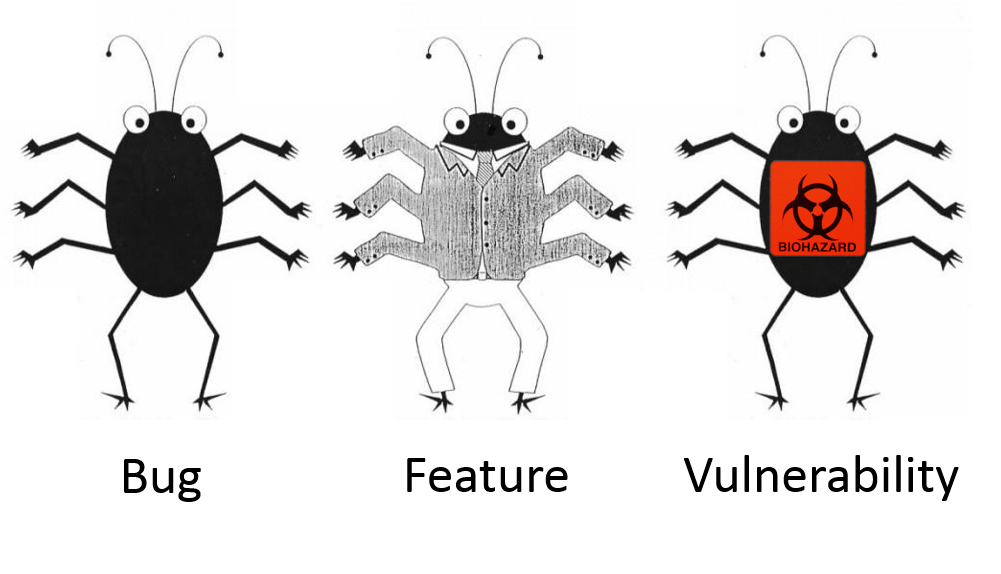
You probably heard a joke, that a bug can be presented as a feature if it is well-documented and the software developers don’t want to fix it.

Bug, feature and vulnerability

Vulnerability is also a specific bug that can lead to some security issues. Or at least it is declared.

Continue reading