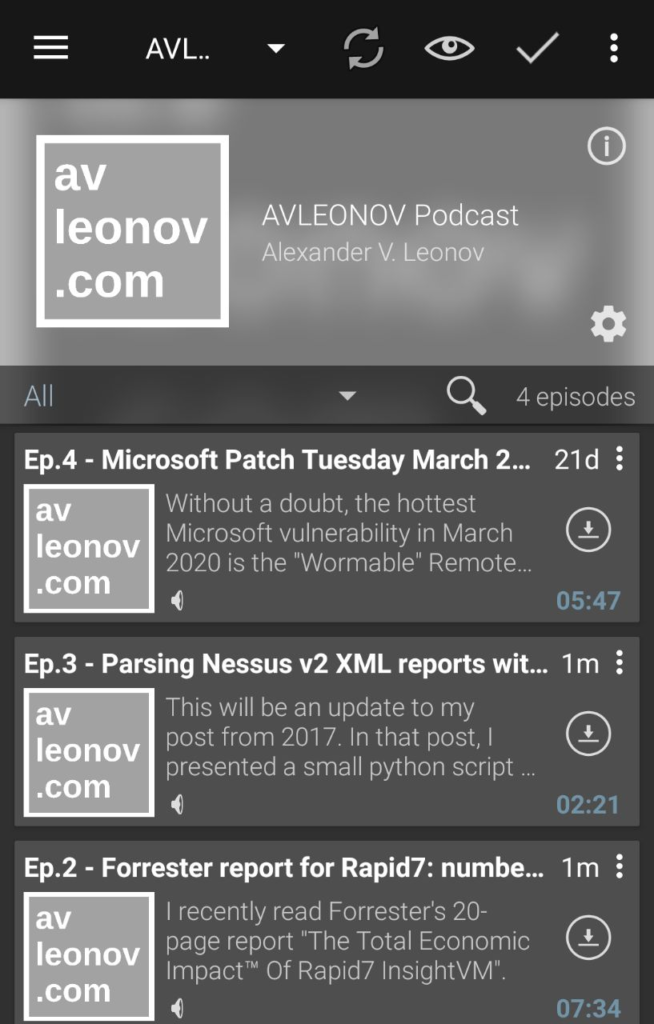
AVLEONOV Podcast. I finally launched my own podcast! These are the audio tracks from my videos with some minimal changes, but it may be more convenient for someone to follow me this way. You can try to find my podcast in your podcast player by searching for “avleonov” (well, at least it works in Podcast Addict) or add it with the direct URL https://avleonov.com/podcast/feed.xml.
And here is what I recently learned about podcasting.
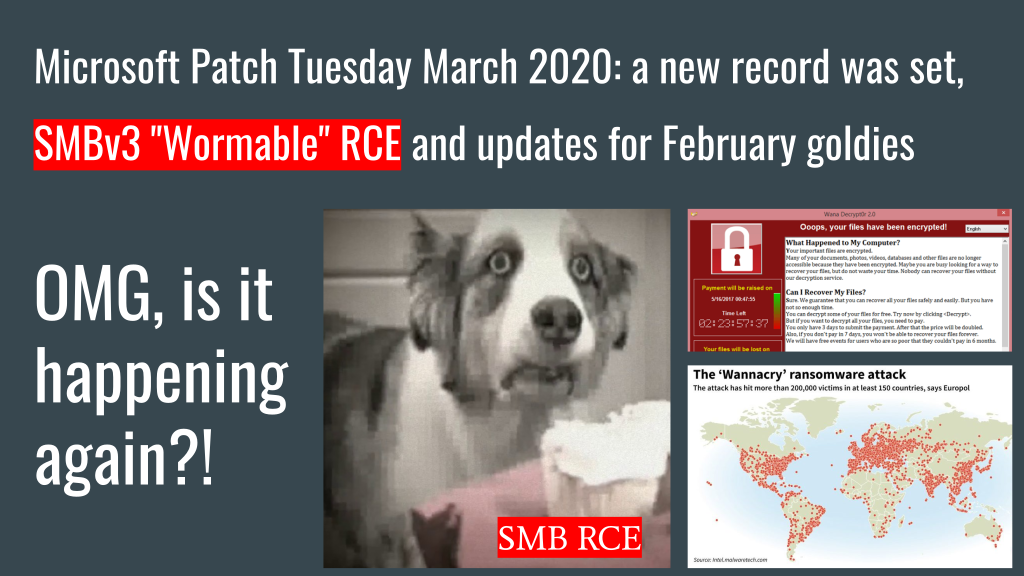
Microsoft Patch Tuesday March 2020: a new record was set, SMBv3 “Wormable” RCE and updates for February goldies. Without a doubt, the hottest Microsoft vulnerability in March 2020 is the “Wormable” Remote Code Execution in SMB v3 CVE-2020-0796. The most commonly used names for this vulnerability are EternalDarkness, SMBGhost and CoronaBlue.
There was a strange story of how it was disclosed. It seems like Microsoft accidentally mentioned it in their blog. Than they somehow found out that the patch for this vulnerability will not be released in the March Patch Tuesday. So, they removed the reference to this vulnerability from the blogpost as quickly as they could.
But some security experts have seen it. And, of course, after EternalBlue and massive cryptolocker attacks in 2017, each RCE in SMB means “OMG, this is happening again, we need to do something really fast!” So, Microsoft just had to publish an advisory for this vulnerability with the workaround ADV200005 and to release an urgent patch KB4551762.
Parsing Nessus v2 XML reports with python.Upd. This is an updated post from 2017. The original script worked pretty well for me until the most recent moment when I needed to get compliance data from Nessus scan reports, and it failed. So I researched how this information is stored in a file, changed my script a bit, and now I want to share it with you.
Previous post about Nessus v2 reports I was writing mainly about the format itself. Now let’s see how you can parse them with Python.
Please don’t work with XML documents the same way you process text files. I adore bash scripting and awk, but that’s an awful idea to use it for XML parsing. In Python you can do it much easier and the script will work much faster. I will use lxml library for this.
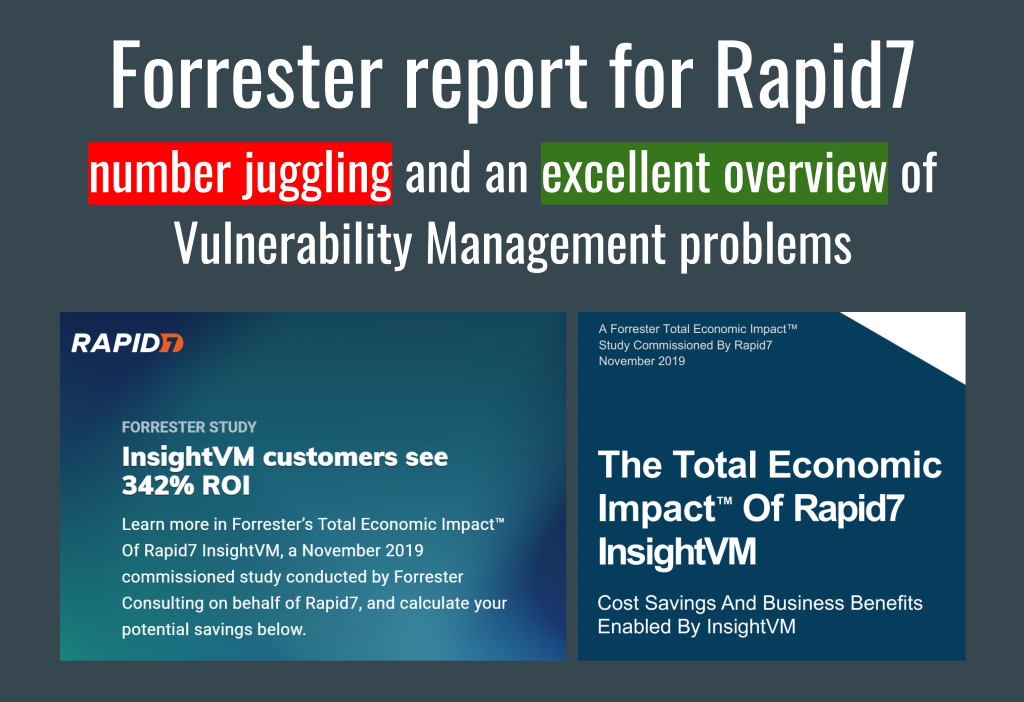
Forrester report for Rapid7: number juggling and an excellent overview of Vulnerability Management problems. I recently read Forrester’s 20-page report “The Total Economic Impact™ Of Rapid7 InsightVM“. It is about the Cost Savings And Business Benefits that Vulnerability Management solution can bring to the organizations.
In short, I didn’t like everything related to money. It seems like juggling with numbers, useless and boring. But I really liked the quotes from customers who criticized existing Vulnerability Management solutions, especially the low quality of the remediation data. These are the real pain points of Vulnerability Management process.
How did Forrester count money?
Forrester interviewed five existing customers of Rapid7 and created a “composite organization”.
This “composite organization” has 12,000 IT assets and spends $223,374 per year on Rapid7 InsightVM ($670,123 for 3 years) including integrations and trainings costs. That means $18 per host. Well, quite a lot, especially when compared to unlimited Nessus Professional for just $2,390 per year. A wonderland of Enterprise Vulnerability Management. 🙂
Microsoft Patch Tuesday February 2020. IMHO, these are the two most interesting vulnerabilities in a recent Microsoft Patch Tuesday February 2020:
Mysterious Windows RCE CVE-2020-0662. “To exploit the vulnerability, an attacker who has a domain user account could create a specially crafted request, causing Windows to execute arbitrary code with elevated permissions.” Without needing to directly log in to the affected device!
Microsoft Exchange server seizure CVE-2020-0688. By sending a malicious email message the attacker can run commands on a vulnerable Exchange server as the system user (and monitor email communications). “the attacker could completely take control of an Exchange server through a single e-mail”.
There were also RCEs in Remote Desktop (Client and Service), a third attempt to fix RCEs in Internet Explorer, Elevation of Privilege, etc. But all this stuff we see in almost every Patch Tuesday and without fully functional exploits it’s not really interesting. ?
Read the full reviews in Tenable and Zero Day Initiative blogs.
Crypto AG scandal. The article in The Washington Post is really huge, but even a brief glance is enough to see how absolutely amazing this Crypto scandal is. A great example of chutzpah. ?
“Crypto AG was a Swiss company specialising in communications and information security. It was jointly owned by the American CIA and West German intelligence agency BND from 1970 until about 2008. … The company was a long-established manufacturer of [backdoored] encryption machines and a wide variety of cipher devices.”
“You think you do good work and you make something secure,” said Juerg Spoerndli, an electrical engineer who spent 16 years at Crypto. “And then you realize that you cheated these clients.” ¯\_(ツ)_/¯
Now the causes of hysteria around Kaspersky and Huawei become more clear. It is natural to suspect others in the things you practiced yourself.
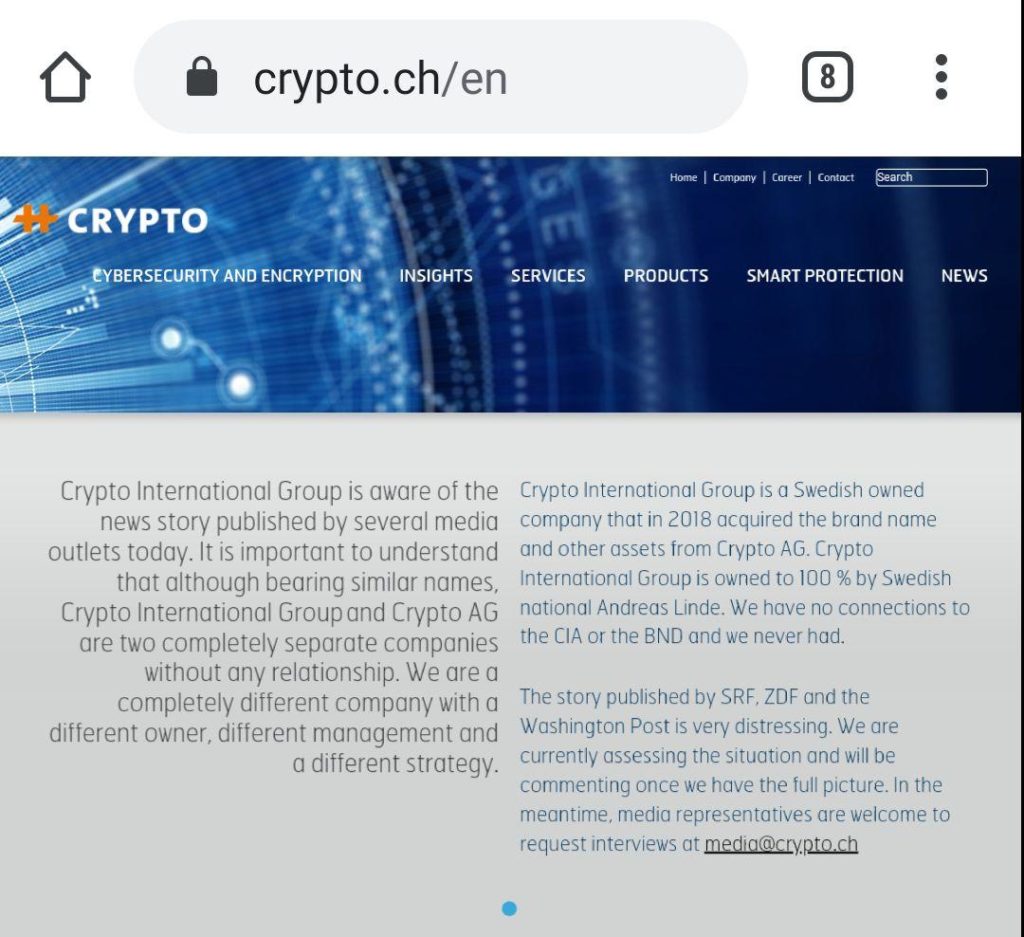
And note the disclaimer on the Crypto’s website. A completely different company, with a different strategy. ☝️? Okaaay…
In the most cases Vulnerability Management is not about Vulnerabilities, but about Management. Just filtering the most critical vulnerabilities is not enough.
Practical Cases:
“Oh, yes, we know ourselves that that everything is bad!” – CVE-2013−4786 IPMI password hash disclosure on > 500 servers. Customer just accepted the risks, Acribia proposed an effective workaround (unbrutable user IDs and passwords). It’s often hard to figure out right remediation measures and implement them. Someone should do it!
“We can download OpenVAS without your help!” – CVE-2018-0171 Cisco Smart Install RCE on 350 hosts. Vulnerability detection rules of several Vulnerability Scanners were not good enough to detect this vulnerability. Do not rely on scanners, know how they work and their limitations.
“If the attackers wanted to hack us, they would have already done it!” – CVE-2017-0144 (MS17-010) Windows SMB RCE on domain controller and several other critical servers. Vulnerability was detected in infrastructure several times, the remediation was agreed with the management, but it was ignored by responsible IT guys. As a result, during the next successful WannaCry-like malware attack the servers, including the DC were destroyed. Vulnerability Management is about the willingness to patch anything, very quickly, as often as required. Otherwise, it makes no sense.
This is my personal blog. The opinions expressed here are my own and not of my employer. All product names, logos, and brands are property of their respective owners. All company, product and service names used here for identification purposes only. Use of these names, logos, and brands does not imply endorsement. You can freely use materials of this site, but it would be nice if you place a link on https://avleonov.com and send message about it at me@avleonov.com or contact me any other way.