Microsoft security solutions against ransomware and APT

Microsoft security solutions against ransomware and APT. Last Tuesday I was invited to Microsoft business breakfast “Effective protection against targeted and multilevel attacks”. Here I would like to share some of my thoughts on this. Need to mention that the food was delicious and the restaurant of Russian Geographical Society is a very lovely place. 😉 Thanks, Microsoft!

Microsoft as a security vendor? O RLY?

Microsoft products are not actually my topic. To tell you the truth, personally I’d better live in a world without this massive Windows hegemony in desktop operating systems. I use Linux mostly. And even when I have to work in a Windows environment, it’s much easier for me to do all the work in some Linux virtual machine.

But in the real life almost every office network is build on Microsoft solutions. And if you are doing Vulnerability Management in any organization, you should deal with them too. The good news is that many security features are available out of the box in the MS products that you have already purchased. It’s just important to know about these features and use them right.

One more thing, why it’s interesting to learn more about Microsoft information security products. Microsoft developers, obviously, have direct access to Windows source code and know better how their own OS works. Many things are much easier for them to implement than for other security vendors. So, good chances that you will see in Microsoft products some interesting features, that other vendors don’t have (yet).

Drowning in data

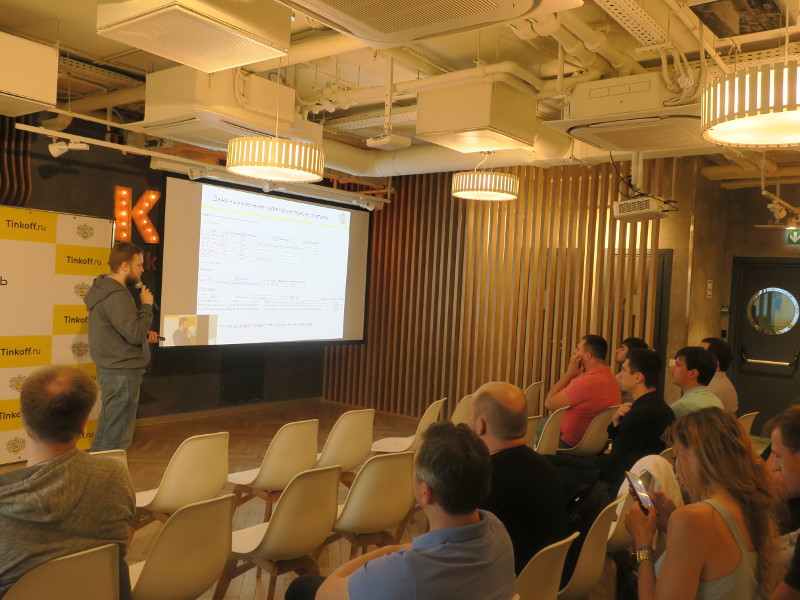
The event began with an opening speech by Andrey Ivanov from Microsoft Russia.

Andrey Ivanov, "Effective protection against targeted and multilevel attacks"

I liked his thesis that “we are drowning in security data”:

  • Threat Intelligence from different sources that need to be implemented in your infrastructure and somehow validated. A good place to mention Vulners.com vulnerability feeds 😉
  • Threat Detection using logs, scanners, various protection tools, etc.
  • The overall number of SIEM inputs is growing faster than our resources. New IT system = new problems of SIEM configuration.

So, it would be nice if somebody, for example OS vendor, will provide all this as a service, right? 😉

Detect the undetectable

Then there was the keynote by Zbigniew Kukowski – one of the leading Microsoft information security experts.

Zbigniew Kukowski, "Effective protection against targeted and multilevel attacks"

Why is it necessary?

Here is what I would like to note from his report. First of all, great arguments why it is necessary. Ok, this is marketing. But the ability to explain (to sell) necessity of information security is important skill for any information security specialist now. It does not matter if you are working in a  security vendor, integrator or customer.

Zbigniew mentioned an interesting case: some Polish company, that lost $ 4.3 million in recent the Petya attack in 4 days. The cost of Information Security measures will be much less than the potential losses of business.

Another argument – attacks are not the entertainment for some individuals any more. Now it’s a well-organized criminal business. Dozens of people are working on popular malware tools, like Petya. That’s why ransomware tools are so popular now – cyber-criminals just want to return their development costs.

Continue reading

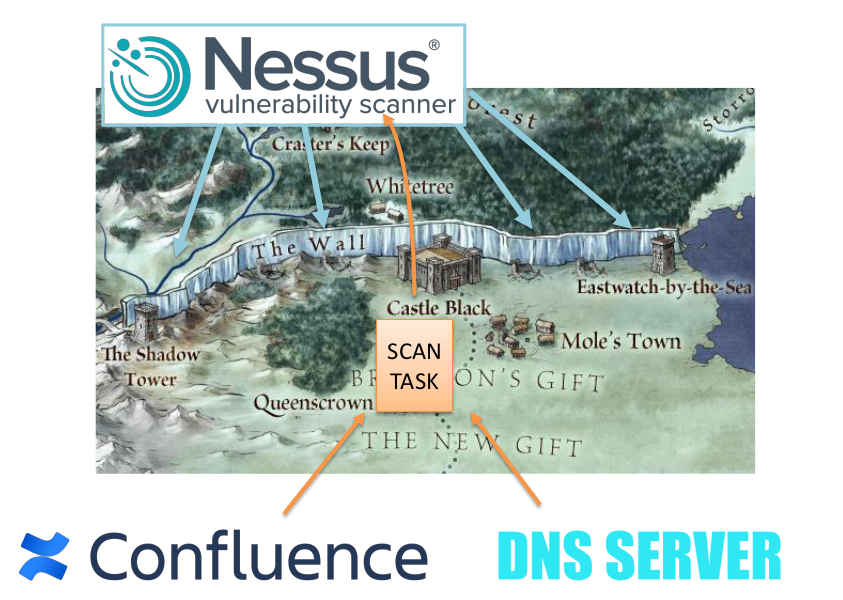
New Nessus 7 Professional and the end of cost-effective Vulnerability Management (as we knew it)

New Nessus 7 Professional and the end of cost-effective Vulnerability Management (as we knew it). It’s an epic and really sad news. 🙁

Nessus 7 release

When people asked me about the cost-effective solution for Vulnerability Management I usually answered: “Nessus Professional with some additional automation through Nessus API”.

With just a couple of Nessus Professional scanning nodes it was possible to scan all the infrastructure and network perimeter (see “Vulnerability Management for Network Perimeter“). Price for each node was fixed and reasonable. And you could make your any reports from the raw scan data, as you like it.

Nessus Pro was still were best choice even when Tenable:

  • Cut off master/slave functionality in Nessus and created “Nessus Manager”.
  • Changed API completely during the update from 5 to 6 version.
  • Gradually increased the price from $1,5k to $2,7k per scanning node per year.

But unfortunately it’s not anymore. End of an era.

And what is even more sad is that Tenable does not mention disabling the API and multi-user function in the main Nessus 7 marketing, as it never was, as if it’s not very important. Just look at “Announcing Nessus Professional v7” – not a word  about “API” or users. Only in additional link:

get more information Nessus7

Only there, in the text (not a video) there is an information about removed features.

The nice little things like “Easily transferable license” and “Emailed scan reports and custom report name / logo” do not make it any better.

So, what next?

Continue reading

Vulners.com vulnerability detection plugins for Burp Suite and Google Chrome

Vulners.com vulnerability detection plugins for Burp Suite and Google Chrome. What is the main idea of version-based vulnerability detection, especially for Web Applications? With an access to the HTTP response (html, headers, scripts, etc.), you can get the name and version of some standards web application (e.g. CMS, CRM, wiki, task tracker) or names and versions of software components that this web application uses: web server, libraries, frameworks, and so on.

Vulners plugins for Burp Suite Professional and Google Chrome

Next step is to get all known vulnerabilities and exploits  for this software. This is the typical task for Vulners.com – largest database and security content searching system (see “Vulners – Google for hacker“).

So, guys from Vulners Team made a set of useful regular expressions for detecting software names and versions – https://vulners.com/api/v3/burp/rules.  You can use this rules in your own scripts and if you want something that will work out of the box, you can try existing plugins for Burp Suite and Google Chrome.

In this post I would like to show how the detection rules work, present new Vulners Burp API and vulnerability detection plugins for Burp Suite and Google Chrome.

Continue reading

Processing .docx and .xlsx files with Python

Processing .docx and .xlsx files with Python. MS Office documents are probably one of the most inconvenient and poorly formalized data sources. It’s much better to keep all the data in specialized databases or at least in wiki. But in real life, MS Office documents, especially Excel and Word, are in active use in nearly every organization. Simply because it is a flexible and easy tool that anyone can use. That’s why it’s important to know an automated ways for processing such files.

Processing MS office files with python

You can easily edit .docx files without any libraries. Technically it’s just a zip archive. So, you can unzip it, make a replacement in the document.xml file and make a zip it again. It’s much better than dealing with old binary .doc files. But there are even more elegant ways.

Let’s says, we need to read data from .xlsx document and generate .docx files based on some existing template. To work with .xlsx files I will use openpyxl python library.

Continue reading

Atlassian Jira, Python and automated labeling

Atlassian Jira, Python and automated labeling. I have already wrote about Atlassian Jira automation in “Automated task processing with JIRA API“. But all examples there were with using of curl. So, I decided to make one more post about Jira API. This time with python examples and about labeling issues (nice wordplay, right? 😉 ).

Jira Labels and Python

You can use labeles for organizing issues on Jira Scrum and Kanban Boards, Jira Dashboards or just for advanced searching (e.g. labels = "LabelName")

Let’s start from the basics.

How to search Jira issues from your own python scripts?

It’s easy. Send a post request to /rest/api/2/search/ with some JQL expression. Jira server will return first 50 matching issues. If you need more, set a startAt parameter and repeat post requests while the number of issues you requested is less than total number of founded issues (parameter in response).

Continue reading

Vulnerability Management for Network Perimeter

Vulnerability Management for Network Perimeter. Network Perimeter is like a door to your organization. It is accessible to everyone and vulnerability exploitation does not require any human interactions, unlike, for example, phishing attacks. Potential attacker can automate most of his actions searching for an easy target. It’s important not to be such of target. 😉

Vulnerability Management for Network Perimeter

What does it mean to control the network perimeter? Well, practically this process consist of two main parts:

  • Assessing network hosts that are facing Internet using some Network Scanner (Nessus, OpenVAS, Qualys, MaxPatrol. F-Secure Radar, etc.)
  • Assessing application servers, e.g. Web Servers, on these hosts using some special tools, e.g. Web Application Scanners (Acunetix, Burp Suite, Qualys WAS, Tenable.io WAS, High-Tech Bridge ImmuniWeb, etc.)

Active scanning is a good method of perimeter assessment. Dynamics of the assets is relatively low, comparing with the Office Network. Perimeter hosts usually stays active all the time, including the time when you are going to scan scanning them. 😉

Most of the dangerous vulnerabilities can be detected without authorization: problems with encryption (OpenSSL Heartbleed, Poodle, etc.). RCE and DoS of web servers and frameworks (Apache Struts and Equifax case)

The best results can be achieved with scanners deployed outside of your network. Thus, you will see your Network Perimeter the same way a potential attacker sees it. But certainly, you will be in a better position:

  • You can ask your IT administrators to add your network and WAS scanners in white list, so they will not be banned.
  • You can check and correlate scan results of remote scanner with (authenticated?) scan results produced by the scanner deployed in your organization’s network and thus filtering false positives.

What about the targets for scanning? How should you get them?

Continue reading

SOC Forum 2017: How I Learned to Stop Worrying and Love Massive Malware Attacks

SOC Forum 2017: How I Learned to Stop Worrying and Love Massive Malware Attacks. Today I spoke at SOC Forum 2017 in Moscow. It was a great large-scale event about Security Operation Centers. 2,700 people registered. Lots of people in suits 😉 . And lots of my good fellows.

SOC Forum 2017 Alexander Leonov

The event was held in Radisson Royal Congress Park. There were three large halls for presentations and a huge space for exhibition/networking.

I would like to mention а stand of Positive Technologies. They have shown today their new PT Security Intelligence Portal with dashboards for executives and joint service with Solar Security for providing GosSOPKA functionality. Some stands were dedicated to Russian government Information Security initiatives: GosSOPKA, BDU FSTEC vulnerability database and FinCERT of the Central Bank of Russia.

During my presentation, I was talking how massive malware (ransomware) attacks can be useful for an organization. Quite a provocative topic, right? 😉 I meant it in the sense that all the hype around malware attack can help Information Security team to do the the following things:

  • Establish useful policies, like mandatory Windows host reboot after patch installation
  • Ban some convenient, but dangerous functionality, like smb file sharing between workstations
  • Implement useful processes, like system hardening (e.g. against mimikatz) or continuous processing of CERT (FinCERT) bulletins

Continue reading