
Author Archives: Alexander Leonov

About Alexander Leonov

Hi! My name is Alexander and I am a Vulnerability Management specialist. You can read more about me here. Currently, the best way to follow me is my Telegram channel @avleonovcom. I update it more often than this site. If you haven't used Telegram yet, give it a try. It's great. You can discuss my posts or ask questions at @avleonovchat. А всех русскоязычных я приглашаю в ещё один телеграмм канал @avleonovrus, первым делом теперь пишу туда.

Retrieving IT Asset lists from NetBox via API

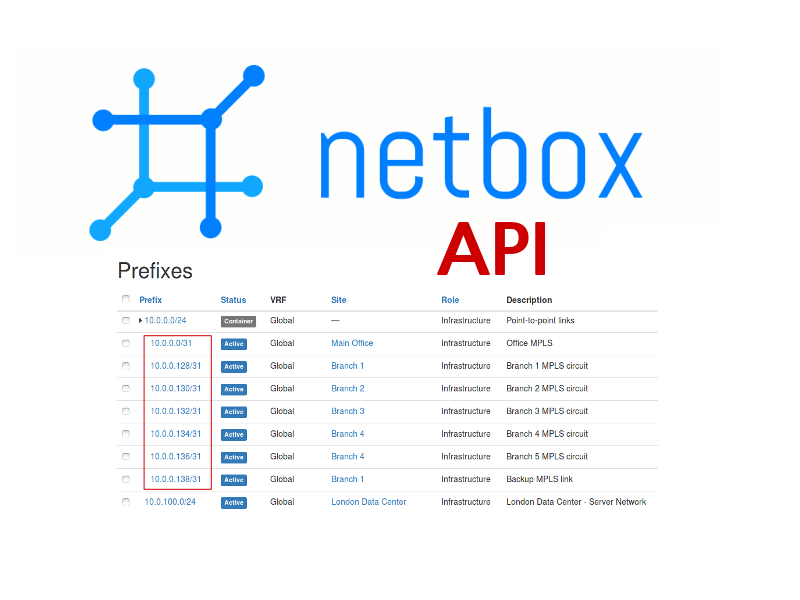
Retrieving IT Asset lists from NetBox via API. A little bit more about IT Asset Inventory of Internal Network, that your IT team can provide. 😉

I have recently worked with NetBox – an open source IP address management (IPAM) and data center infrastructure management (DCIM) solution developed by well-known cloud hosting provider DigitalOcean.

NetBox api

It’s not really about security, not even a CMDB. But, security team still might be interested in NetBox, because it makes possible to track the hosts in some critical subnet without active scanning, providing great visibility of assets. Here I will show a small example of NetBox API usage.

Continue reading

Assessing Linux Security Configurations with SCAP Workbench

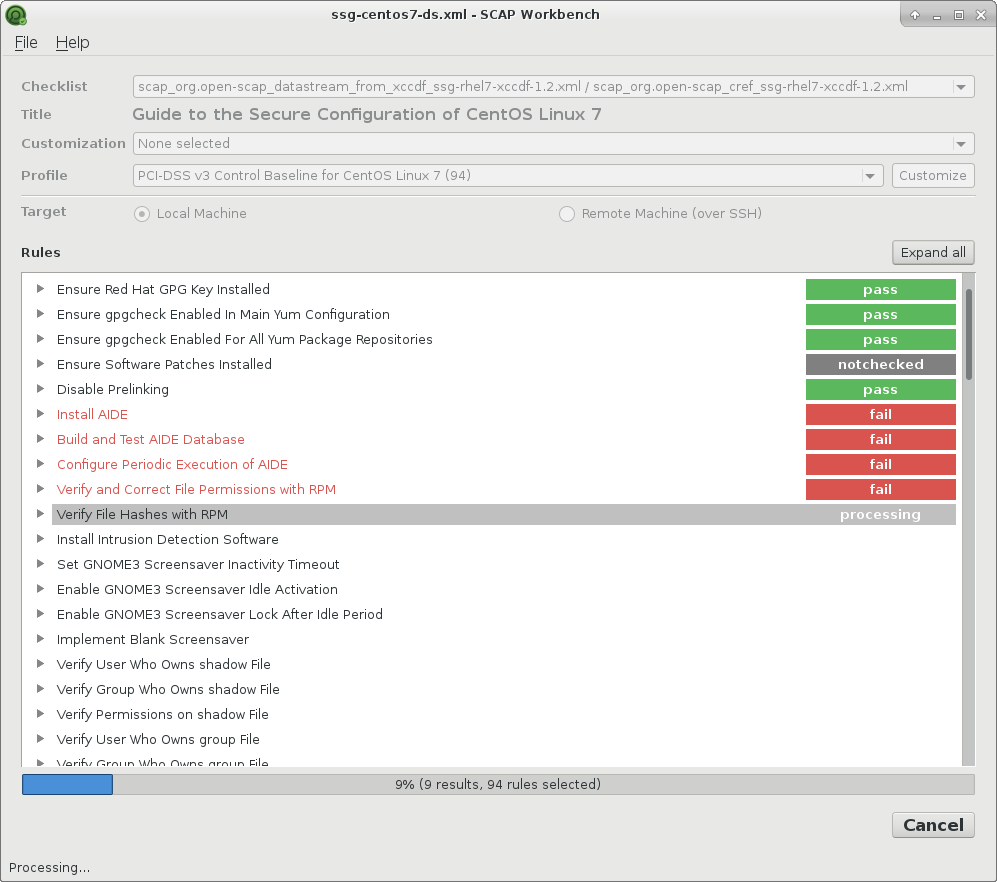
Assessing Linux Security Configurations with SCAP Workbench. Recently I had a chance to work with OpenSCAP. It’s a set of free and open-source tools for Linux Configuration Assessment and  a collection security content in SCAP (Security Content Automation Protocol) format.

In this post I will write about SCAP Workbench. It is a GUI application that can check the configuration of your local Linux host (or the remote host via ssh; note that agent installation is required), and show the settings that are not comply with some security standard, for example PCI DSS or DISA STIG.

SCAP Workbench PCI DSS CentOS7 localhost

Moreover, you can generate the script for automated remediation. You can also create your own scan profiles based on existing  SCAP content.

Continue reading

CyberThursday: Asset Inventory, IT-transformation in Cisco, Pentest vs. RedTeam

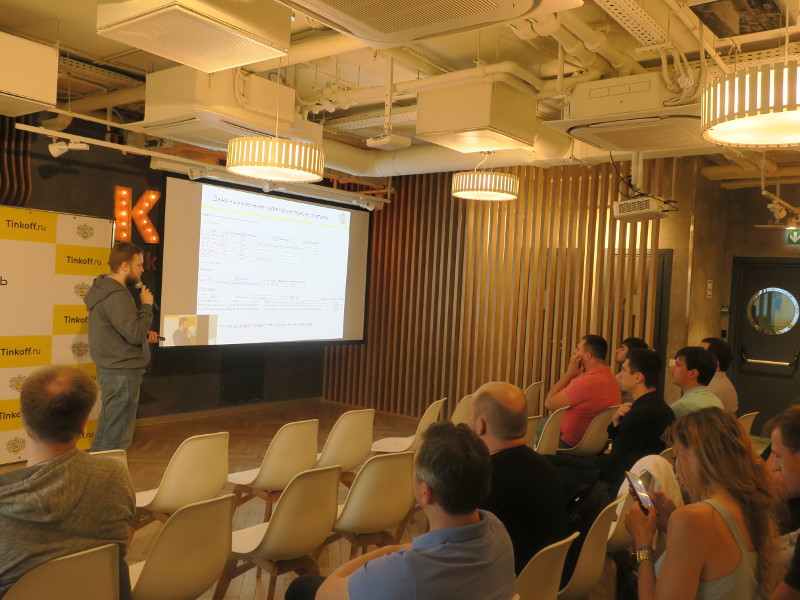
CyberThursday: Asset Inventory, IT-transformation in Cisco, Pentest vs. RedTeam. Two weeks ago I was speaking at a very interesting information security event – CyberThursday. This is a meeting of a closed Information Security practitioners group. The group is about 70 people, mainly from the financial organizations, telecoms and security vendors.

CyberThursday 2018 Asset Inventory

These meetings have a rather unique atmosphere. Almost everyone knows each other. The event has no permanent place. It constantly moves between the offices of large Russian companies. The hoster, usually a CISO, can bring his IT and InfoSec colleagues. For others, only “bring a friend” format is available. This helps keep the event focussed and very informal. Participants propose and approve the topics by voting in the chat group. There is no place for marketing, all topics are practical and relevant.

Continue reading

Asset Inventory for Internal Network: problems with Active Scanning and advantages of Splunk

Asset Inventory for Internal Network: problems with Active Scanning and advantages of Splunk. In the previous post, I was writing about Asset Inventory and Vulnerability Scanning on the Network Perimeter. Now it’s time to write about the Internal Network.

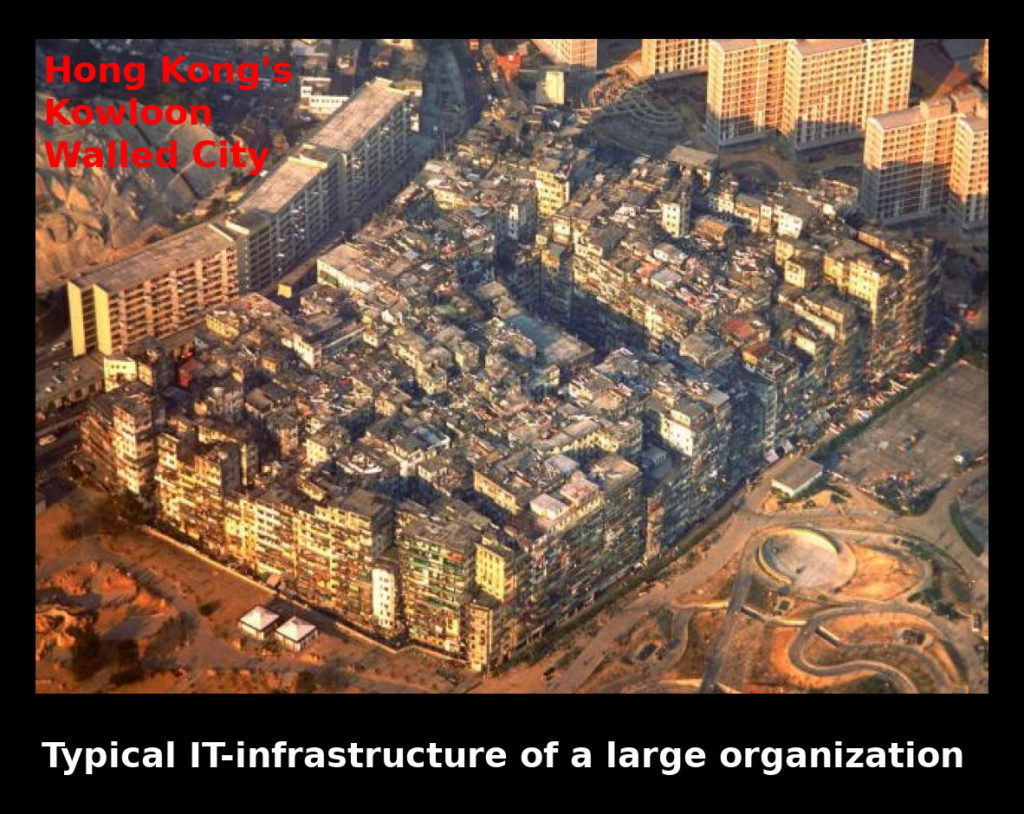
Typical IT-infrastructure of a large organization

I see a typical IT-infrastructure of a large organization as monstrous favela, like Kowloon Walled City in Hong Kong. At the beginning it was probably wisely designed, but for years it  was highly effected by spontaneous development processes in various projects as well as multiple acquisitions. And now very few people in the organization really understand how it all works and who owns each peace.

There is a common belief that we can use Active Network Scanning for Asset Inventory in the organization. Currently, I’m not a big fan of this approach, and I will try to explain here the disadvantages of this method and mention some alternatives.

Continue reading

Asset Inventory for Network Perimeter: from Declarations to Active Scanning

Asset Inventory for Network Perimeter: from Declarations to Active Scanning. In the previous post, I shared some of my thoughts about the good Asset Inventory system. Of course, for me as a Security Specialist, it would be great if IT will provide such magical system. 🙂 But such an ideal situation is rarely possible. So now let’s see how to build an Asset Inventory system using the resources of Information Security team.

There are no special secrets. It’s necessary to get information about the assets from all available IT systems and then get the rest of the data using our own Assessment tools. I would like to start with hosts on Network Perimeter. The Network Perimeter targets are available at any time for hacker attacks, that’s why this part of the network is the most critical.

Asset Inventory for Network Perimeter

Network Perimeter is like the Wall in the Game of Thrones. The same white walkers are hiding behind the wall and our task is to find the breaches in the wall faster than potential intruders. “Night gathers, and now my watch begins”. (c)

Perimeter is changing constantly. And we should understand at any time what hosts are currently exposed in every office and every external hosting platform.

We can get information about external hosts using some Vulnerability Scanner located on external host in the Internet. I have already wrote about it briefly in  Vulnerability Management for Network Perimeter. Here I would like focus on how we can understand which hosts should be scanned and what useful information we can get from the raw scan results.

Continue reading

What I expect from IT Asset Inventory

What I expect from IT Asset Inventory. The main problem of vulnerability management, in my opinion, is that it is not always clear whether we know about ALL network hosts existing in our infrastructure or not. So, not the actual process of scanning and the detection of vulnerabilities, but the lack of knowledge what we should scan.

Knowing the total number of active hosts, this must be such a simple and basic thing. But for a large organization, this is not so trivial. To tell the truth, I do not know how to do IT Asset Inventory right. I’m not even sure who should be responsible this. There are so many different technological and organizational nuances. I will mention some of them below.

Who is responsible for inventorying IT assets?

But I can say with confidence that my basic requirement for IT Asset Inventory system will be the completeness of the scope, not the number of collected parameters. The very minimum is just to see that some network host existed and seemed active at some time.

Continue reading

Sending tables from Atlassian Confluence to Splunk

Sending tables from Atlassian Confluence to Splunk. Sometimes when we make automated analysis with Splunk, it might be necessary to use information that was entered or edited manually. For example, the classification of network hosts: do they belong to the PCI-DSS Scope or another group critical hosts or not.

Sending tables from Atlassian Confluence to Splunk

In this case, Confluence can be quite a convenient tool for maintaining such a registry. Page with a table can be created very quickly and multiple employees can immediately start working with it.

Let’s see how to convert such table, export it to Splunk and use it with other data.

Continue reading