Microsoft Patch Tuesday September 2020: Zerologon and other exploits, RCEs in SharePoint and Exchange. I would like to start this post by talking about Microsoft vulnerabilities, which recently turned out to be much more serious than it seemed at first glance.
Older Vulnerabilities with exploits
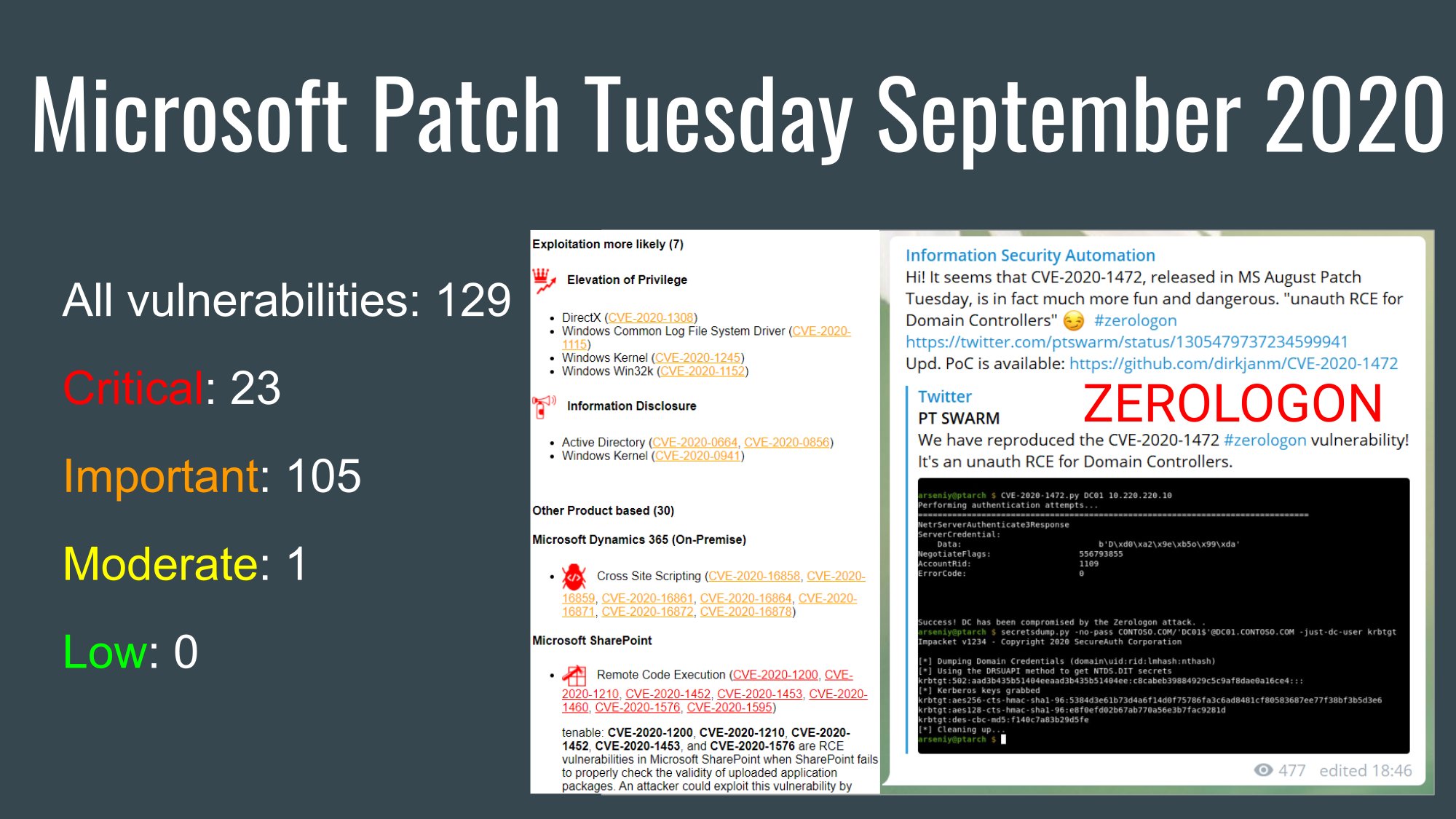
“Zerologon” Netlogon RCE (CVE-2020-1472)
One of them is, of course, the Netlogon vulnerability from the August 2020 Patch Tuesday. It’s called “Zerologon”. I would not say that Vulnerability Management vendors completely ignored it. But none of them (well, maybe only ZDI) emphasized in their reports that this vulnerability would be a real disaster.
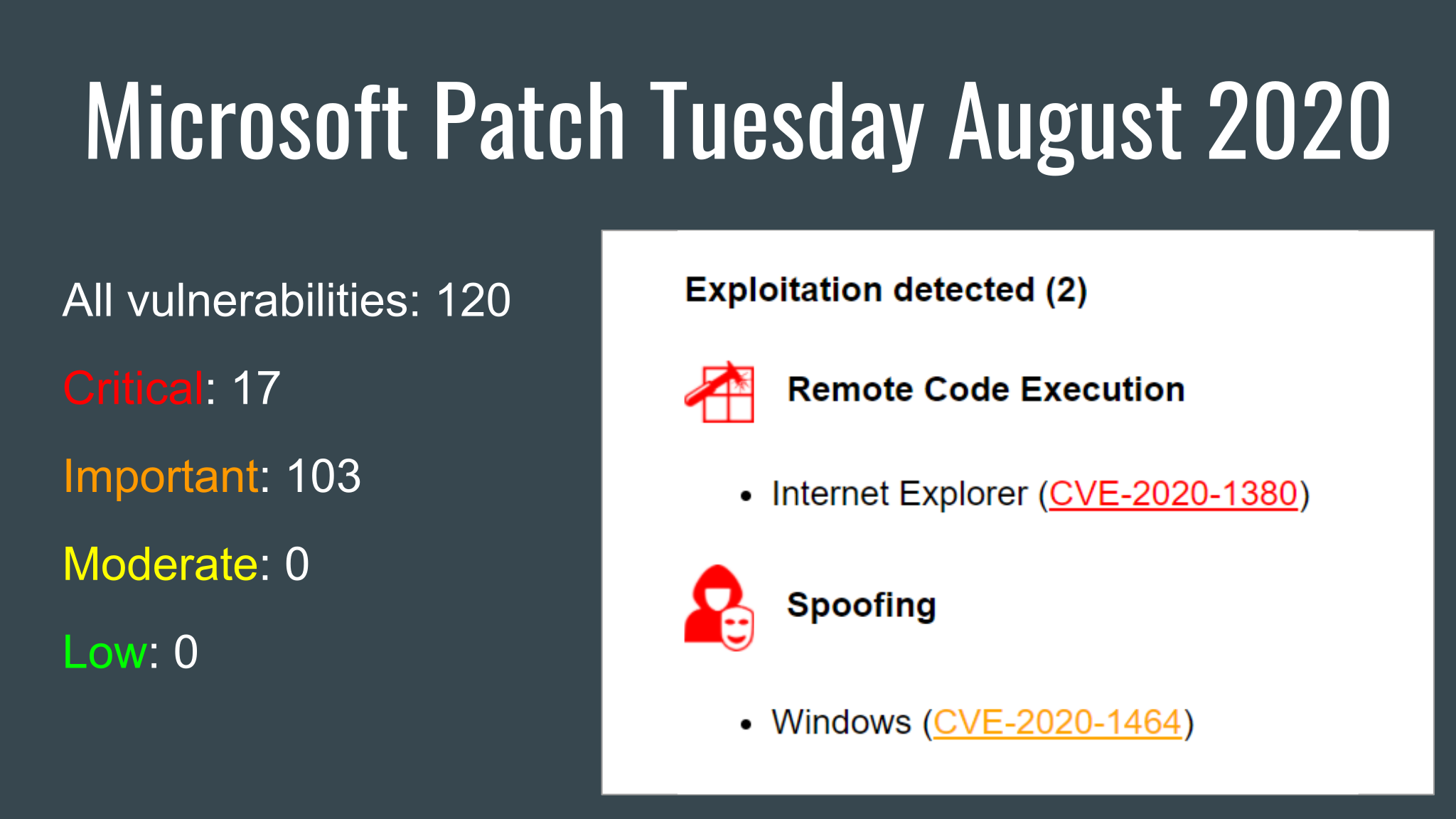
Microsoft Patch Tuesday August 2020: vulnerabilities with Detected Exploitation, useful for phishing and others. This time I would like to review not only the vulnerabilities that were published in the last August Microsoft Patch Tuesday, but also the CVEs that were published on other, not Patch Tuesday, days. Of course, if there are any.
But let’s start with the vulnerabilities that were presented on MS Patch Tuesday on August 11th. There were 120 vulnerabilities: 17 of them are Critical and 103 Important. My vulristics script could not find public exploits for these vulnerabilities on Vulners.com.
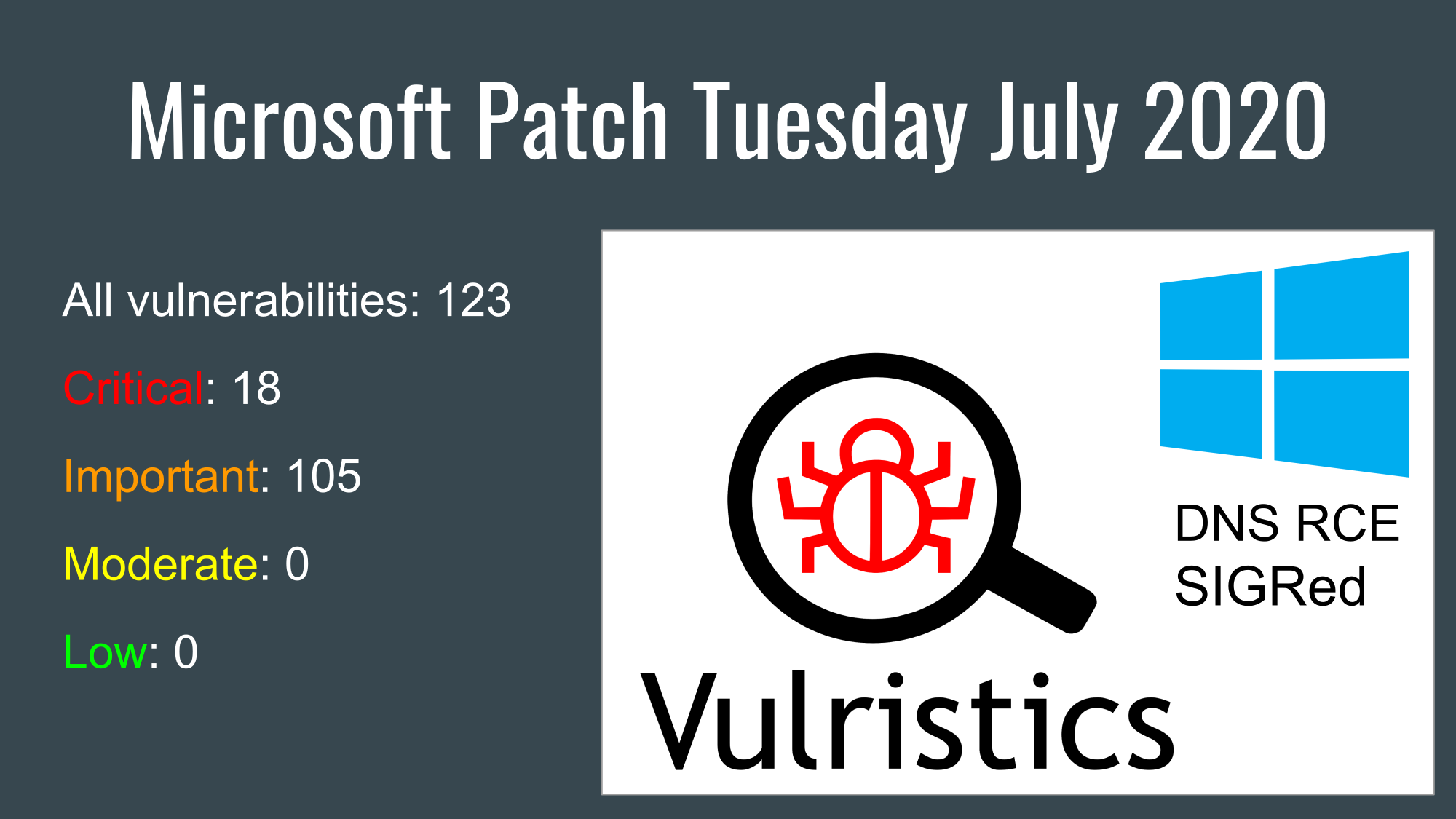
Microsoft Patch Tuesday July 2020: my new open source project Vulristics, DNS SIGRed, RDP Client and SharePoint. I am doing this episode about July vulnerabilities already in August. There are 2 reasons for this. First of all, July Microsoft Patch Tuesday was published in the middle of the month, as late as possible. Secondly, in the second half of July I spent my free time mostly on coding. And I would like to talk more about this.
Vulristics
I decided to release my Microsoft Patch Tuesday reporting tool as part of a larger open source project (github). I named it Vulristics (from “Vulnerability” and “Heuristics”). I want this to be an extensible framework for analyzing publicly available information about vulnerabilities.
Let’s say we have a vulnerability ID (CVE ID) and we need to decide whether it is really critical or not. We will probably go to some vulnerability databases (NVD, CVE page on the Microsoft website, Vulners.com, etc.) and somehow analyze the descriptions and parameters. Right? Such analysis can be quite complex and not so obvious. My idea is to formalize it and make it shareable. It may not be the most efficient way to process data, but it should reflect real human experience, the things that real vulnerability analysts do. This is the main goal.
Barapass, Tsunami scanner, vulnerabilities in Windows DNS Server and SAP products, weird attack on Twitter. This episode is based on posts from my Telegram channel avleonovcom, published in the last 2 weeks. So, if you use Telegram, please subscribe. I update it frequently.
Barapass update
I recently released an update to my password manager barapass. BTW, it seems to be my only pet project at the MVP stage, which I use every day.
What’s new:
Now I am sure that it works on Windows 10 without WSL. And you can run it beautifully even with the icon. ? Read more about installation in Windows in this file.
Not only “copy the next value to the clipboard” (or “revolver mode” ) is now possible in the search results section. You can also get the previous value or copy the same value one again if it was somehow erased in the clipboard. Previously, I had to retype the search request each time to do this, and it was quite annoying. By the way, I unexpectedly discovered that the user input history inside the application magically works in the Windows shell (using up and down arrows) without any additional coding. On Linux it does not.
You can set a startup command, for example, to decrypt the container.
The startup command and quick (favorite) commands are now in settings.json and not hard-coded.
settings.json, container files and decrypted files are now in “files” directory. It became more convenient to update barapass, just change the scripts in the root directory and that’s it. I divided the scripts into several files, now it should be more clear how it works.
So, if you need a minimalistic console password manager in which you can easily use any encryption you like – welcome! You can read more about barapass in my previous post.
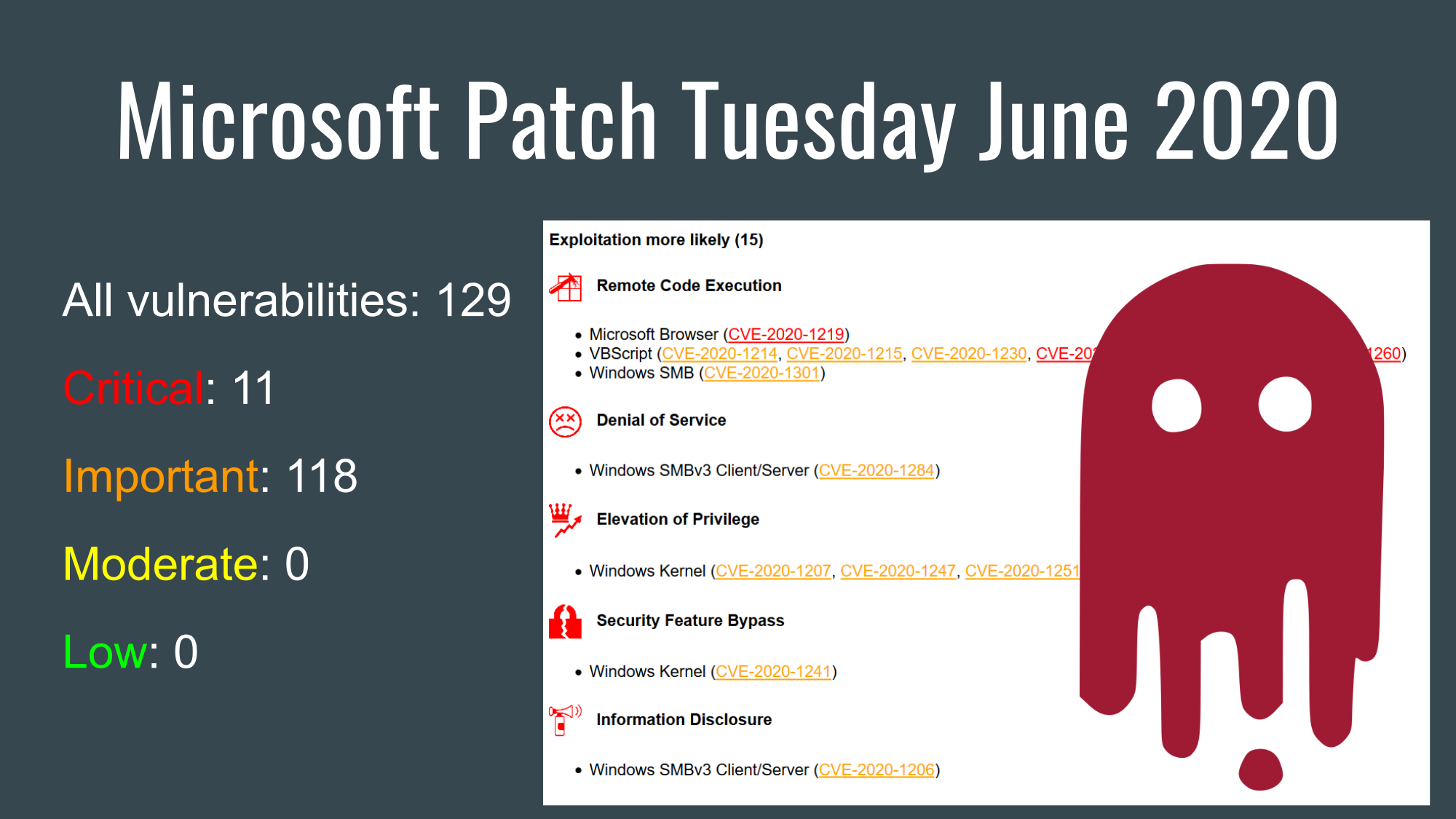
Microsoft Patch Tuesday June 2020: The Bleeding Ghost of SMB. This time, Microsoft addressed 129 vulnerabilities: 11 critical and 118 important. In fact, in the file that I exported from the Microsoft website, I saw 2 more CVEs (CVE-2020-1221, CVE-2020-1328) related to Microsoft Dynamics 365 (on-premises). But there is no information on them on the Microsoft website, in the MITRE CVE database and NVD. Does this mean that these CVE ids were mentioned unintentionally and related to some critical issues? I don’t think so, but this is strange.
This time there were no vulnerabilities with detected exploitation, so let’s start with the group “Exploitation more likely” according to Microsoft.
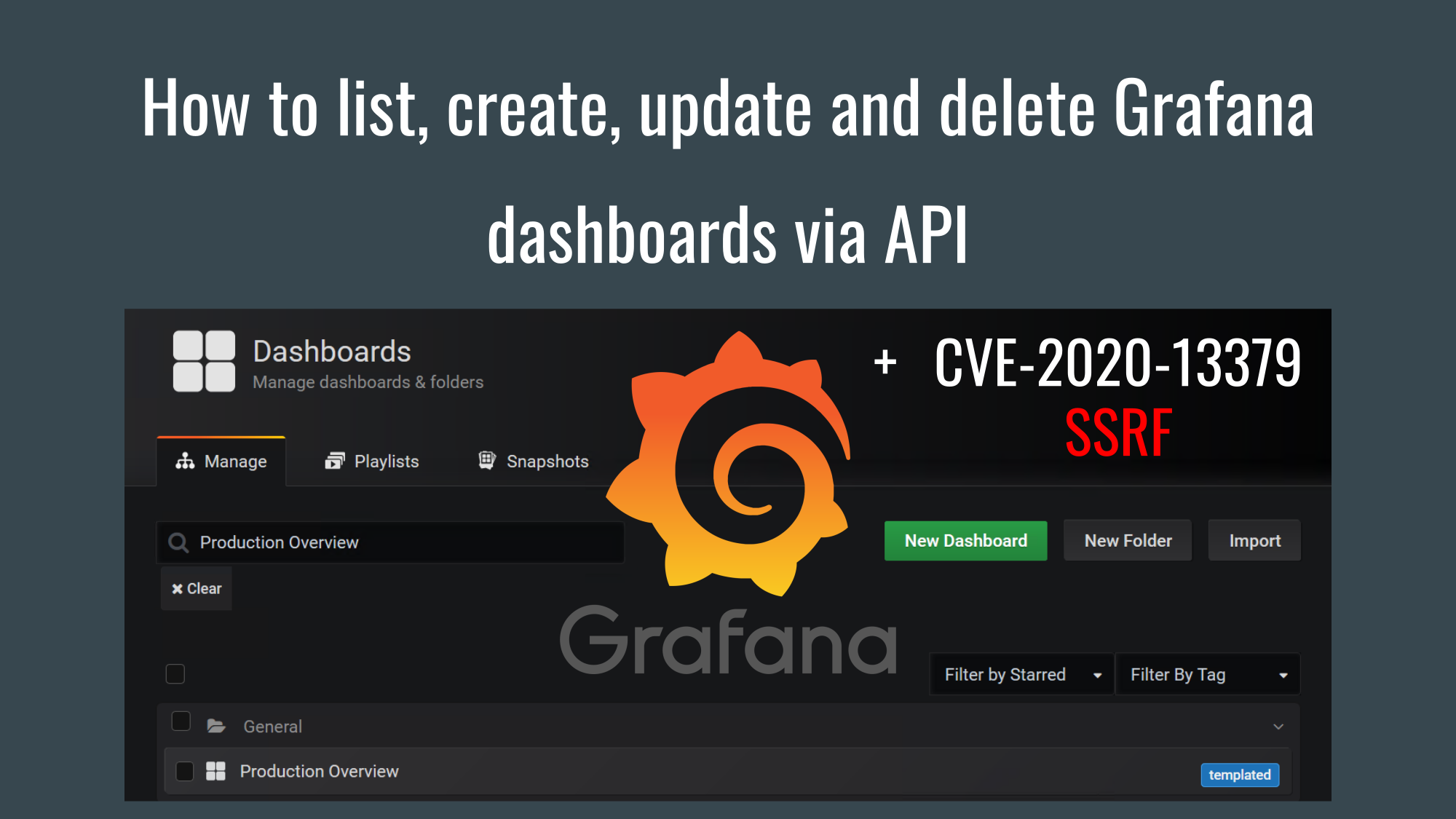
How to list, create, update and delete Grafana dashboards via API. I have been a Splunk guy for quite some time, 4 years or so. I have made several blog posts describing how to work with Splunk in automated manner (see in appendix). But after their decision to stop their business in Russia last year, including customer support and selling software and services, it was just a matter of time for me to start working with other dashboarding tools.
For me, Grafana has become such a tool. In this post I want to describe the basic API operations with Grafana dashboards, which are necessary if you need to create and update dozens and hundreds of dashboards. Doing all this in the GUI will be painful. Grafana has a pretty logical and well-documented API. The only tricky moments I had were getting a list of all dashboard and editing an existing dashboard.
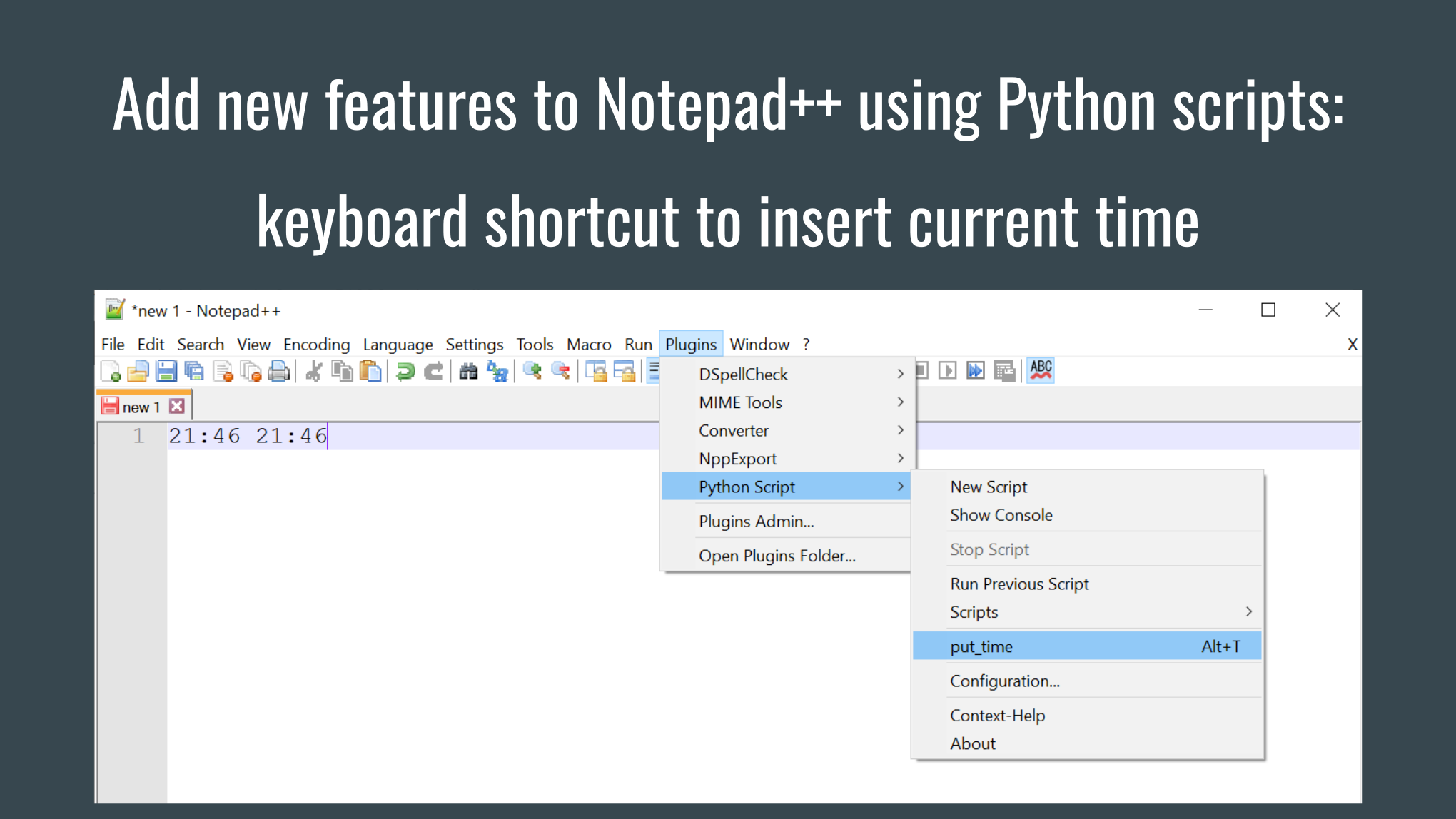
Add new features to Notepad++ using Python scripts: keyboard shortcut to insert current time. I have to say, I spend a lot of time daily in Notepad++ text editor for Windows. I keep my “logbook” there. I record what I am doing now and what needs to be done. This allows me not to keep everything in my head and switch the context more efficiently. I can recommend this to everyone. And it is especially useful to note when you started working on a task and when you finished. This gives an understanding of what actually takes your time. I’m not a fan of very strict and formal techniques such as pomodoro, but using some form of time management is good.
Recording timestamps manually is inconvenient. It would be much easier to press a key combination and automatically insert the current timestamp into the document. It turned out that this is possible, and even more – you can get the results of any Python script this way!
This is my personal blog. The opinions expressed here are my own and not of my employer. All product names, logos, and brands are property of their respective owners. All company, product and service names used here for identification purposes only. Use of these names, logos, and brands does not imply endorsement. You can freely use materials of this site, but it would be nice if you place a link on https://avleonov.com and send message about it at me@avleonov.com or contact me any other way.