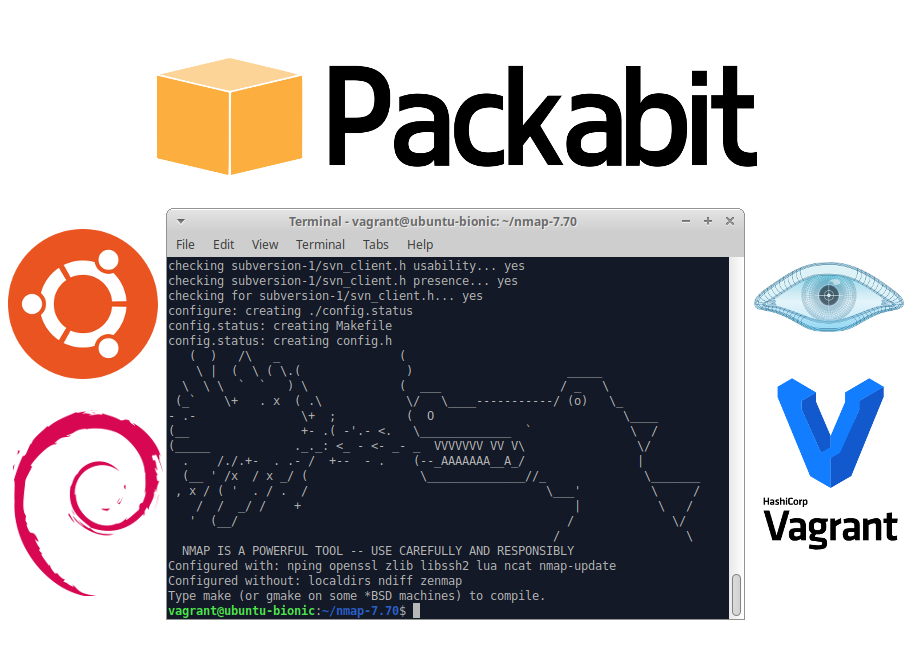
SSH, SFTP, public key authentication and python. SFTP is a simple and fairly reliable way to share the information within the organization. Let’s look at the situation when you need to pick up some files from a remote host with authorization by public key. And after that, let’s see how to use it with in python.
Moreover, let’s see how to work with SSH using python and execute any commands on the remote host. For example. if we need it to collect versions of installed packages and a version Linux distribution for further vulnerability analysis (see “Vulnerability Assessment without Vulnerability Scanner“). 😉
Burp Suite Free Edition and NTLM authentication in ASP.net applications. As you know, Burp Suit is a scanner for advanced Web Application Security researchers. However, the free version of Burp is more like Firebug analogue, but much more functional.
Let’s see how to install it and use for website analysis. This analysis may be necessary to find vulnerabilities or somehow automate the work with the site. Let’s take, for example, ASP.net applications with NTLM-authorization, which is rather unpleasant to analyze.
Carbon Blacking your sensitive data it’s what the agents normally do. But usually without such consequences. In this situation with Carbon Black, I am most interested in the actual reasons of all this media noise. From what point business as usual becomes a scandal. Ok, when you see Carbon Black customer’s private files in public access at Virus Total it’s a 100% epic fail. But what about other options.
Agent makes file analysis by himself on user’s host. It’s probably ok. Some paranoid person, like me, may say that it’s possible that data may leak during the update process, like in case of M.E.Doc. But it probably can be detected it in traffic somehow.
Agent sends file to the vendor’s cloud for further analysis in some private multiscanner. Vendor will have copy of your private data. What if this data will leak? Are you sure that vendor will bear responsibility for this?
Agent sends file to vendor’s cloud, vendor than sends it to some third-party for analysis. Are you sure vendors that you use doesn’t do this? How can you investigate this? What will be your next actions if you figure out that they do it without your permission?
Agent sends file to the vendor’s cloud, vendor then sends it to some third-party for analysis, third-party opens access to this file for a wide range of people.
Not for Russians. Let’s talk about web-site blocking. Not about cases of government censorship, not about cases where content is blocked for copyright reasons and not even about sanctions. I want to pay attention to the cases when companies block access to their own sites voluntarily for user from the whole country, in particular for the users from Russia.
I do not know why they actually do such things. Perhaps they are trying to defend themselves against evil Russian hackers. Not the most effective measure. Attackers know how to use proxies and VPNs. Maybe they are under constant DDoS attack from Russian IPs? But these problems can also be solved more effectively without blocking an entire country. And this can be understood for the company, which is not much in Information Security, but I see this regularly on the websites of Security Vendors. For example, Tanium:
Or a very recent purchase of Qualys, start-up Nevis Networks:
But okay, in these cases, only sales of these companies in Russia suffer (if they even exist).
Automated posting on Vkontakte public pages using VK API and Python.Vk.com (Vkontakte) is the most popular social network Russia and Ex-USSR with 430+ million users. Traditional advantages of vk.com – huge amount of free music and video. The service allows users to upload and share files and for a long time was quite tolerant to piracy. In 2016 Mail.Ru Group, Vkontakte parent company, has solved all problems with major music labels and now works closely with the rights holders.
VKontakte has very efficient features for creating communities: public pages (blogs) and groups (open and closed web-forums). In VK communities you can easily share news, photo, audio, video, text files in different formats, create discussions topics and wiki-pages. When I was studying at the University in 2003-2009, to share information in a study group we needed to create our own website and phpBB-based forum. Now practically all students simply use VKontakte groups for this. VKontakte shows all content in groups as is, without hiding and filtering.
With reach automation capabilities, you can do various interesting things based on VK. For a start, I decided to post all annotations from my https://avleonov.com blog to https://vk.com/avleonovcom Vkontakte page. I created this page in web GUI and filled it with content automatically using my own python scripts.
Creating a new application
I want to work with Vkontakte from my Python scripts. So, I will need to create a new Standalone Application for this. You can do it here: https://vk.com/editapp?act=create
Upd. March 2018 Integration with Vkontakte suddenly broke, because they added mandatory version parameter to all calls.
getsploit from Vulners.com. Kirill Isox Ermakov, the founder of Vulners, has recently presented a new open-source tool for searching and downloading exploits – getsploit.
Let’s say we want to pentest some WordPress blog. For example, this website avleonov.com. We can get WordPress version simply using curl:
As you can see on the screen shot, getsploit makes a search request to vulners.com: bulletinFamily:exploit AND title:WordPress AND title:4.7.1 and matches objects in Immunity Canvas, DSquare Exploit Pack, Exploit-DB, Metasploit, Packet Storm, Malware exploit database, SAINTexploit™, seebug.org, Vulnerability Lab, 0day.today and Zero Science Lab.
PHDays VII: To Vulnerability Database and beyond. Last Tuesday and Wednesday, May 23-24, I attended PHDays VII conference in Moscow. I was talking there about vulnerability databases and the evolution process of vulnerability assessment tools, as far as I understand it.
But first of all, a few words about the conference itself. I can tell that since the last year the event got even better. I’ve seen lot of new faces. Some people I didn’t know, but they knew me by my blog and accounts in social networks. What a strange, strange time we live in! I was very pleased to see and to talk with you all, guys! 🙂
PHDays is one of the few events that truly brings all Russian community of security professionals together. I’ve seen people I have studied with in university, colleagues from the all places where I have been worked, and nearly all researchers and security practitioners that I follow. Big thanks for the organizers, Positive Technologies, for such an amazing opportunity!
It is also a truly international event. You can see speakers from all over the world. And all information is available both in Russian and English. Almost all slides are in English. Three parallel streams of reports, workshops and panel discussions were dubbed by professional simultaneous interpreters, like it is a United Nations sessions or something, recorded and broadcast live by the team of operators and directors. Final result looks really great.
Video of my presentation:
I was talking too fast and used some expressions that was hard to translate. The translator, however, did an awesome job. He is my hero! 🙂 If you didn’t understand something on video, I made a transcript bellow.
A version without translation for Russian-speakers is here.
Slides:
Unfortunately gif animation is not working in the Slideshare viewer.
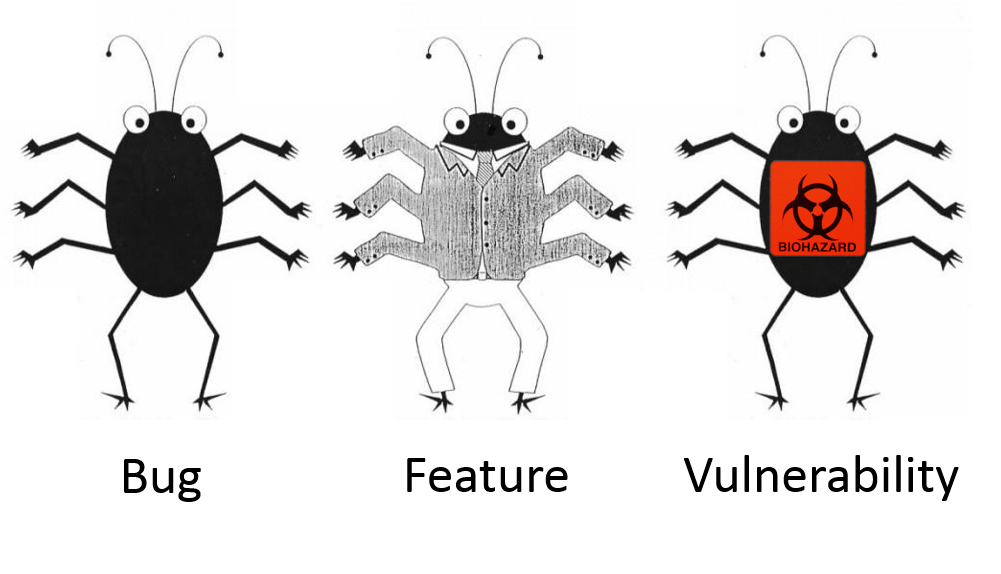
Today I would like to discuss vulnerability databases and how vulnerability assessment systems has been evolving. Prior to discussing vulnerability databases I need to say that any vulnerability is just a software error, a bug, that allowing hacker to do some cool things. Software developers and vendors post information about such vulnerabilities on their websites. And there are tons and tones of vendors, and websites, and software products, and vulnerabilities.
This is my personal blog. The opinions expressed here are my own and not of my employer. All product names, logos, and brands are property of their respective owners. All company, product and service names used here for identification purposes only. Use of these names, logos, and brands does not imply endorsement. You can freely use materials of this site, but it would be nice if you place a link on https://avleonov.com and send message about it at me@avleonov.com or contact me any other way.