

Tag Archives: VulnCheckKEV

August Linux Patch Wednesday

August Linux Patch Wednesday

August Linux Patch Wednesday. A total of 3,060 vulnerabilities. For comparison, there were 2,017 in July. That's a 52% increase and another new record. This time, there are 1,354 vulnerabilities in the Linux Kernel and 447 in Chromium. For 3 vulnerabilities, there are signs of exploitation in the wild:

🔻 RCE - Jenkins (CVE-2026-53435). Jenkins is a development automation server used to build, test, and deploy software. The vulnerability allows a remote authenticated attacker to use the Script Console to execute arbitrary code and read files from the Jenkins controller. The vulnerability was added to the VulnCheck KEV on June 15 and fixed in RedOS on August 12.

🔻 CodeInj - WordPress (CVE-2026-60137). WordPress is a popular open-source CMS for creating websites and blogs. The vulnerability leads to a blind SQL injection in the WordPress core, allowing a remote unauthenticated attacker to read user accounts and password hashes from the WordPress database. Code execution is then possible by installing a malicious plugin. Multiple public exploits are available. The vulnerability was added to the CISA KEV catalog on July 21. A fix for the wordpress package in the Debian repository was released on July 23.

🔻 RCE - SPIP (CVE-2026-77647). SPIP is an open-source CMS for creating and collaboratively editing websites. The vulnerability allows an unauthenticated remote attacker to execute arbitrary PHP code. The vulnerability was added to the VulnCheck KEV on August 20. A fix for the spip package in the Debian repository was released on August 18.

Strictly speaking, the report contains one more vulnerability RCE - WinRAR (CVE-2025-8088) that is being exploited in the wild. The vulnerability was fixed in the clamav package in the Alt Linux repository. However, exploitation is only possible on Windows, so it is out of scope.

Another 127 vulnerabilities are not known to be exploited in the wild, but public exploits are available for them, or there are indications that such exploits exist. Notable examples include:

🔸 RCE - Action Pack "KindaRails2Shell" (CVE-2026-66066). Action Pack is a component of Ruby on Rails responsible for handling web requests, routing, and generating responses. An attacker can upload a specially crafted image to a vulnerable application and achieve remote code execution.

🔸 RCE - WordPress "XSS2Shell" (CVE-2026-64638). The attack chain allows an unauthenticated XSS on the login page to be escalated to arbitrary PHP code execution.

🔸 CodeInj - PHP (CVE-2026-17543). Improper escaping of backslashes in attacker-controlled parameters can lead to a trivial SQL injection in PHP.

🔸 EoP - Linux Kernel "Zapscape" (CVE-2026-64561). This KVM escape vulnerability allows an attacker to break out of a virtual machine in KVM/x86 environments and execute commands on the host with root privileges.

🔸 EoP - Linux Kernel "OVSwrap" (CVE-2026-64531), Linux Kernel "SCTPhantom" (CVE-2026-64564), Linux Kernel "Ubuntu PPPoL2TP" (CVE-2026-68398). These vulnerabilities allow a local attacker to escalate privileges to root.

🔸 AuthBypass - Traefik (CVE-2026-48020). Traefik is an HTTP reverse proxy and load balancer. A high-severity vulnerability in the StripPrefix middleware allows an unauthenticated attacker to bypass route-level authentication and authorization.

🗒 Full Vulristics report

May Linux Patch Wednesday

May Linux Patch Wednesday

May Linux Patch Wednesday. A total of 1,638 vulnerabilities (474 in the Linux kernel). For comparison, in April there were 1,035 vulnerabilities (a record!). And this time it turns out to be a record again, more than one and a half times higher! The acceleration is both impressive and alarming. But we will see what happens next. At some point it should stabilize. Although the number of critical vulnerabilities is already so high that reviewing all of them becomes quite problematic. For 7 vulnerabilities there are signs of exploitation in the wild. And for another 264 there are public exploits. Let’s start, as usual, with vulnerabilities being actively exploited according to CISA KEV and VulnCheck KEV data. Here, at the top, as expected, are two high-profile ways to get a root shell:

🔻 EoP - Linux Kernel "Copy Fail" (CVE-2026-31431)
🔻 EoP - Linux Kernel "Dirty Frag" (CVE-2026-43500)

Other vulnerabilities being exploited in the wild:

🔻 RCE - Apache ActiveMQ (CVE-2026-40466). Based on the description, this appears to be a bypass of the fix for CVE-2026-34197, which I already wrote about earlier.

🔻 AuthBypass - Rclone (CVE-2026-41176). Rclone ("rsync for cloud storage") is a command-line utility for synchronizing files and directories between various cloud storage services and local systems. Exploitation of the vulnerability can lead to unauthorized access to sensitive administrative functionality, including configuration and operational RC methods.

🔻 RCE - NGINX (CVE-2026-42945). The bug enables unauthenticated remote code execution against servers using rewrite and set directives.

🔻 DoS - PgBouncer (CVE-2026-6664). PgBouncer is a lightweight, open-source connection pooler for PostgreSQL databases. It reduces connection overhead by managing a pool of connections to one or more PostgreSQL servers, improving performance and resource efficiency for applications with frequent short-lived database connections. An integer overflow in the network packet parsing code in PgBouncer before 1.25.2 bypasses a boundary check and can lead to a crash.

🔻 XSS - Postorius (CVE-2026-44742). The Postorius Django app provides a web user interface to access GNU Mailman. Mailman is free software for managing electronic mail discussion and e-newsletter lists. The vulnerability is being exploited according to VulnCheck KEV; however, no public exploits has been observed yet.

From the remaining vulnerabilities with public exploits, but without any signs of exploitation in the wild so far, the following can be highlighted:

🔸 RCE - Apache HTTP Server (CVE-2026-23918). Double-free error in Apache httpd mod_http2 stream cleanup, leading to pre-auth RCE.

🔸 RCE - Apache Tomcat (CVE-2026-34486). Apache Tomcat Tribes cluster communication module fails to discard messages when EncryptInterceptor decryption fails, allowing unauthenticated attackers to trigger Remote Code Execution via Java deserialization on port 4000.

🔸 RCE - ProFTPD (CVE-2026-42167). The flaw exists in how mod_sql handles certain logging variables (like %U), allowing an unauthenticated attacker to inject SQL commands via the USER command.

🔸 EoP - Linux Kernel "DirtyDecrypt" (CVE-2026-31635). Linux local privilege escalation in the RxRPC/GSSAPI decryption path. A missing skb_cow_data() check in rxgk_decrypt_skb() allows an unprivileged local attacker to corrupt cache pages and overwrite in-memory contents of read-only files.

🔸 EoP - Linux Kernel "Fragnesia" (CVE-2026-46300). I also analyzed this vulnerability earlier. A bug in skb_try_coalesce() allowing page-cache write via fragmented ESP packets.

🔸 EoP - Linux Kernel (CVE-2026-46333). Local root privilege escalation and credential disclosure in the Linux kernel ptrace path, discovered by researchers at Qualys.

🔸 EoP - PackageKit "Pack2TheRoot" (CVE-2026-41651). PackageKit is a free and open-source suite of software applications designed to provide a consistent and high-level abstraction layer for a number of different package management systems. The vulnerability allows an attacker to escalate privileges, potentially gaining root access or compromising the system.

🔸 ComInj - Composer (CVE-2026-40261, CVE-2026-40176). Composer is a dependency manager for PHP. The vulnerability exists in the Perforce::generateP4Command() method. Due to insufficient sanitization of repository configuration parameters (such as url, p4user, or client) when constructing shell commands, an attacker who controls a composer.json file can execute arbitrary commands on the victim's system when composer install or composer update is executed.

🗒 Full Vulristics report

I looked at VulnCheck KEV

I looked at VulnCheck KEV
I looked at VulnCheck KEVI looked at VulnCheck KEVI looked at VulnCheck KEVI looked at VulnCheck KEVI looked at VulnCheck KEVI looked at VulnCheck KEV

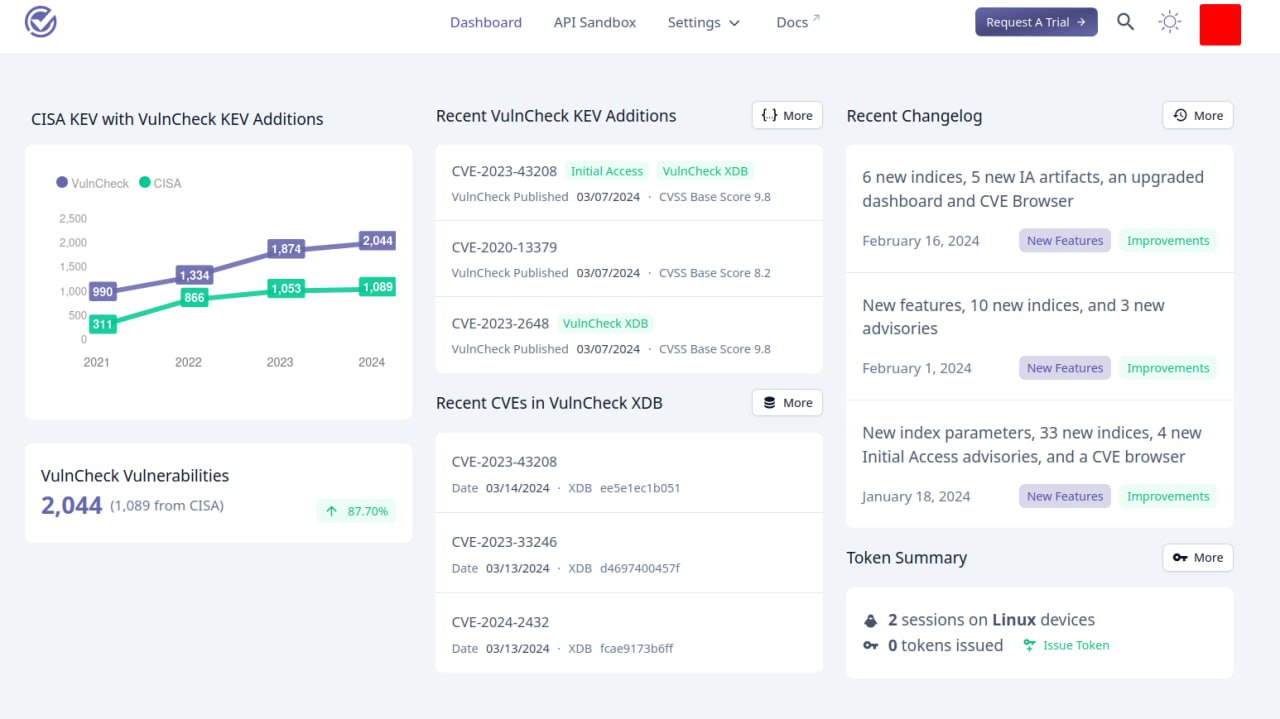
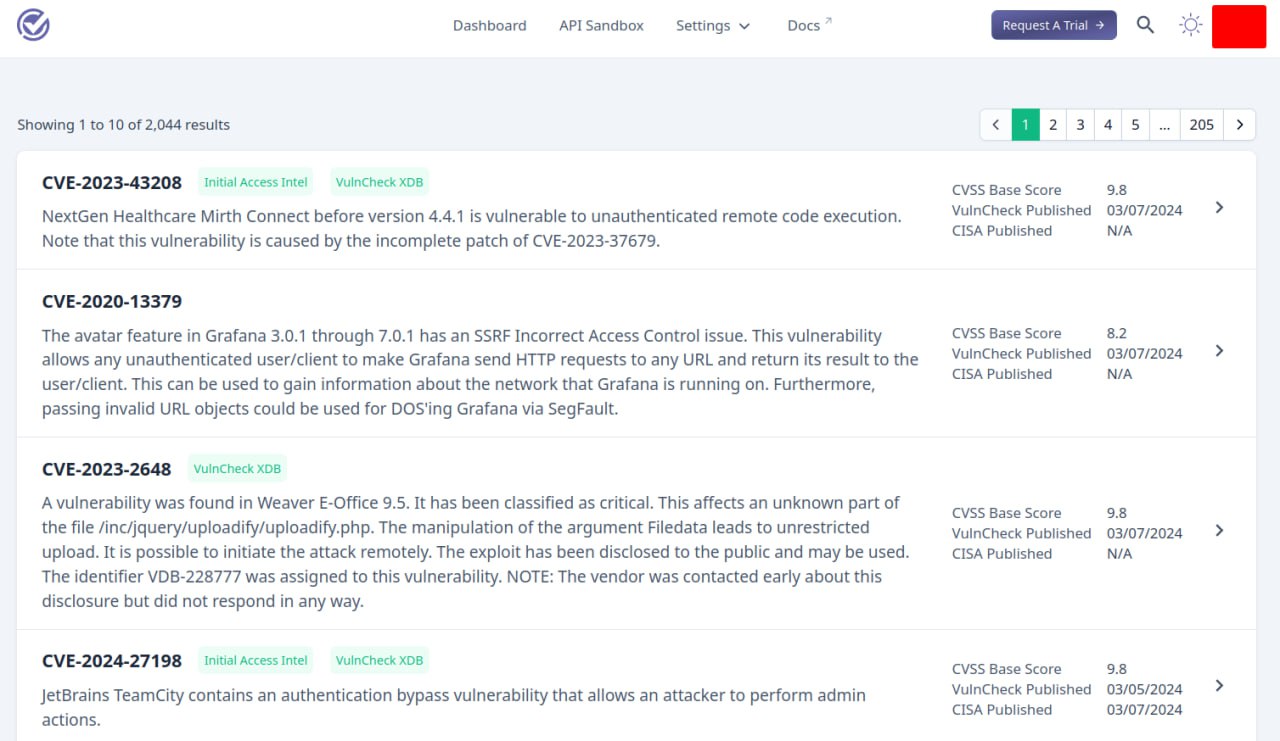
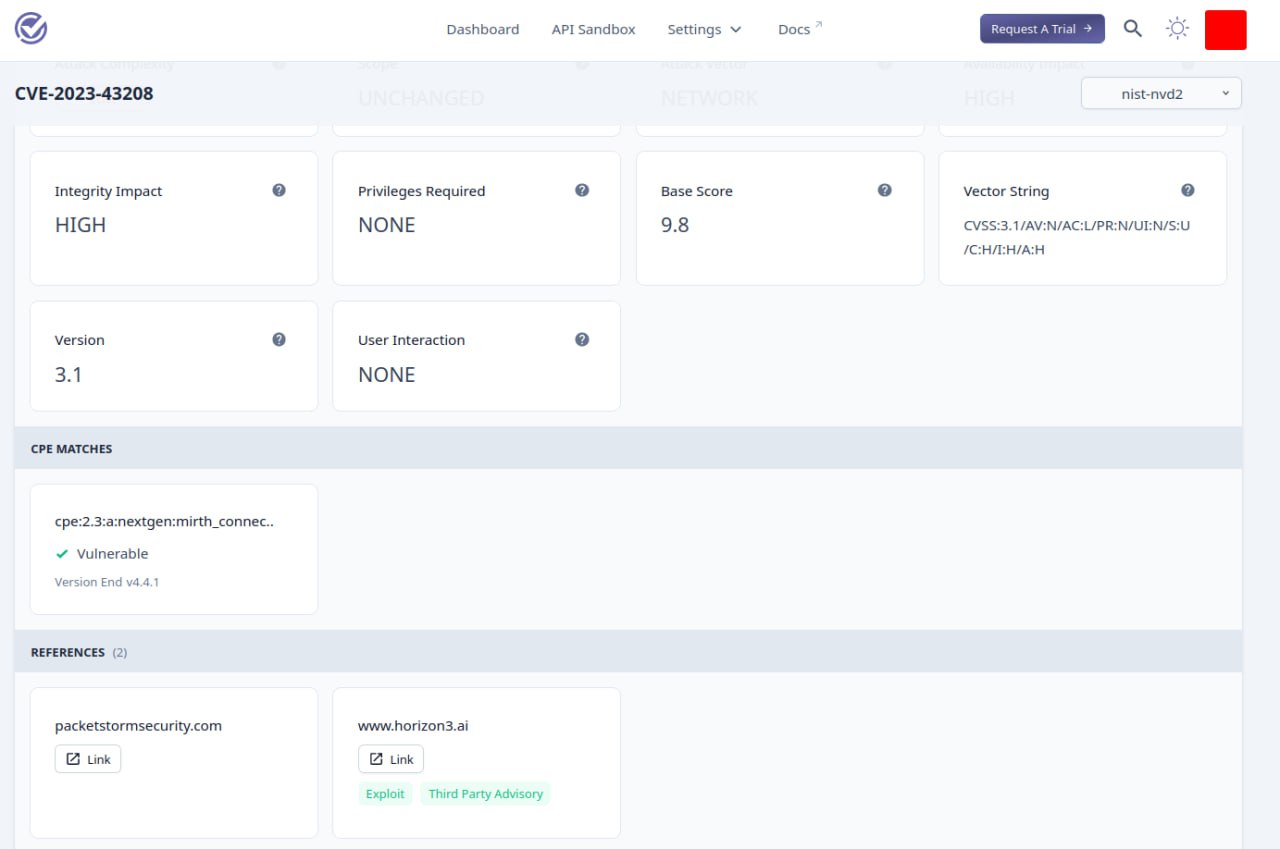
I looked at VulnCheck KEV. This is an analogue of CISA KEV (Know Exploited Vulnerabilities) by VulnCheck.

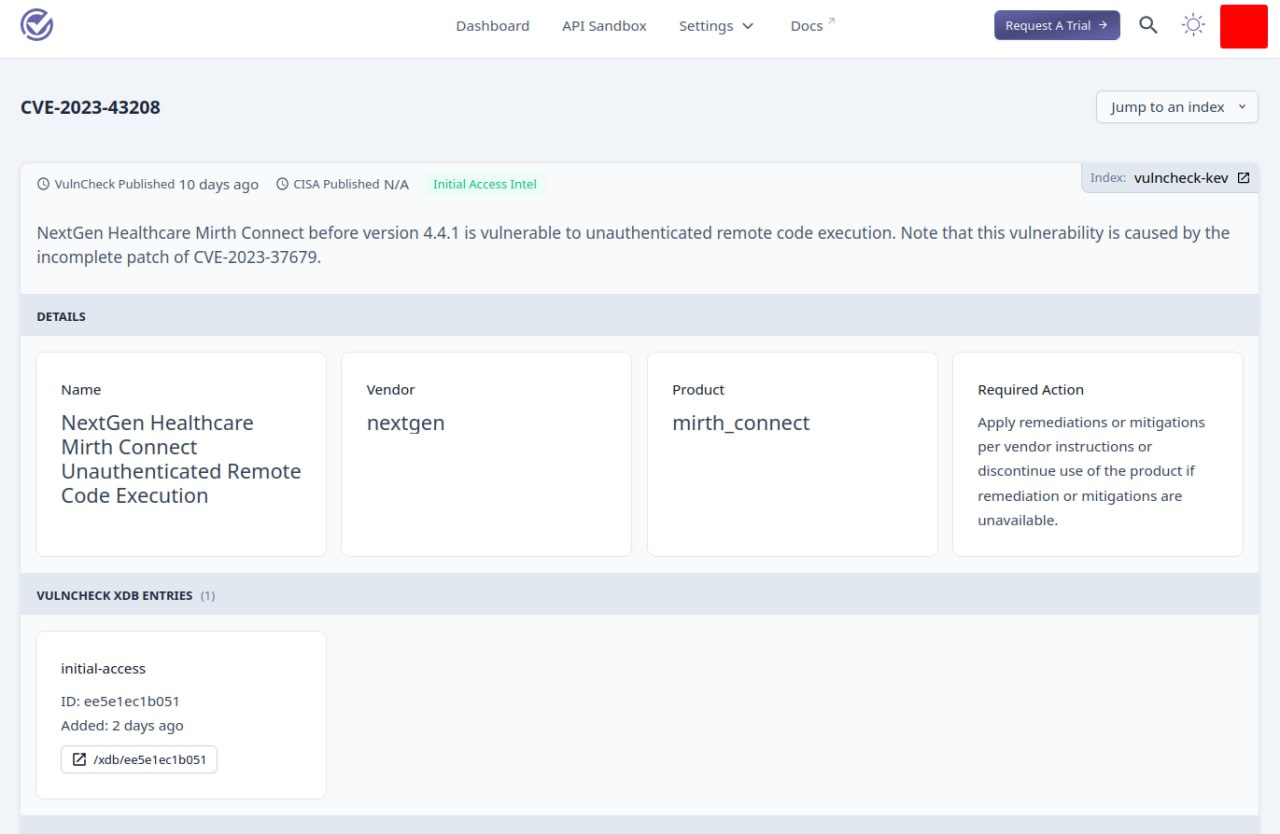
🔹 Unlike the public CISA KEV, only registered users have access to VulnCheck KEV. The VulnCheck website is accessible from Russian IPs 🇷🇺, but when registering they write that "account is currently under review" (in fact requests are simply blocked 🥸). Requests from non-Russian IPs are registered automatically. 🌝
🔹 There are ~2 times more CVEs in the database than in CISA KEV.
🔹 There are no standard tools for downloading all these CVEs via web-gui. 🤷‍♂️
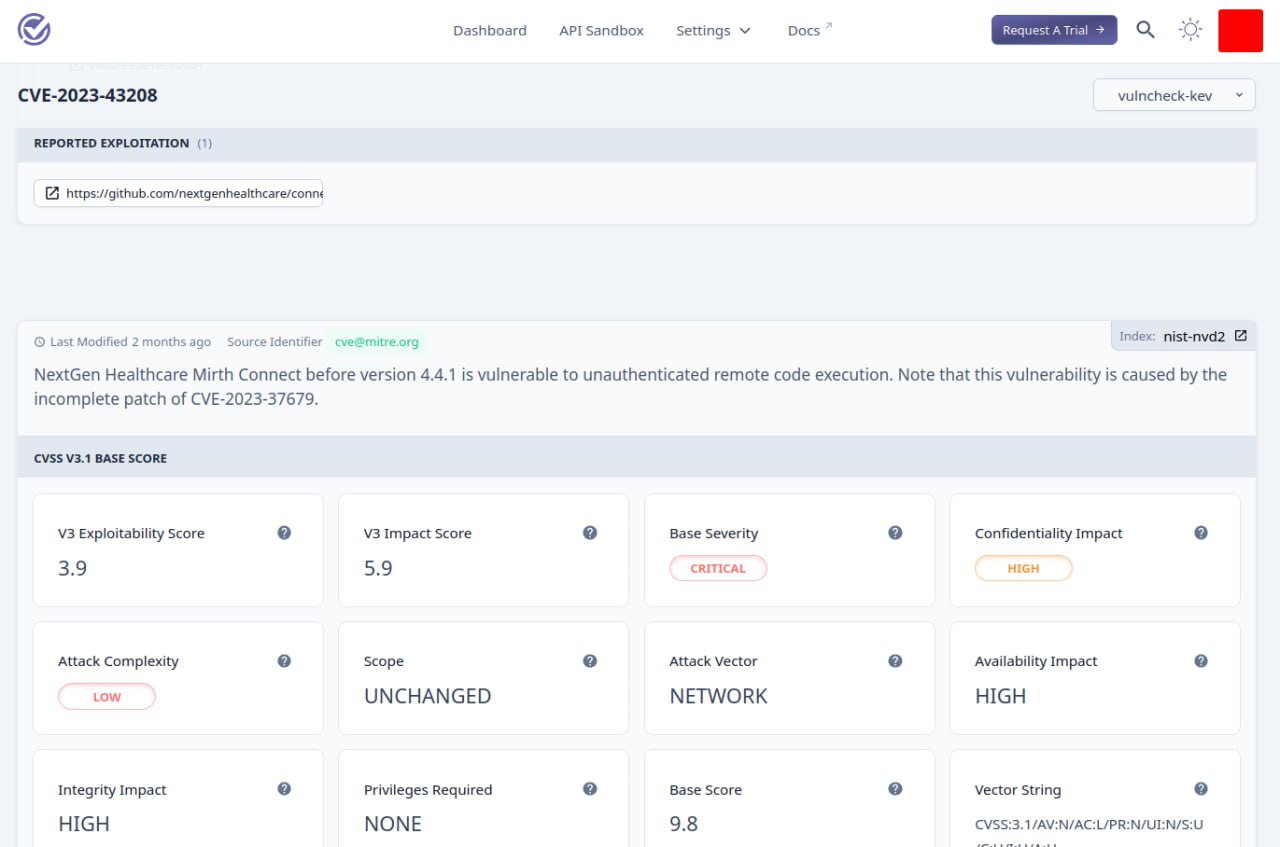
🔹 There are links to exploits for CVEs that look good. 👌
🔹 There are signs of exploitation in the wild. Sometimes it's clear, like "Outbreak Alerts 2023" pdf report. Sometimes it’s strange, like a link to a Shadowserver dashboard or a non-related blog post. 🤷‍♂️

The selection of CVEs is quite interesting, but the rationale for exploitation in the wild needs to be improved. 😉

На русском