Category Archives: Productology

Let’s Encrypt for shared hosting

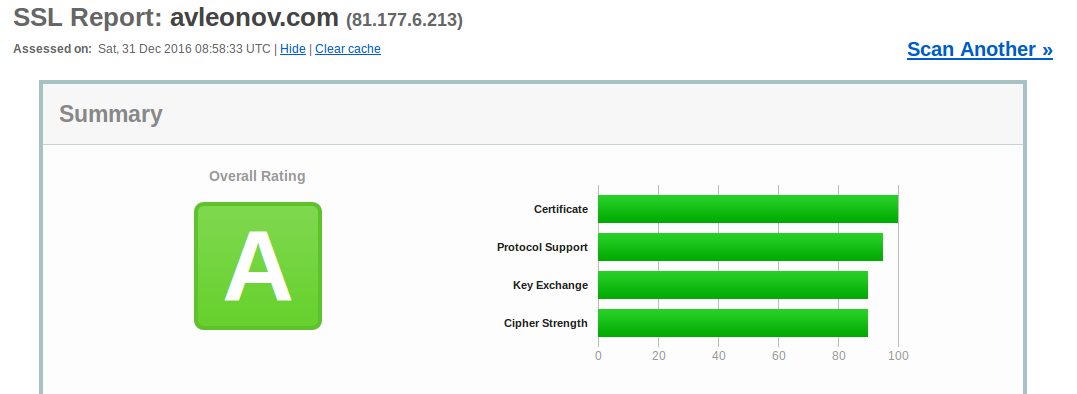
Let’s Encrypt for shared hosting. I have recently moved my blog to https using free Let’s Encrypt (Linux Foundation Project) certificate.

Let’s Encrypt service works the best, when you have your own server. You just need to configure some scripts that will regularly request new certificates and everything will work automatically. But, even if your site is on shared hosting, it’s still possible to use Let’s Encrypt. You can make the certificate on your machine, I used Ubuntu Linux, and then add them in the web interface of your hoster, of course if this feature is supported. Certificate will be valid for 4 month, and then you will need make a new one.

To say the truth, I did it because search engines and browser vendors will discriminate http-only sites very soon. And, of course, for fun. Green lock icon in address bar looks cool. ^_^

Continue reading

Installing Nessus for SecurityCenter on laptop

Installing Nessus for SecurityCenter on laptop. The great thing about Tenable SecurityCenter: when you buy it you also get hundreds of licenses for Nessus.  You can google different types of SecurityCenter bundles with “SecurityCenter Continuous View – On Premise” request. “Scanners” here mean SC scanners:
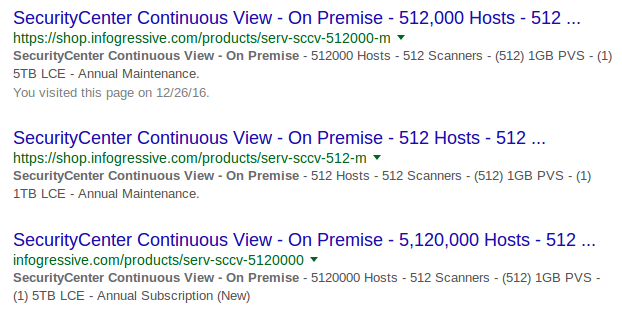
You will need these scanner licenses to deploy Nessus hosts on your network, connect them to your Tenable SecurityCenter and manage scan process using SecurityCenter via graphical user interface or API. Of course, with all the restrictions on amount of IP addresses that you can scan.

At the same time, these Nessus for SecurityCenter servers are fully functional. Technically this servers are the same as Nessus Professional. Nessus for SecurityCenter has the same web interface, where you can create multiple user accounts, manage the scans in GUI and API, scan any amount of IP addresses. Scan data will be stored locally on your Nessus server and your SecurityCenter will not see it or use it in any way. This is really great. And I hope it is a feature and not a bug.
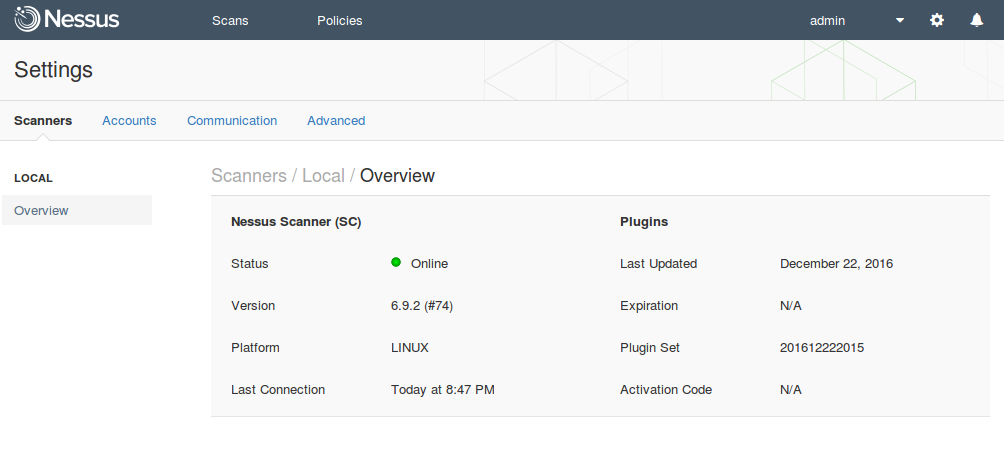
However, there are some differences. Nessus Professional downloads security plugins and makes activation using remote Tenable severs. Nessus for SecurityCenter does these things using SecurityCenter in your network.

So, when you have such a great amount of Nessus licenses you may want to install one on your own laptop. It might be really useful for debugging. For example, when you are developing your own nasl scripts, to enable them in Nessus, you will need to restart it. And you will not probably want to do it on the Nessus server where dozens of scanning jobs are running.

In this post I will try to install Nessus on Centos 7 in VirtualBox, configure port forwarding, activate and update Nessus plugins with SecurityCenter.

Continue reading

Divination with Vulnerability Database

Divination with Vulnerability Database. Today I would like to write about a popular type of “security research” that really drives me crazy: when author takes public Vulnerability Base and, by analyzing it, makes different conclusions about software products or operating systems.

CVE Numbers their occult power and mystic virtues

The latest research of such type, was recently published in CNews – a popular Russian Internet portal about IT technologies. It is titled ““The brutal reality” of Information Security market: security software leads in the number of holes“.

The article is based on Flexera/Secunia whitepaper. The main idea is that various security software products are insecure, because of amount of vulnerability IDs related to this software existing in Flexera Vulnerability Database. In fact, the whole article is just a listing of such “unsafe” products and vendors (IBM Security, AlienVault USM and OSSIM, Palo Alto, McAfee, Juniper, etc.) and the expert commentary: cybercriminals may use vulnerabilities in security products and avoid blocking their IP-address; customers should focus on the security of their proprietary code first of all, and then include security products in the protection scheme.

What can I say about these opuses of this kind?

They provide “good” practices for software vendors:

  • Hide information about vulnerabilities in your products
  • Don’t release any security bulletins
  • Don’t request CVE-numbers from MITRE for known vulnerabilities in your products

And then analysts and journalists won’t write that your product is “a leader in the number of security holes”. Profit! 😉

Continue reading

ZeroNights16: Enterprise Vulnerability Management

ZeroNights16: Enterprise Vulnerability Management. 17-18 November I was at the great event  Zero Nights security conference in Moscow. For the first time as a speaker. Being a part of such famous and prestigious security event was very exciting. I was talking mainly about VM solution problems and custom reporting/ticketing, Ekaterina shared some experience in using Tenable SecurityCenter for Vulnerability and Compliance management.

Presentation was recorded and some time later video will be available on YouTube. However, I suppose audio will be only in Russian not earlier than February 2017. So I think it will be a much more useful to share some points of the presentation right now. Lucky here I don’t have any time restrictions. =)

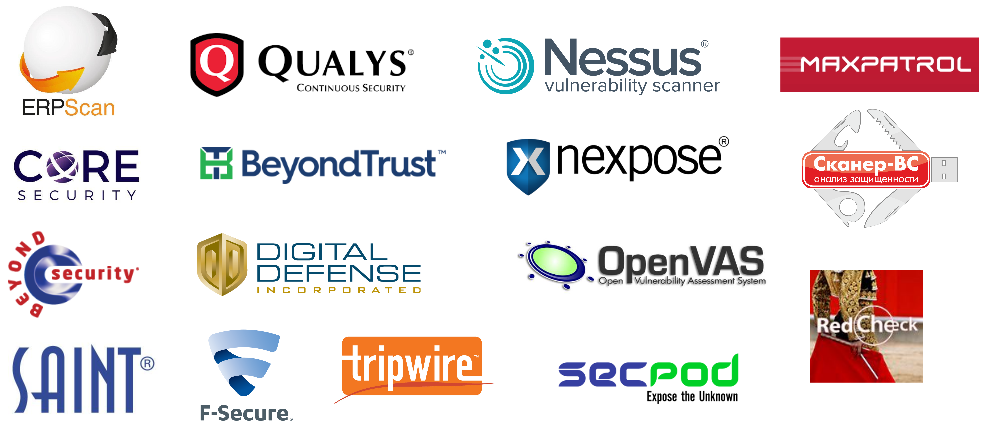
The first thing to say about Vulnerability Scanners and Vulnerability Management product is that there are plenty of them. On this picture I mentioned some of the products/vendors.

Vulnerability Scanners and Vendors

Some of them are highly specialized, like ErpScan for SAP, others are universal. Some of them are presented globally: Tenable Nessus / SecurityCenter, Rapid 7 Nexpose, Qualys, F-Secure etc., others are known mainly in Russia: Positivie Technologies Maxpatrol, Altx-Soft RedCheck, Echelon Scaner-VS. Some products are expansive, some of them not and even have versions available for free: OpenVAS, SecPod Saner Personal, Altx-Soft ComplianceCheck, Qualys SSL labsHigh-Tech Bridge SSL Server Security Test, etc.

In my opinion the main problems of VM solutions are expansiveness and low reliability of the scan results.

Continue reading

Seccubus installation and GUI overview

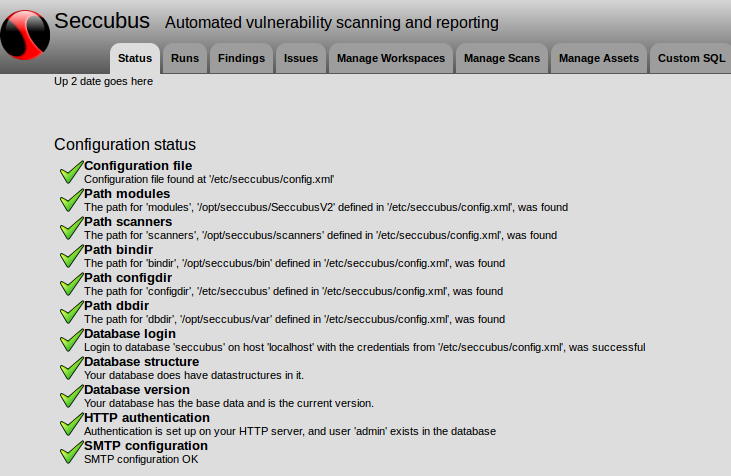
Seccubus installation and GUI overview. Seccubus can be roughly described as an open source analogue of Tenable SecurityCenter. Look, it can launch scans via APIs of Nessus, OpenVAS, and some other scanning tools, retrieve scan results, parse them and put in MySQL database. Then you can make SQL queries and work with scans in asset-based way (as you know, it is trending now).

Seccubus

Well, Seccubus is not yet a fancy-looking security product. You will need to spend some time to install and configure it, but still it is a very interesting project with a great potential.

Seccubus also may serve as open project that will accumulate expertise in API usage for various Vulnerability Scanners. Another project of such kind is OpenVAS, it’s OSPd scripts and connectors.

In this post I will describe installation process an show elements of GUI web-interface.

I installed Seccubus in CentOS 6 x86_64. I also tried CentOS 6 i386 and it worked fine. However, I can’t recommend you to install official Seccubus packages in CentOS 7 and the latest Debian-based systems. I had some issues with dependencies and Apache configuration. It seems like these systems are not fully supported yet. Security patches for CentOS 6.8 will be available until 30 Nov 2020, so anyway we have time.

Continue reading

Getting public IP address ranges for an organization

Getting public IP address ranges for an organization. Small bash script to automate the work with Qrator Radar public API.

Qrator Radar

The idea is to get autonomous system (AS) number of the organization by it’s name and retrieve all related IPv4 Prefixes. Why you may need it? To be sure, for example, that you scan all the hosts of organization available from the Internet for vulnerability management, penetration testing or bug bounty activity. For smaller organizations that don’t have own AS that obviously will not work.

Continue reading

Fast comparison of Nessus and OpenVAS knowledge bases

Fast comparison of Nessus and OpenVAS knowledge bases. In my opinion, quality of knowledge base is the most important characteristic of Vulnerability Management (VM) product. Maybe it’s because I have spent significant amount of time making different security content for vulnerability scanners and this is some form of professional deformation. 🙂 The fact is that nowadays we have dozens of VM solutions on the market, which have very different knowledge bases and thus different abilities for detecting vulnerabilities. And really nobody talk about this. I can recommend related post “Tenable doesn’t want to be Tenable anymore” and especially HD Moore’s comment to that post. It describes the reason why nobody interested now in quality of detection. Maximum what we, end-users, can hear from the vendor about it’s knowledge base is an amount of vulnerability checks: 40000-80000 and approximate list of supported systems. There is a massive false belief that detection quality of the products is approximately the same and it’s better talk about dashboards, reports, SIEM-like capabilities. To demonstrate that the difference actually exists I made a pretty primitive comparison of Nessus and OpenVAS knowledge bases.

I chose these two products, mainly because information on their NASL plugins is available at Vulners.com. As I also wrote earlier how you can use easily parse Vulners archives in python, so you can repeat it for yourself. I talked about this topic at Pentestit webinar about Vulners. If you are familiar with Russian, you can also check this out. 😉 The slides for this presentation are available here.

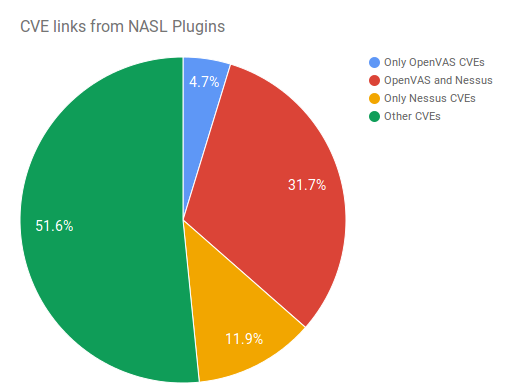
Why I call this comparison fast and primitive? I don’t define the structure of KBs for this product and don’t carefully map one nasl script to another. I suppose it may be a theme for another posts. Instead I am looking at the CVE links. If two scanners detect can the same vulnerabilities, they should have the same CVE links in all the NASL scripts, right? In reality we have a great difference between the products and more than a half of the CVEs can’t be detected by using both of them.

CVE links from NASL plugins

All CVEs: 80196
OpenVAS CVE links: 29240
Nessus CVE links: 35032
OpenVAS vs. Nessus: 3787;25453;9579

Continue reading