January “In the Trend of VM” (#23): vulnerabilities in Windows, React and MongoDB. Traditional monthly roundup of trending vulnerabilities. Launching the 2026 season. 🙂
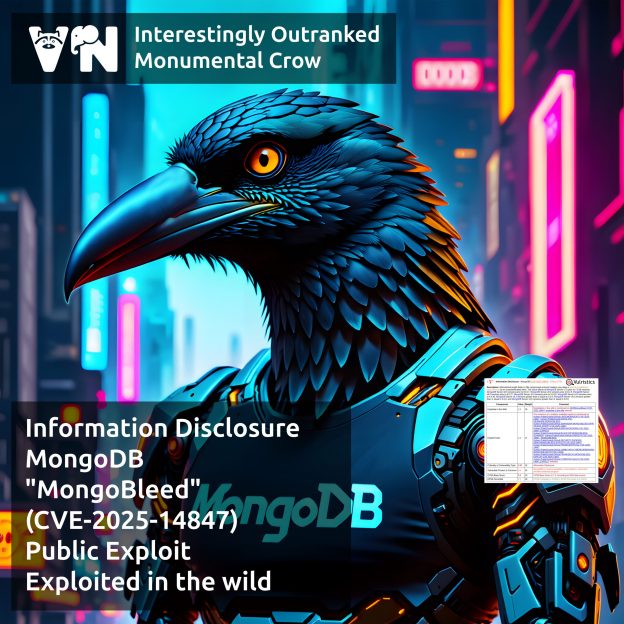
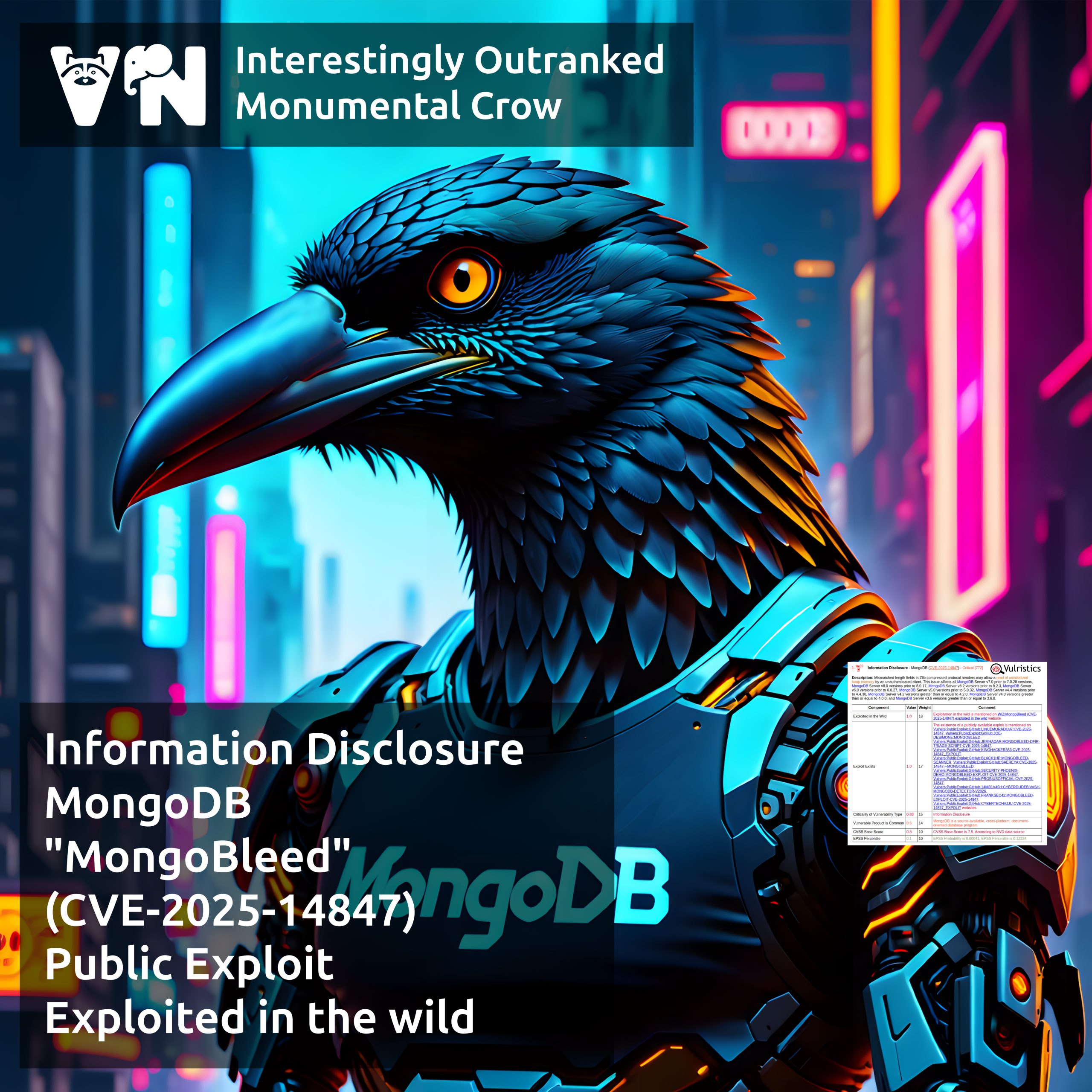
About Information Disclosure – MongoDB “MongoBleed” (CVE-2025-14847) vulnerability.MongoDB is a popular NoSQL database that stores data as JSON-like documents with an optional schema. The project is licensed under the SSPL. A flaw in MongoDB’s handling of the data length parameter during zlib compression allows a remote, unauthenticated attacker to access uninitialized memory and, consequently, sensitive data (credentials, keys, customer data, etc.).
⚙️ “Critical fix” was released on December 19. The vulnerability is fixed in versions 8.2.3, 8.0.17, 7.0.28, 6.0.27, 5.0.32, and 4.4.30.
🛠👾 A public exploit appeared on GitHub on December 26. Exploiting it only requires specifying a host, port, and memory read offsets. Immediately after the exploit was published, mass exploitation began, according to Wiz. The vulnerability was added to the CISA KEV on December 29.
🌐 Censys reports ~86k vulnerable servers online, including ~2k in Russia.
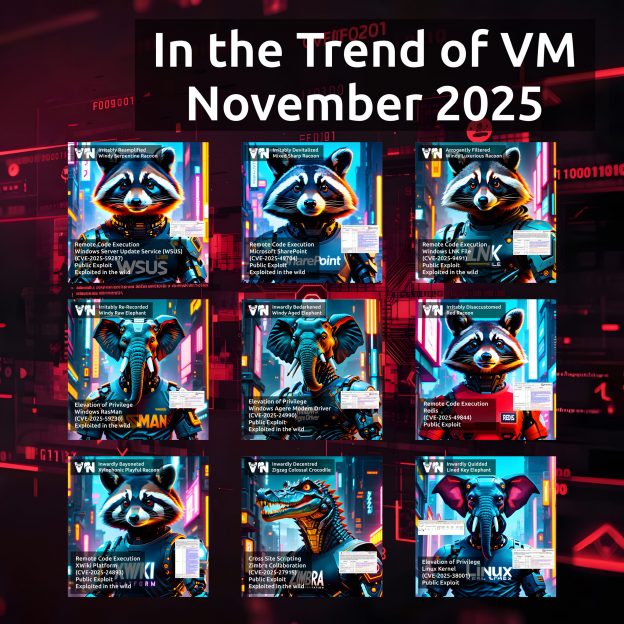
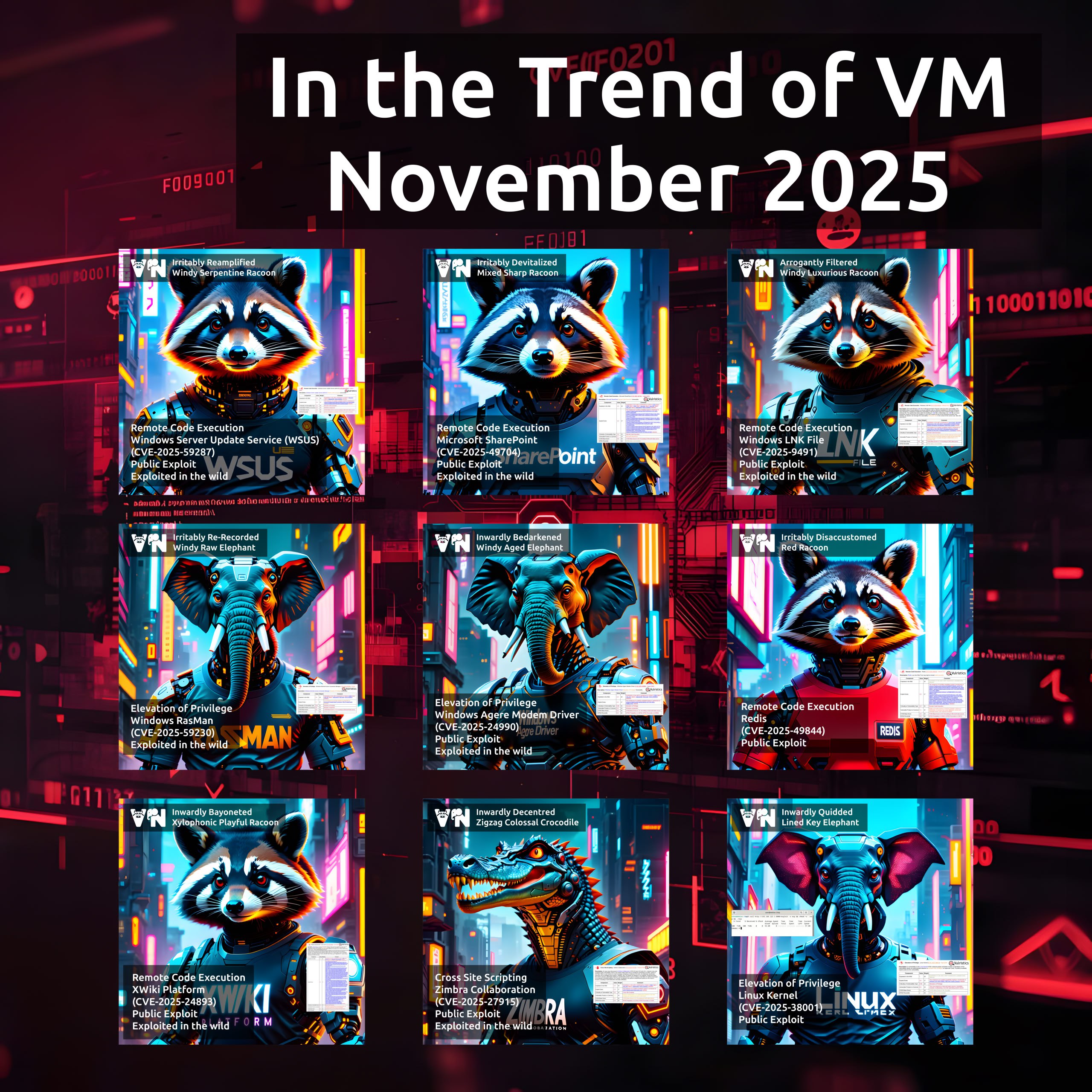
November “In the Trend of VM” (#21): vulnerabilities in Windows, SharePoint, Redis, XWiki, Zimbra Collaboration, and Linux. The usual monthly roundup. After several months, here’s a big one. 🔥
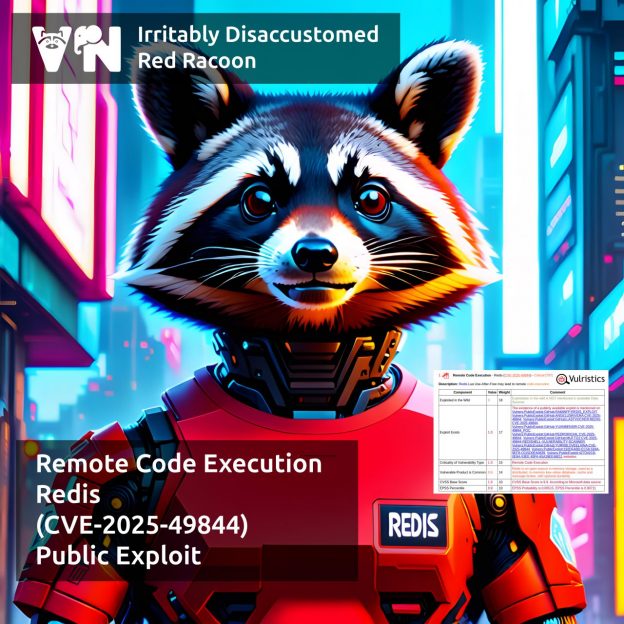
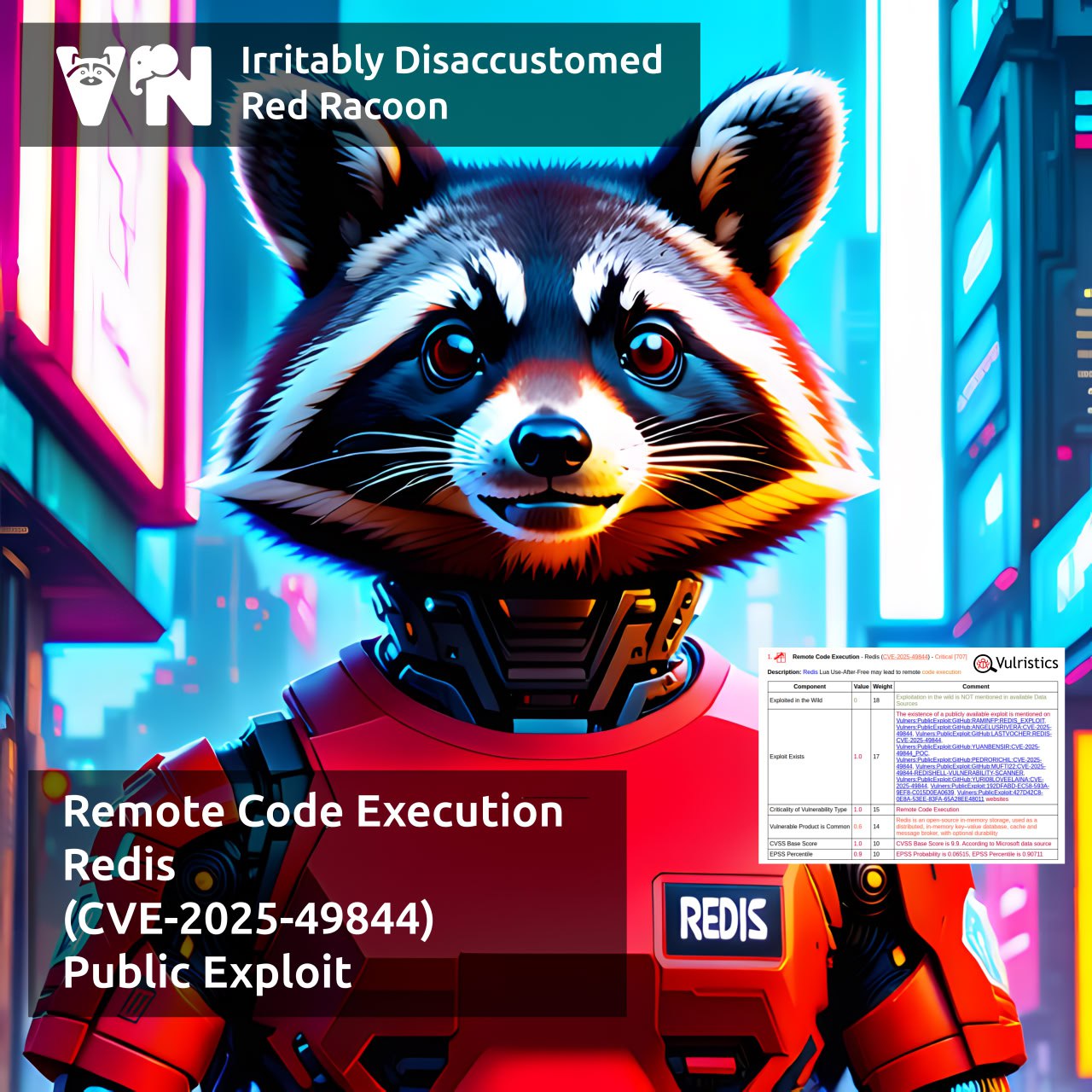
About Remote Code Execution – Redis “RediShell” (CVE-2025-49844) vulnerability. Redis is a popular in-memory key–value database, used as a distributed cache and message broker, with optional durability. This vulnerability allows a remote authenticated attacker to execute arbitrary code via a specially crafted Lua script. The requirement for authentication does not reduce its severity, because authentication in Redis is disabled by default and is often not used. 🤷♂️
⚙️ The vulnerability was discovered by Wiz researchers and presented at Pwn2Own Berlin in May of this year; it was fixed on October 3 (version 8.2.2).
🛠 As of October 7, a public exploit for the vulnerability is available on GitHub.
👾 There are no reports of attacks so far.
🌐 As of October 7, 330,000 Redis instances were accessible on the Internet, of which 60,000 had no authentication.
About Elevation of Privilege – PAN-OS (CVE-2024-9474) vulnerability. An attacker with PAN-OS administrator access to the management web interface can perform actions on the Palo Alto device with root privileges. Linux commands can be injected via unvalidated input in script.
The need for authentication and admin access could limit this vulnerability’s impact, but here we have the previous vulnerability Authentication Bypass – PAN-OS (CVE-2024-0012). 😏 Exploitation of this vulnerability chain was noted by Palo Alto on November 17. After November 19, when the watchTowr Labs article was published and exploits appeared, mass attacks began.
On November 21, Shadowserver reported that ~2000 hosts were compromised, mostly in the US and India. According to Wiz, attackers deployed web shells, Sliver implants and cryptominers.
About Remote Code Execution – NVIDIA Container Toolkit (CVE-2024-0132) vulnerability. NVIDIA’s bulletin was released on September 25. The vulnerability was found by researchers from Wiz.
Container Toolkit provides containerized AI applications with access to GPU resources. AI is now almost impossible without the use of video cards. 😏 Therefore, this component is very common.
The essence of the vulnerability is that a launched malicious container image can gain access to the host file system, which, in turn, can lead to the attacker’s code execution, denial of service, escalation of privileges, information disclosure, and data tampering.
If an attacker gains access to a desktop in this way, it’s not so bad, but what if he gains access to Kubernetes nodes or a cluster? 🫣 AI service providers (a la Hugging Face) that launch untrusted images are at risk.
Vulnerability Management news and publications #1. Hello everyone! In this episode, I will try to revive Security News with a focus on Vulnerability Management.
On the one hand, creating such reviews requires free time, which could be spent more wisely, for example, on open source projects or original research. On the other hand, there are arguments in favor of news reviews. Keeping track of the news is part of our job as vulnerability and security specialists. And preferably not only headlines.
I usually follow the news using my automated telegram channel @avleonovnews. And it looks like this: I see something interesting in the channel, I copy it to Saved Messages so that I can read it later. Do I read it later? Well, usually not. Therefore, the creation of news reviews motivates to read and clear Saved Messages. Just like doing Microsoft Patch Tuesday reviews motivates me to watch what’s going on there. In general, it seems it makes sense to make a new attempt. Share in the comments what you think about it. Well, if you want to participate in the selection of news, I will be glad too.
I took 10 news items from Saved Messages and divided them into 5 categories:
This is my personal blog. The opinions expressed here are my own and not of my employer. All product names, logos, and brands are property of their respective owners. All company, product and service names used here for identification purposes only. Use of these names, logos, and brands does not imply endorsement. You can freely use materials of this site, but it would be nice if you place a link on https://avleonov.com and send message about it at me@avleonov.com or contact me any other way.