
Author Archives: Alexander Leonov

About Alexander Leonov

Hi! My name is Alexander and I am a Vulnerability Management specialist. You can read more about me here. Currently, the best way to follow me is my Telegram channel @avleonovcom. I update it more often than this site. If you haven't used Telegram yet, give it a try. It's great. You can discuss my posts or ask questions at @avleonovchat. А всех русскоязычных я приглашаю в ещё один телеграмм канал @avleonovrus, первым делом теперь пишу туда.

Sending FireEye HX data to Splunk

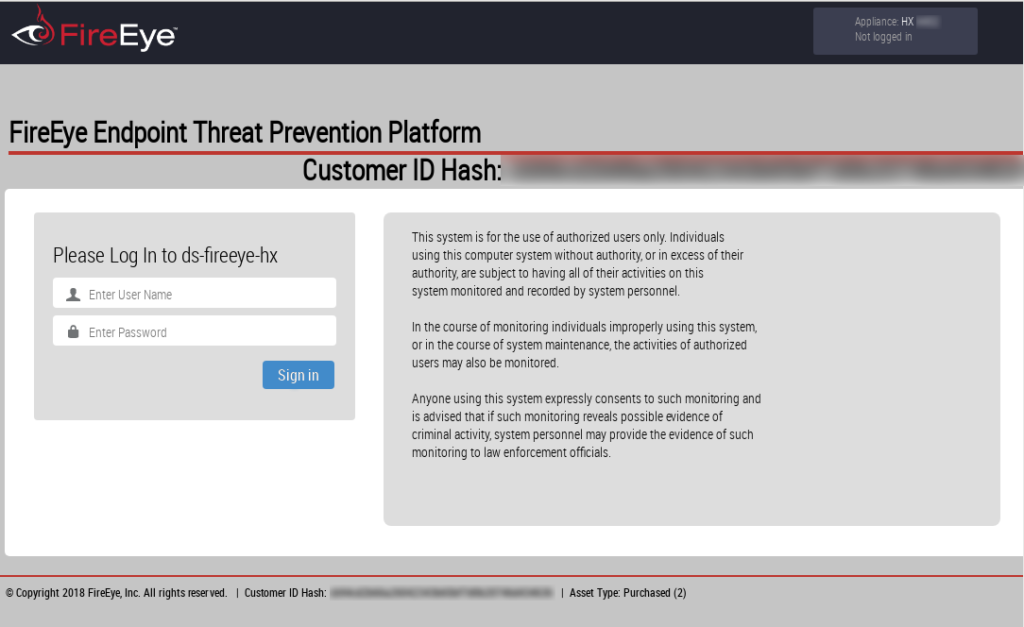
Sending FireEye HX data to Splunk. FireEye HX is an agent-based Endpoint Protection solution. Something like an antivirus, but focused on Advanced Persistent Threats (APT). It has an appliance with GUI where you can manage the agents and see information about detected security incidents.

As with any agent-based solution, it’s necessary to ensure that the agents are installed on every supported host in your network. You may also want to analyze the alerts automatically. And for both purposes you can use Splunk. Let’s see how to do it. 😉

FireEye HX appliance login screen

Note, everything bellow is for FireEye Endpoint Security (HX) 4.0.6 and Splunk 7.0.2. If you use some other version, the things may be quite different.

The main idea is following. We should present FireEye hosts and alerts data in JSON format, add some mandatory fields ans send this packages to Splunk using HTTP Event connector. Then we can process it in Splunk like I’ve shown in “How to correlate different events in Splunk and make dashboards“.

Continue reading

How to correlate different events in Splunk and make dashboards

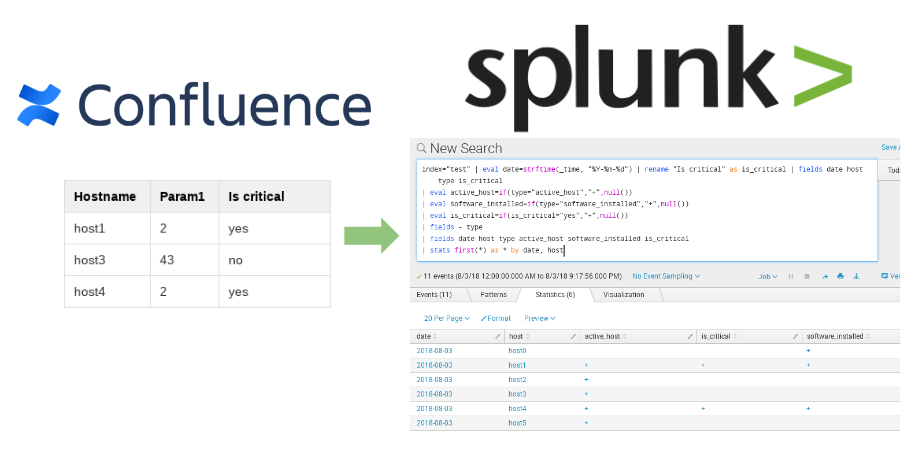
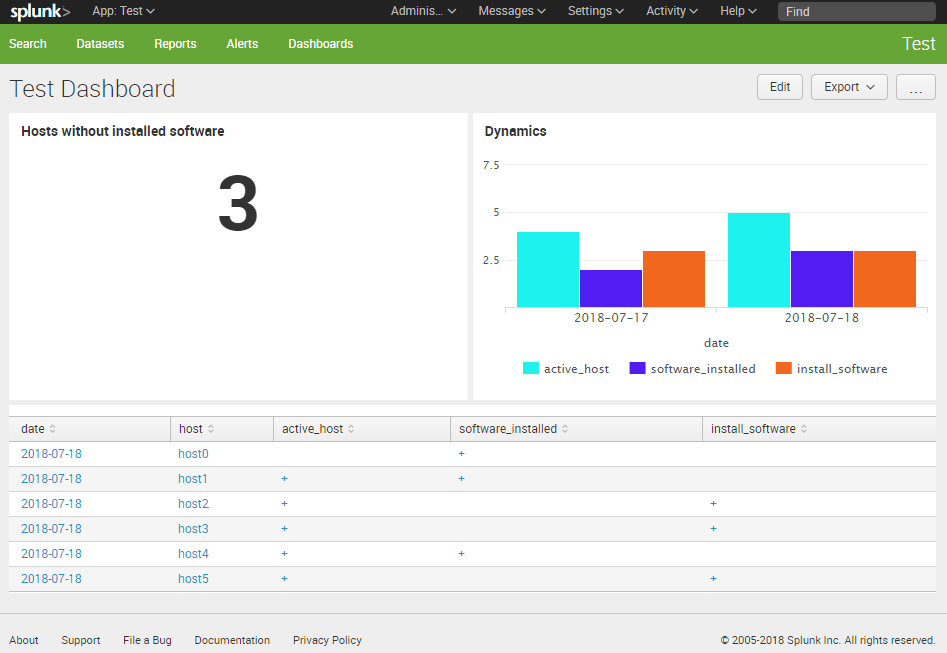
How to correlate different events in Splunk and make dashboards. Recently I’ve spent some time dealing with Splunk. Despite the fact that I have already done various Splunk searches before, for example in “Tracking software versions using Nessus and Splunk“, the correlation of different events in Splunk seems to be a very different task. And there not so many publicly available examples of this on the Internet. So, I decided to write a small post about it myself.

Splunk dashboard

Disclaimer: I’m not a pro in Splunk. I don’t have an idea if I am doing this the right or in optimal way. 😉 I just learned some tricks, they worked for me well and I want to share it with you. 

I will show the following case:

  1. We have some active network hosts.
  2. Some software product should be installed these hosts.
  3. We will send “host X is active” and “software is installed on host X” events to the Splunk server.
  4. We want to get some diagrams in Splunk that will show us on which hosts the software is  installed and how number of such hosts is changing in time.

As you can see, the task is quite a trivial and it can be easily implemented in pure Python. But the idea is to make it in Splunk. 😉

Continue reading

Free High-Tech Bridge ImmuniWeb Application Discovery service

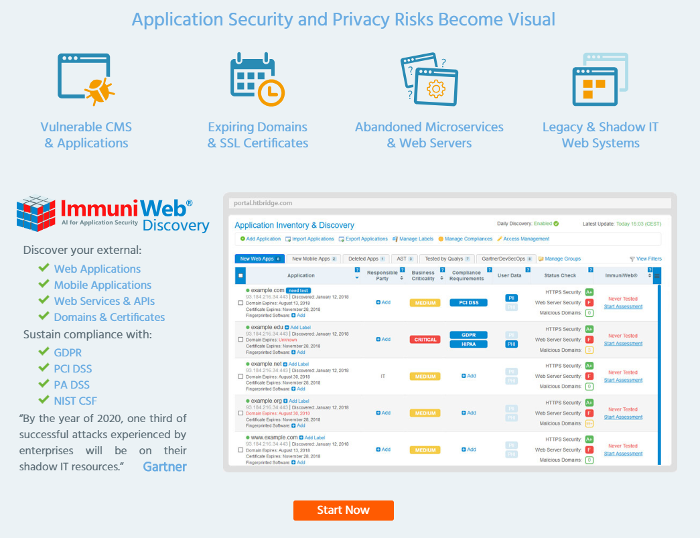
Free High-Tech Bridge ImmuniWeb Application Discovery service. Today I would like to talk about another service for application security analysis by High-Tech Bridge. It’s called ImmuniWeb Application Discovery.

This service can get information about your web and mobile applications available from the Internet. Believe me, this is not so obvious for a large organization. And, what is especially pleasant, it works automatically and free of charge. 😉

High-Tech Bridge ImmuniWeb Free Application Discovery

ImmuniWeb Application Discovery will also show the basic security problems with SSL connection, web-server headers, potential phishing issues for all founded web services. You can read more about this part in my posts about High-Tech Bridge services and APIs for SSL/TLS server testing and for searching cybersquatting, typosquatting and phishing domains.

From the same interface you can order an advanced audit of your web applications by High-Tech Bridge as well.

Continue reading

Qualys Security Conference Virtual 2018. New Agents, Patch Management and Free Services

Qualys Security Conference Virtual 2018. New Agents, Patch Management and Free Services. Today I attended a very interesting online event – Qualys Security Conference Virtual 2018. It consisted of 11 webinars, began at 18:00 and will end at 03:45 Moscow time. Not the most convenient timing for Russia, but it was worth it. 🙂

Qualys Security Conference 2018

Last time I was at offline QSC event in 2016, so for me it was especially interesting to learn about the new features of Qualys platform.

Continue reading

U.S. sanctions against Russian cybersecurity companies

U.S. sanctions against Russian cybersecurity companies. I never thought that I will write here about state sanctions. Usually I try to ignore political topics. But now it’s necessary. Yesterday OFAC introduced sanctions against 5 Russian companies.

Treasury Sanctions Russian Federal Security Service Enablers

I would like to mention 3 of them:

Continue reading

PHDays8: Digital Bet and thousands tons of verbal ore

PHDays8: Digital Bet and thousands tons of verbal ore. It’s time to write about Positive Hack Days 8: Digital Bet conference, which was held May 15-16 at the Moscow World Trade Center. It was the main Russian Information Security event of the first half of 2018. More than 4 thousand people attended! More than 50 reports, master classes and round tables held in 7 parallel streams. And, of course, impressive CTF contest for security experts and hackers with an fully-functioning model of the city.

Hack Days 8: Digital Bet

I was very pleased that there was a separate section dedicated to Vulnerability Management. Something similar happened only at ISACA meetup last year. But here we had an event for several thousand people!

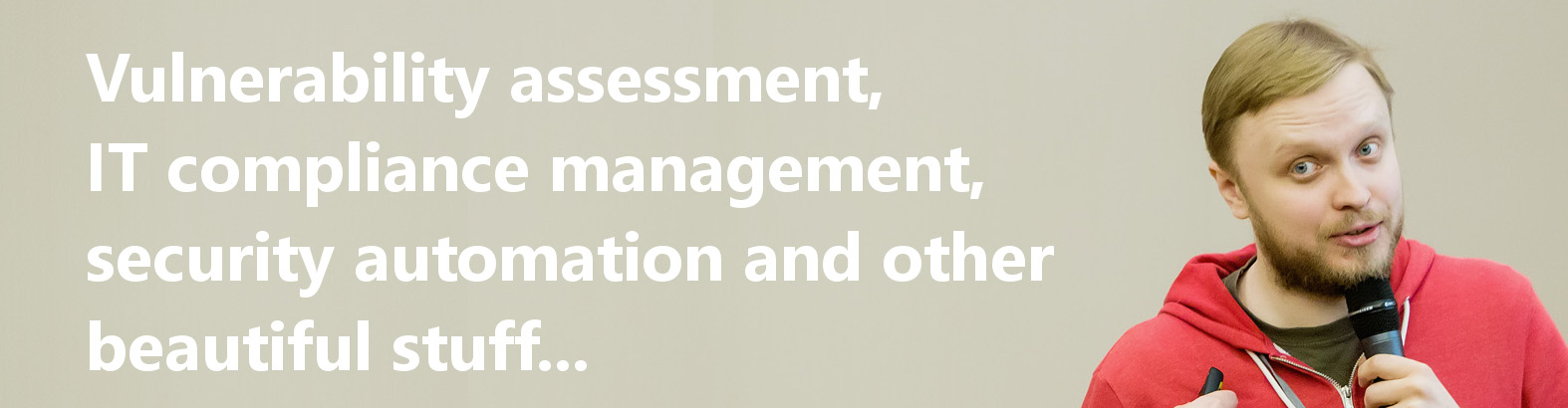
The session was held in Fast Track format: 20 minutes for the presentation and questions. I was the first to speak. My report was called “Vulnerability Databases: sifting thousands tons of verbal ore”. Here is the video:

And here’s a link to the version with only Russian sound track.

Continue reading

Vulnerability Databases: Classification and Registry

Vulnerability Databases: Classification and Registry. What publicly available Vulnerability Databases do we have? Well, I can only say that there are a lot of them and they are pretty different. Here I make an attempt to classify them.

It’s quite an ungrateful task. No matter how hard you try, the final result will be rather inaccurate and incomplete. I am sure someone will be complaining. But this is how I see it. 😉 If you want to add or change something feel free to make a comment bellow or email me@avleonov.com.

The main classifier, which I came up with:

  • There are individual vulnerability databases in which one identifier means one vulnerability. They try to cover all existing vulnerabilities.
  • And others are security bulletins. They cover vulnerabilities in a particular product or products. And they usually based on on patches. One patch may cover multiple vulnerabilities.

I made this diagram with some Vulnerability Databases. Note that I wanted to stay focused, so there are no exploit DBs, CERTs, lists of vulnerabilities detected by some researchers (CISCO Talos, PT Research, etc.), Media and Bug Bounty sites.

Vulnerability Databases classification

For these databases the descriptions of vulnerabilities are publicly available on the site (in html interface or downloadable data feed), or exist in a form of paid Vulnerability Intelligence service (for example, Flexera).

On one side there are databases of individual vulnerabilities, the most important is National Vulnerability Database. There are also Chinese, Japanese bases that can be derived from NVD or not.

On the other side we have security bulletins, for example RedHat Security Advisories.

And in the middle we have a Vulnerability Databases, for which it is not critical whether they have duplicated vulnerability IDs or not.

Continue reading