Downloading entire Vulners.com database in 5 minutes

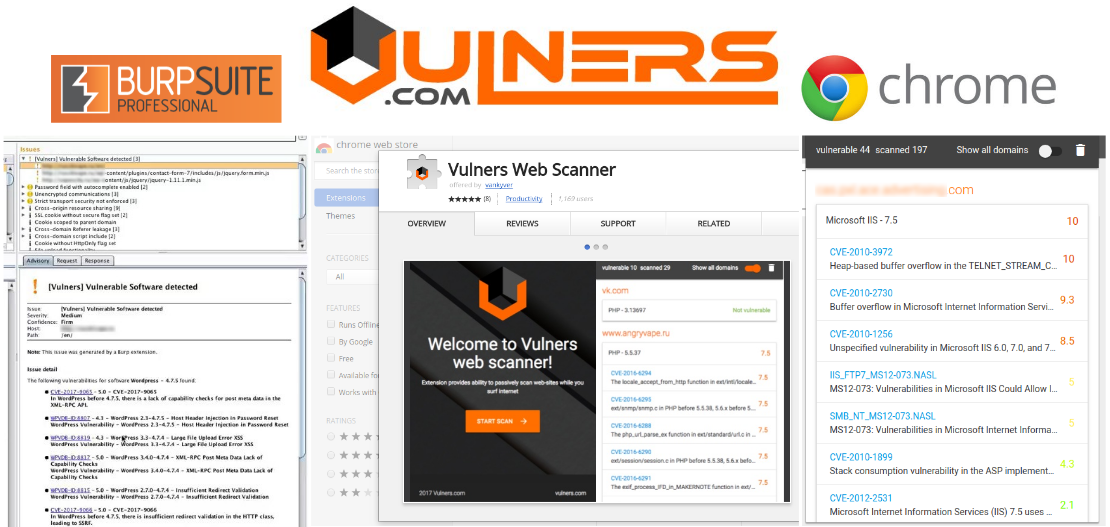
Downloading entire Vulners.com database in 5 minutes. Today I once again would like to talk about Vulners.com and why, in my opinion, it is the best vulnerability database that exist nowadays and a real game-changer.

The main thing is transparency. Using Vulners you not only can search for security content (see “Vulners – Google for hacker“), but download freely all available content from the database for your own offline analysis. And more than this, you can even see how Vulners actually works and evaluate how fresh and full the content is.

Vulners collections

Why you may need to download full security content database? For example, you may want to create something like vulnerability quadrants.

Vulnerability Quadrant

Continue reading

Dealing with cybersquatting, typosquatting and phishing

Dealing with cybersquatting, typosquatting and phishing. It won’t be a secret to say that phishing remains one of the most effective attack vectors.

For example, your colleague receives by email a malicious web link that looks like a link to your corporate portal and opens it. If your Vulnerability and Patch Management programs are not good enough (see “WannaCry about Vulnerability Management“) and the software on his desktop has some critical and exploitable vulnerabilities in web browser, PDF reader, Microsoft Office, etc., you will probably get compromised host in your network.

This is also a pain for your customers. If someone will be sending messages on behalf of your organization, this can easily lead to fraud and costs in public image. And it will be even harder to detect. You will know about it only if they tell you. And if the attack was not massive, the probability of this is not very high.

High-Tech Bridge Trademark Abuse Radar summary

What can we do about this?

  • We should definitely raise the awareness among co-workers and clients. They should know that such attacks may occur and carefully check the domain before any click. Especially if the letter seems suspicious.
  • On the other hand, we can also act proactively. Find which domains are similar enough to company brand and can be potentially used for phishing or other types of fraud. Then work with owners or registrars of such domains directly.

However, tracking down potentially malicious domains is not an easy task. Where should we take the lists of  all registered domains? What does “similar enough” really mean? Fortunately, there are services that greatly facilitate this task.

And today I would like to write you about a new free service by High-Tech Bridge – Trademark Abuse Radar. BTW, I already wrote earlier about their cool free service and API for SSL/TLS server testing, you can also check this out 😉

Everything is simple. Just enter the domain name you are interested in and in a few minutes you will receive a full report. No authorization for analysis is required, because the report is built on external and open data.

High-Tech Bridge Trademark Abuse Radar input

I chose the Citibank (citibank.com) as one of the most famous banking brand in the world. Let’s see what Trademark Abuse Radar will find.

Continue reading

Not for Russians

Not for Russians. Let’s talk about web-site blocking. Not about cases of government censorship, not about cases where content is blocked for copyright reasons and not even about sanctions. I want to pay attention to the cases when companies block access to their own sites voluntarily for user from the whole country, in particular for the users from Russia.

I do not know why they actually do such things. Perhaps they are trying to defend themselves against evil Russian hackers. Not the most effective measure. Attackers know how to use proxies and VPNs. Maybe they are under constant DDoS attack from Russian IPs? But these problems can also be solved more effectively without blocking an entire country. And this can be understood for the company, which is not much in Information Security, but I see this regularly on the websites of Security Vendors. For example, Tanium:

Tanium

Or a very recent purchase of Qualys, start-up Nevis Networks:

Nevis Networks

But okay, in these cases, only sales of these companies in Russia suffer (if they even exist).

A slightly different case was recently seen on the Amazon recruiting site.

Continue reading

Qualys new look and new products

Qualys new look and new products. As you all know, it’s Black Hat 2017 time. This year Qualys seems to be the main newsmaker among Vulnerability Management vendors. Qualys Team renewed logo and website, updated marketing strategy, presented two new products: CloudView and CertView. I decided to take a look.

New Qualys Logo

Talking about design, I liked the old logo more. I don’t see “Q” here. Mirrored “9” maybe. 🙂 However, I did not like the blue nut of Tenable before and now it looks right and familiar.

Site design was also changed and simplified. I really liked well-structured qualys.com, where and every scan mode (“Cloud Apps”) had it’s own color and icon.

Continue reading

Automated posting on Vkontakte public pages using VK API and Python

Automated posting on Vkontakte public pages using VK API and Python. Vk.com (Vkontakte) is the most popular social network Russia and Ex-USSR with 430+ million users. Traditional advantages of vk.com – huge amount of free music and video. The service allows users to upload and share files and for a long time was quite tolerant to piracy. In 2016 Mail.Ru Group, Vkontakte parent company, has solved all problems with major music labels and  now works closely with the rights holders.

VKontakte has very efficient features for creating communities: public pages (blogs) and groups (open and closed web-forums). In VK communities you can easily share news, photo, audio, video, text files in different formats, create discussions topics and wiki-pages. When I was studying at the University in 2003-2009, to share information in a study group we needed to create our own website and phpBB-based forum. Now practically all students simply use VKontakte groups for this. VKontakte shows all content in groups as is, without hiding and filtering.

With reach automation capabilities, you can do various interesting things based on VK. For a start, I decided to post all annotations from my https://avleonov.com blog to https://vk.com/avleonovcom Vkontakte page. I created this page in web GUI and filled it with content automatically using my own python scripts.

Creating a new application

I want to work with Vkontakte from my Python scripts. So, I will need to create a new Standalone Application for this. You can do it here: https://vk.com/editapp?act=create

vk new application

Upd. March 2018 Integration with Vkontakte suddenly broke, because they added mandatory version parameter to all calls.

Continue reading

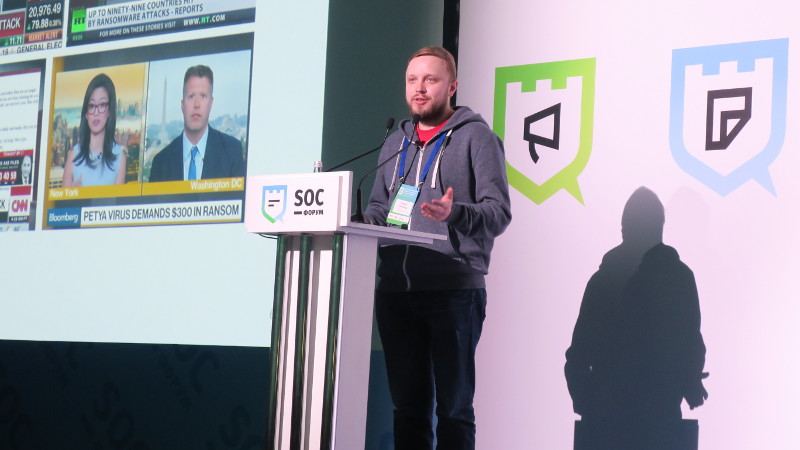
Petya, M.E.Doc and the problem of trust

Petya, M.E.Doc and the problem of trust. I’ve already mentioned in “Petya the Great and why *they* don’t patch vulnerabilities“, that NotPetya ransomware seems trivial from Vulnerability Management point of view. It uses known Windows vulnerabilities, that were patched by Microsoft long time ago.

Despite of this, I was really interested in M.E.Doc (servers were confiscated by Ukrainian police and website is not operational) role in the initial phase of malware spreading. In my opinion, we have a pretty interesting example of an attack vector, that will be very hard to detect and mitigate. And moreover, it’s once again shows that protected perimeter won’t be a panacea anymore.

m.e.doc

M.E.Doc – My Electronic Document Circulation System. “m.e.doc” sounds like the word, that mean “honey” in Russian and Ukrainian. That’s why all these bees in promo materials.

M.E.Doc is an Document Circulation System very popular in Ukraine. It makes possible to send reports to the government authorities in electronic form. It can be used in any organization. I can even imagine situation when usage of this kind of software may be even mandatory. Now the researchers [Eset, Dr.Web] say that M.E.Doc servers sent updates with backdoors  to the customers.

This backdoor has abilities:

  • Data collection for accessing mail servers
  • Arbitrary commands execution in the infected system
  • Running any executables
  • Downloading arbitrary files to the infected computer
  • Uploading arbitrary files to a remote server
  • Identify the exact organization using EDRPOU number.

I don’t really care about technical details about this backdoor. For me it’s enough that malicious code was on official server of the vendor and was spread to legitimate customers. Boom!

Continue reading

Adding third party nasl plugins to OpenVAS

Adding third party nasl plugins to OpenVAS. If you want to develop nasl plugins for OpenVAS, you might be interested how to import them in scanner. So, I was also interested.

First of all, I decided to copy one of existing nasl scripts. I chose script that successfully detected vulnerability on a target host. Thus, in the case of importing error, I would know for sure that it’s not because of syntax errors in script, but, for example, because non-existing plugin signature.

I scanned target CentOS host, chose and copied script file, changed id of the script (oid) and script title, rebuilt database. Then I rescanned target host.

CESA edited

As you can see, new script is also in results. Pretty straightforward.

CESA edited description

Now, let’s review the actual commands.

Continue reading