Tag Archives: CISAKEV

About Remote Code Execution - Microsoft SharePoint (CVE-2026-20963) vulnerability

About Remote Code Execution - Microsoft SharePoint (CVE-2026-20963) vulnerability

About Remote Code Execution - Microsoft SharePoint (CVE-2026-20963) vulnerability. This vulnerability was fixed in the January MSPT. At the time of the MSPT release on January 13, VM vendors did not highlight this vulnerability in their reviews, and Microsoft reported no evidence of exploitation in the wild. The CVSS vector was initially rated as CVSS:3.1/AV:N/AC:L/PR:L/UI:N/S:U/C:H/I:H/A:H (8.8). The "PR:L" indicates that authentication was required to exploit the vulnerability. However, on March 17, Microsoft updated both the vulnerability description and its CVSS vector. The updated CVSS vector is CVSS:3.1/AV:N/AC:L/PR:N/UI:N/S:U/C:H/I:H/A:H (9.8). The "PR:N" indicates that authentication is not required for exploitation.

Current vulnerability description:

"Deserialization of untrusted data (CWE-502) in Microsoft Office SharePoint allows an unauthorized attacker to execute code over a network. In a network-based attack, an unauthenticated attacker could write arbitrary code to inject and execute code remotely on the SharePoint Server."

👾 On March 18, the vulnerability was added to the CISA KEV catalog. No detailed information about exploitation is available yet, and there are currently no public exploits. However, in terms of potential impact, this vulnerability may be comparable to last year's RCE "ToolShell" (CVE-2025-49704).

The situation surrounding this vulnerability demonstrates that the criticality of any vulnerability cannot be determined once and for all. Indicators of exploitation in the wild or public exploits may emerge at any time, and the vendor may also revise the vulnerability description and CVSS metrics for various reasons. Therefore, all vulnerabilities detected within an infrastructure must be continuously monitored (either internally or via a VM vendor), with their criticality regularly reassessed and remediation deadlines adjusted accordingly.

Given that the status of any specific vulnerability may change at any time, it is not advisable to dismiss vulnerabilities as definitively non-critical or non-exploitable. A responsible approach assumes that all detected vulnerabilities require remediation, prioritized according to their continuously updated risk levels.


July Linux Patch Wednesday

July Linux Patch Wednesday

July Linux Patch Wednesday. This time, there are 470 vulnerabilities, slightly fewer than in June. Of these, 291 are in the Linux Kernel. One vulnerability shows signs of being exploited in the wild (CISA KEV):

🔻 SFB - Chromium (CVE-2025-6554)

There are also 36 (❗️) vulnerabilities for which public exploits are available or suspected to exist. Notable among them:

🔸 RCE - Redis (CVE-2025-32023), pgAdmin (CVE-2024-3116), Git (CVE-2025-48384)
🔸 EoP - Sudo (CVE-2025-32462, CVE-2025-32463)
🔸 PathTrav - Tar (CVE-2025-45582)
🔸 XSS - jQuery (CVE-2012-6708)
🔸 SFB - PHP (CVE-2025-1220)
🔸 DoS - LuaJIT (CVE-2024-25177), Linux Kernel (CVE-2025-38089)
🔸 MemCor - DjVuLibre (CVE-2025-53367)

🗒 Full Vulristics report

На русском

June "In the Trend of VM" (#16): vulnerabilities in Microsoft Windows, Apache HTTP Server, the web interfaces of MDaemon and Zimbra, and the 7-Zip archiver

June In the Trend of VM (#16): vulnerabilities in Microsoft Windows, Apache HTTP Server, the web interfaces of MDaemon and Zimbra, and the 7-Zip archiver

June "In the Trend of VM" (#16): vulnerabilities in Microsoft Windows, Apache HTTP Server, the web interfaces of MDaemon and Zimbra, and the 7-Zip archiver. A traditional monthly vulnerability roundup. 🙂

🗞 Post on Habr (rus)
🗒 Digest on the PT website (rus)

A total of 7 trending vulnerabilities:

🔻 Elevation of Privilege - Microsoft DWM Core Library (CVE-2025-30400)
🔻 Elevation of Privilege - Windows Common Log File System Driver (CVE-2025-32701, CVE-2025-32706)
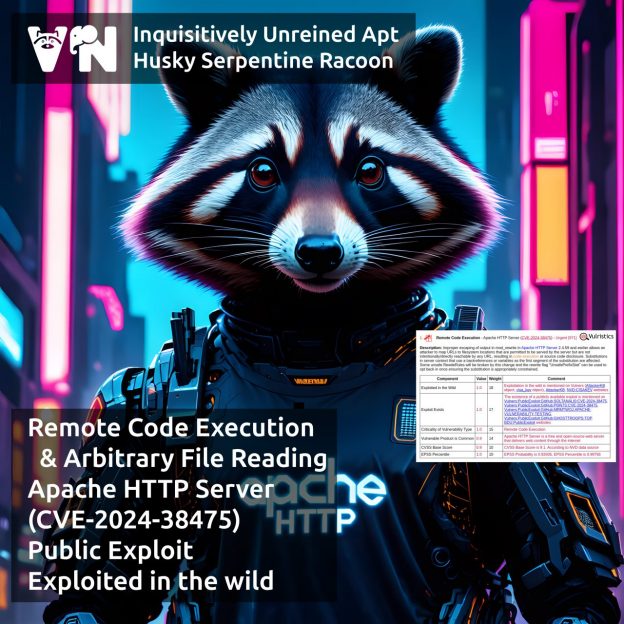
🔻 Remote Code Execution & Arbitrary File Reading - Apache HTTP Server (CVE-2024-38475)
🔻 Cross Site Scripting - MDaemon Email Server (CVE-2024-11182)
🔻 Cross Site Scripting - Zimbra Collaboration (CVE-2024-27443)
🔻 Remote Code Execution - 7-Zip (BDU:2025-01793)

На русском

About Remote Code Execution & Arbitrary File Reading - Apache HTTP Server (CVE-2024-38475) vulnerability

About Remote Code Execution & Arbitrary File Reading - Apache HTTP Server (CVE-2024-38475) vulnerability

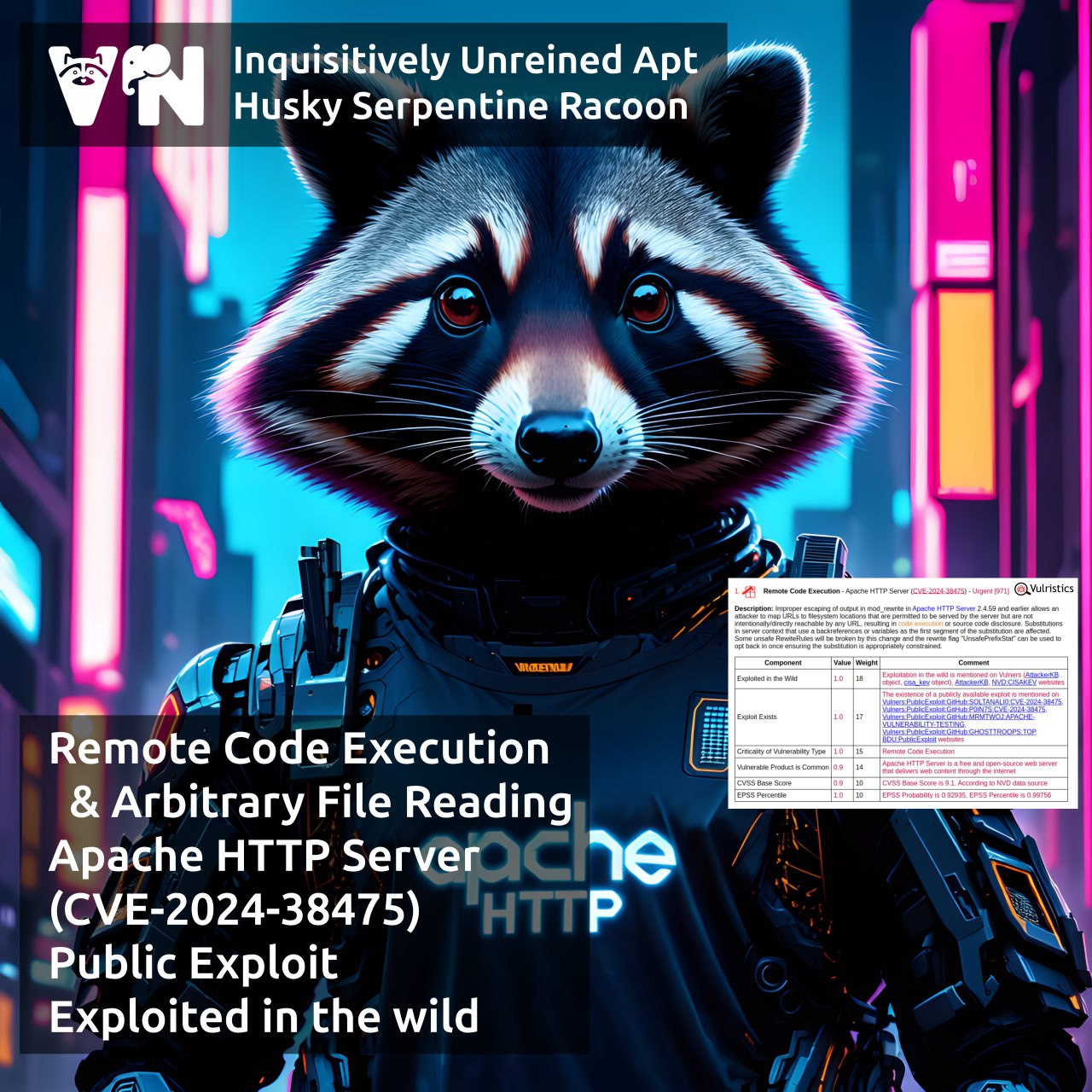
About Remote Code Execution & Arbitrary File Reading - Apache HTTP Server (CVE-2024-38475) vulnerability. Improper escaping of output in mod_rewrite module leads to remote code execution or arbitrary file reading. Successful exploitation does not require authentication.

🔻 Apache HTTP Server 2.4.60, which includes a fix for this vulnerability, was released on July 1, 2024. Orange Tsai (DEVCORE) published technical details and BH2024 slides on the vulnerability on August 9, 2024. A PoC exploit has been on GitHub since August 18, 2024.

🔻 On April 29, 2025, it was disclosed that CVE-2024-38475 is actively exploited to compromise SonicWall SMA gateways. WatchTowr Labs explains how the vulnerability exposes the SQLite file with active session tokens. On May 1, the vulnerability was added to the CISA KEV.

Naturally, this vulnerability could potentially affect far more than just SonicWall appliances. 😏

На русском

March Linux Patch Wednesday

March Linux Patch Wednesday

March Linux Patch Wednesday. Total vulnerabilities: 1083. 😱 879 in the Linux Kernel. 🤦‍♂️ Two vulnerabilities show signs of exploitation in the wild:

🔻 Code Injection - GLPI (CVE-2022-35914). An old vulnerability from CISA KEV, but first patched on March 3 in RedOS Linux.
🔻 Memory Corruption - Safari (CVE-2025-24201). Fixed in WebKitGTK packages in Linux repositories.

There are 19 vulnerabilities with publicly available exploits. Notable ones:

🔸 Remote Code Execution - Apache Tomcat (CVE-2025-24813)
🔸 Command Injection - SPIP (CVE-2024-8517)
🔸 Memory Corruption - Assimp (CVE-2025-2152)
🔸 Memory Corruption - libxml2 (CVE-2025-27113)

The Elevation of Privilege vulnerability in the Linux Kernel (CVE-2022-49264) has no public exploit yet. However, it resembles well-known PwnKit (CVE-2021-4034).

🗒 Full Vulristics report

На русском

New episode "In The Trend of VM" (#10): 8 trending vulnerabilities of November, zero budget VM and who should look for patches

New episode "In The Trend of VM" (#10): 8 trending vulnerabilities of November, zero budget VM and who should look for patches. The competition for the best question on the topic of VM continues. 😉🎁

📹 Video on YouTube, LinkedIn
🗞 Post on Habr (rus)
🗒 Digest on the PT website

Content:

🔻 00:29 Spoofing - Windows NTLM (CVE-2024-43451)
🔻 01:16 Elevation of Privilege - Windows Task Scheduler (CVE-2024-49039)
🔻 02:16 Spoofing - Microsoft Exchange (CVE-2024-49040)
🔻 03:03 Elevation of Privilege - needrestart (CVE-2024-48990)
🔻 04:11 Remote Code Execution - FortiManager "FortiJump" (CVE-2024-47575)
🔻 05:19 Authentication Bypass - PAN-OS (CVE-2024-0012)
🔻 06:32 Elevation of Privilege - PAN-OS (CVE-2024-9474)
🔻 07:42 Path Traversal - Zyxel firewall (CVE-2024-11667)
🔻 08:37 Is it possible to Manage Vulnerabilities with no budget?
🔻 09:53 Should a VM specialist specify a patch to install on the host in a Vulnerability Remediation task?
🔻 10:51 Full digest of trending vulnerabilities
🔻 11:18 Backstage

На русском

About Authentication Bypass - PAN-OS (CVE-2024-0012) vulnerability

About Authentication Bypass - PAN-OS (CVE-2024-0012) vulnerability

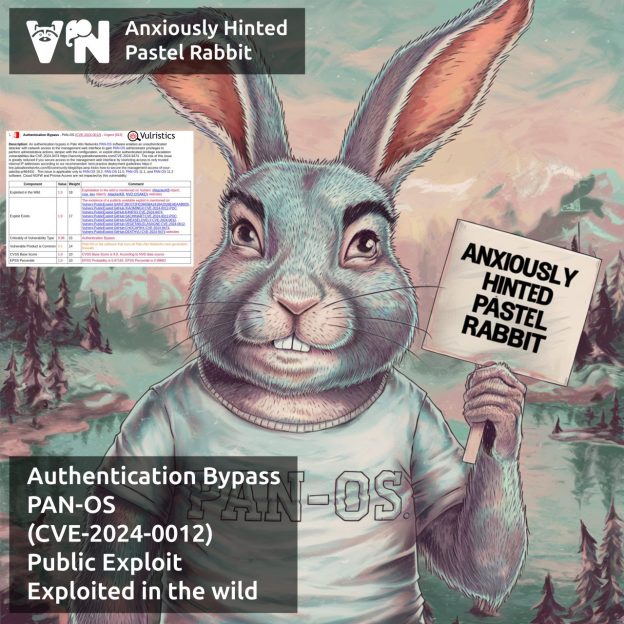
About Authentication Bypass - PAN-OS (CVE-2024-0012) vulnerability. An unauthenticated attacker with network access to the Palo Alto device web management interface could gain PAN-OS administrator privileges to perform administrative actions, tamper with the configuration, or exploit other authenticated vulnerabilities. Firewalls of the PA, VM, CN series and the Panorama management platform are vulnerable. The vendor recommends restricting access to the management web interface to trusted internal IP addresses only.

🔻 On November 8, a Palo Alto bulletin was released
🔻 On November 15, signs of attacks were noticed, labeled as "Operation Lunar Peek"
🔻 On November 18, the vulnerability was added to the CISA KEV
🔻 On November 19, watchTowr Labs released a post with technical details ("supply the off value to the X-PAN-AUTHCHECK HTTP request header, and the server helpfully turns off authentication") 😏 and exploits soon appeared on GitHub

На русском