Not for Russians. Let’s talk about web-site blocking. Not about cases of government censorship, not about cases where content is blocked for copyright reasons and not even about sanctions. I want to pay attention to the cases when companies block access to their own sites voluntarily for user from the whole country, in particular for the users from Russia.
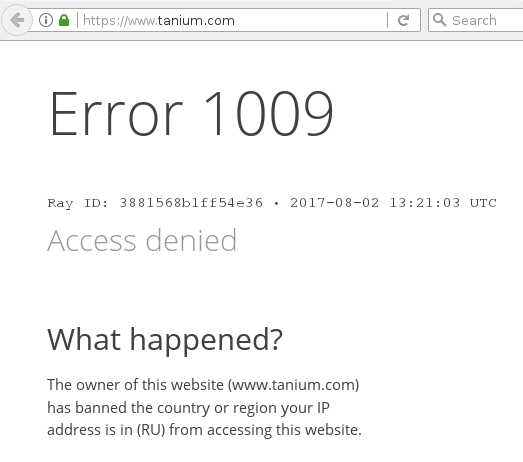
I do not know why they actually do such things. Perhaps they are trying to defend themselves against evil Russian hackers. Not the most effective measure. Attackers know how to use proxies and VPNs. Maybe they are under constant DDoS attack from Russian IPs? But these problems can also be solved more effectively without blocking an entire country. And this can be understood for the company, which is not much in Information Security, but I see this regularly on the websites of Security Vendors. For example, Tanium:
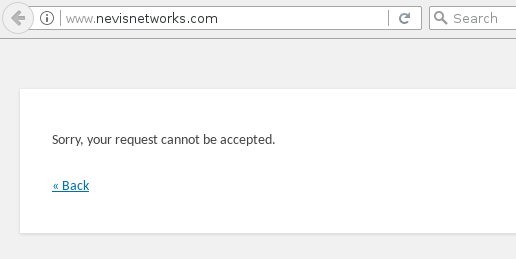
Or a very recent purchase of Qualys, start-up Nevis Networks:
But okay, in these cases, only sales of these companies in Russia suffer (if they even exist).
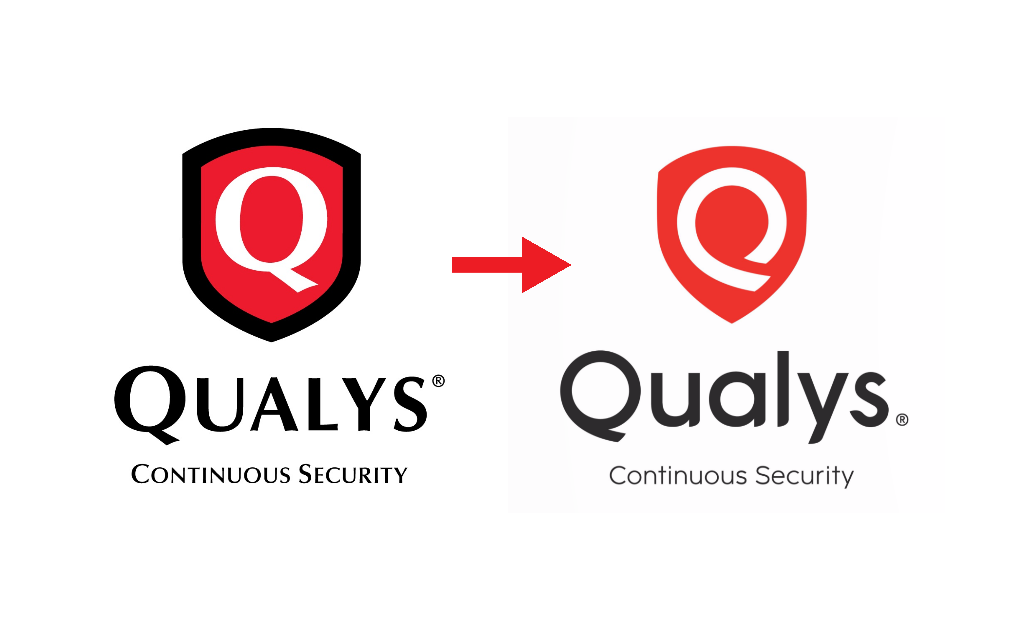
Qualys new look and new products. As you all know, it’s Black Hat 2017 time. This year Qualys seems to be the main newsmaker among Vulnerability Management vendors. Qualys Team renewed logo and website, updated marketing strategy, presented two new products: CloudView and CertView. I decided to take a look.
Talking about design, I liked the old logo more. I don’t see “Q” here. Mirrored “9” maybe. 🙂 However, I did not like the blue nut of Tenable before and now it looks right and familiar.
Site design was also changed and simplified. I really liked well-structured qualys.com, where and every scan mode (“Cloud Apps”) had it’s own color and icon.
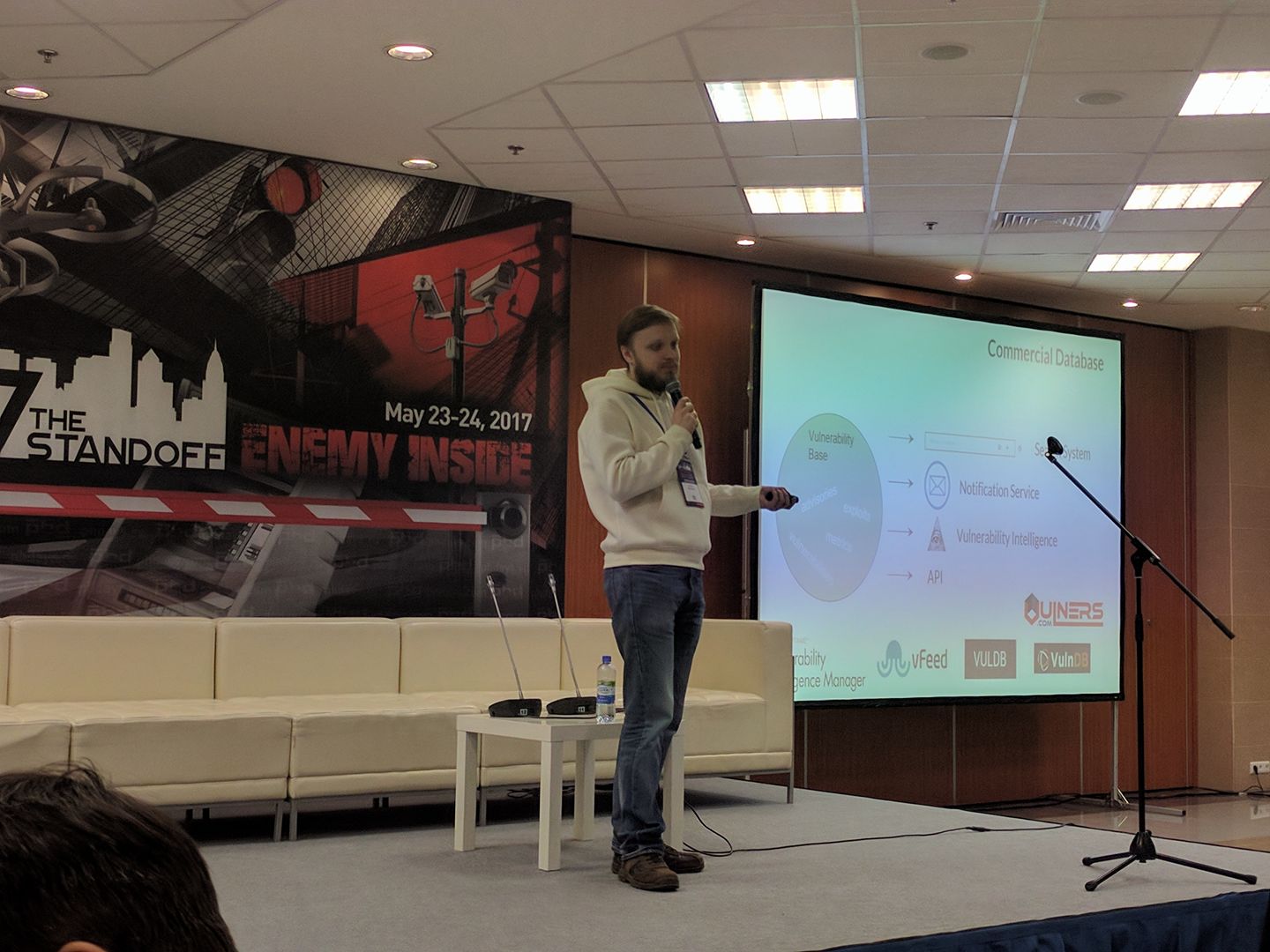
PHDays VII: To Vulnerability Database and beyond. Last Tuesday and Wednesday, May 23-24, I attended PHDays VII conference in Moscow. I was talking there about vulnerability databases and the evolution process of vulnerability assessment tools, as far as I understand it.
But first of all, a few words about the conference itself. I can tell that since the last year the event got even better. I’ve seen lot of new faces. Some people I didn’t know, but they knew me by my blog and accounts in social networks. What a strange, strange time we live in! I was very pleased to see and to talk with you all, guys! 🙂
PHDays is one of the few events that truly brings all Russian community of security professionals together. I’ve seen people I have studied with in university, colleagues from the all places where I have been worked, and nearly all researchers and security practitioners that I follow. Big thanks for the organizers, Positive Technologies, for such an amazing opportunity!
It is also a truly international event. You can see speakers from all over the world. And all information is available both in Russian and English. Almost all slides are in English. Three parallel streams of reports, workshops and panel discussions were dubbed by professional simultaneous interpreters, like it is a United Nations sessions or something, recorded and broadcast live by the team of operators and directors. Final result looks really great.
Video of my presentation:
I was talking too fast and used some expressions that was hard to translate. The translator, however, did an awesome job. He is my hero! 🙂 If you didn’t understand something on video, I made a transcript bellow.
A version without translation for Russian-speakers is here.
Slides:
Unfortunately gif animation is not working in the Slideshare viewer.
Today I would like to discuss vulnerability databases and how vulnerability assessment systems has been evolving. Prior to discussing vulnerability databases I need to say that any vulnerability is just a software error, a bug, that allowing hacker to do some cool things. Software developers and vendors post information about such vulnerabilities on their websites. And there are tons and tones of vendors, and websites, and software products, and vulnerabilities.
New vulnersBot for Telegram with advanced searches and subscriptions.Vulners.com team have recently presented a new version of vulnerability intelligence bot for Telegram messenger. Now you can search for vulnerabilities and other security content by talking with bot.
Searches
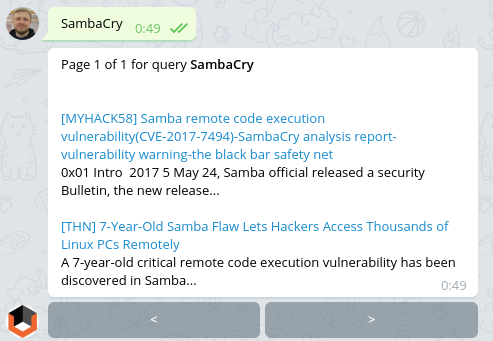
For example, I’ve heard about new critical vulnerability in Samba called SambaCry by analogy with famous WannaCry. Let’s see what Vulners knows about it.
Ok, I see it has id CVE-2017-7494. Do we have exploits related to this vulnerability? cvelist:CVE-2017-7494 AND bulletinFamily:”exploit”
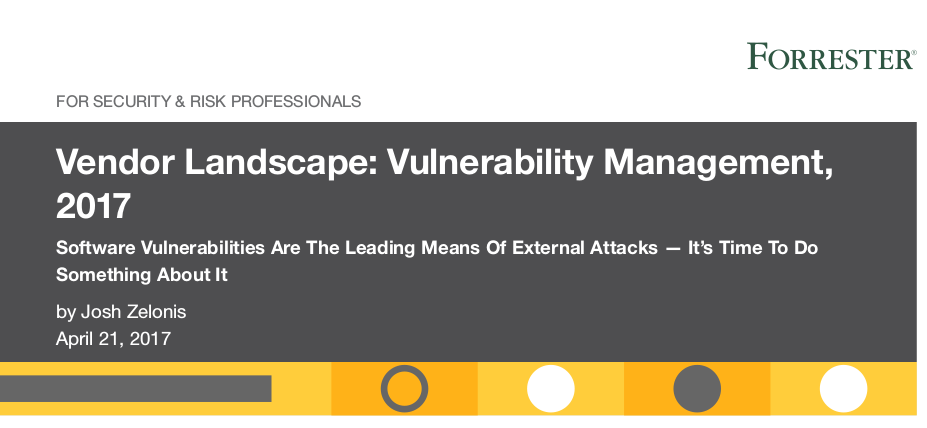
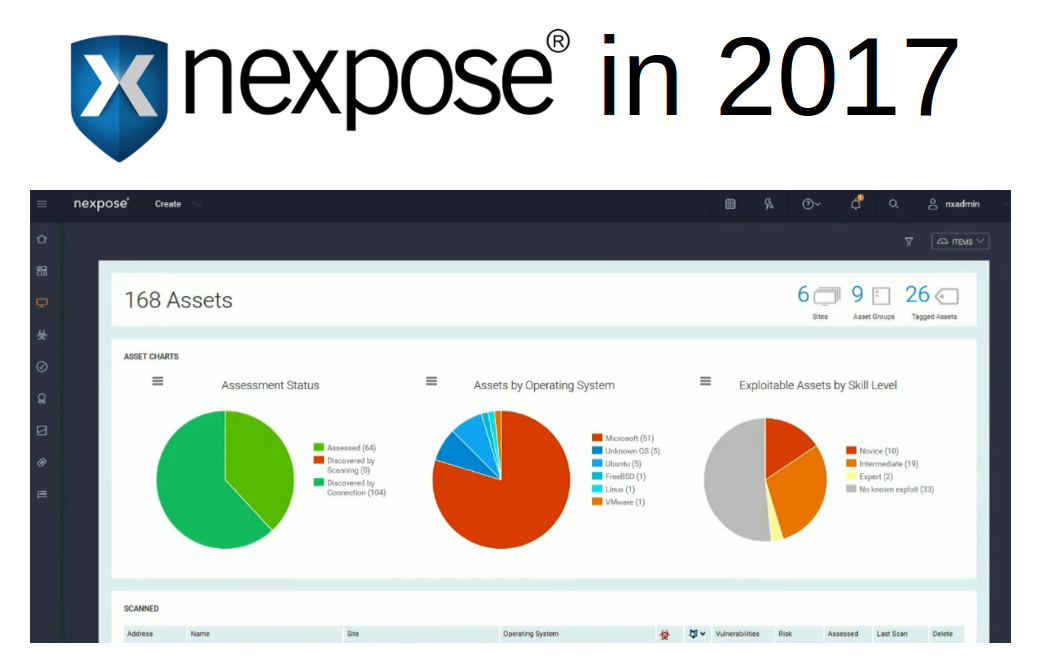
What’s interesting in this document? First of all, Josh Zelonis and co-authors presented their version of VM products evolution. It consists of this steps (I have reformulated them a bit for the copyright reasons) :
Initial fear of automated vulnerability assessment tools
Mid-1990s and first productized offerings
Authenticated scanning dramatically improved accuracy of scans
Application scanning (DAST)
Security assessment of software containers and DevOps in general.
And of course, things that sales people say to you should be always taken with some skepticism. Only concrete implementation tested in your environment matters. But they usually mention some useful ideas that can be perceived independently from the products they promote. Continue reading →
Selenium, SikuliX and Social Network posting. The last post was about SikuliX. It’s fair to say that it’s not optimal for web applications automation. For such applications, it’s better to use something, that will natively work with your web-browse. The first solution that comes to mind is, of course, Selenium.
Selenium is a portable software-testing framework for web applications. Selenium provides a record/playback tool for authoring tests without the need to learn a test scripting language.
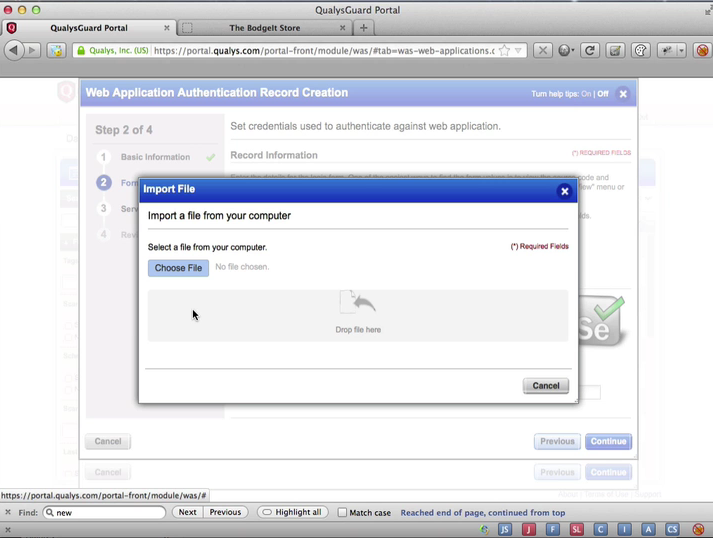
This app is released under the Apache 2.0 license and is a very common tool for Quality Assurance (QA). It can be also used in Information Security. For example, you can upload Selenium scripts in Qualys WAS (Web Application Scanner) to help scanner in performing some complex operations, for example in authentication on the website.
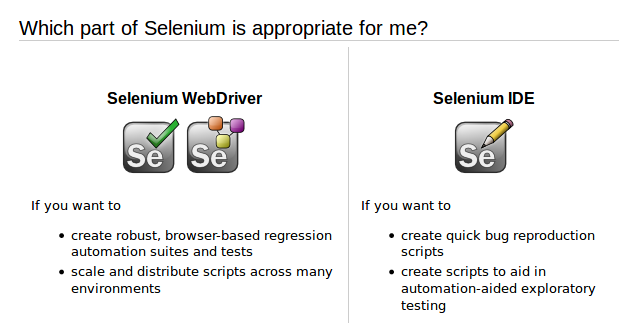
Selenium is available in a form of two products: Selenium WebDriver for some hardcore automation and web-browser plugin Selenium IDE, which will help you to create and run scripts. I chose Selenium IDE.
This is my personal blog. The opinions expressed here are my own and not of my employer. All product names, logos, and brands are property of their respective owners. All company, product and service names used here for identification purposes only. Use of these names, logos, and brands does not imply endorsement. You can freely use materials of this site, but it would be nice if you place a link on https://avleonov.com and send message about it at me@avleonov.com or contact me any other way.