Category Archives: Vulnerability Management

Vulners Nmap plugin

Vulners Nmap plugin. In previous post about Vulners vulnerability detection plugins for Burp and Google Chrome, I mentioned that it would be great to have a plugin for some free publicly available tool, like Nmap. And guys from the Vulners Team have recently released Nmap plugin. Isn’t it awesome? 🙂
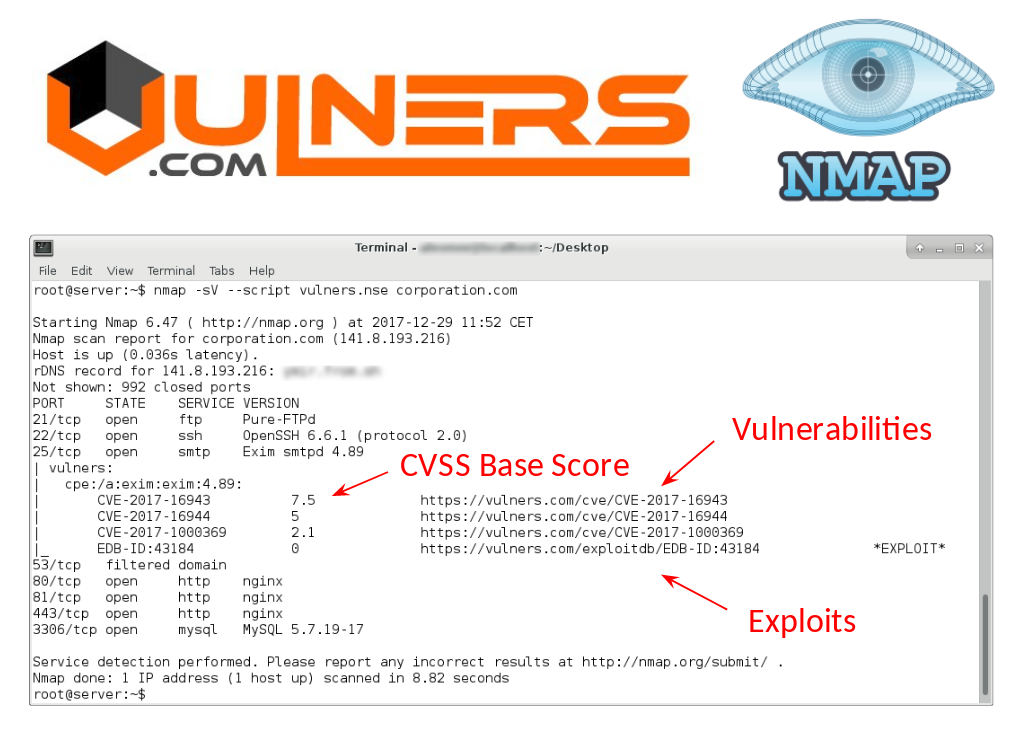
Vulners Nmap vulnerability detection plugin

To detect vulnerabilities with Vulners Nmap plugin, you need to download the script and run it like this:

$ wget -O vulners.nse https://raw.githubusercontent.com/vulnersCom/nmap-vulners/master/vulners.nse
$ nmap -sV --script vulners.nse corporation.com

The output you can see on the screenshot above.

First of all, I need to say that it’s not the full analogue of the plugins for Burp and Google Chrome.

In the current version it doesn’t analyse the content and headers of the site. It doesn’t detect vulnerabilities of standard Web applications. From the other hand, this plugin can detect vulnerabilities of network services, that plugins for Burp and Chrome obviously won’t detect.

Continue reading

New Nessus 7 Professional and the end of cost-effective Vulnerability Management (as we knew it)

New Nessus 7 Professional and the end of cost-effective Vulnerability Management (as we knew it). It’s an epic and really sad news. 🙁

Nessus 7 release

When people asked me about the cost-effective solution for Vulnerability Management I usually answered: “Nessus Professional with some additional automation through Nessus API”.

With just a couple of Nessus Professional scanning nodes it was possible to scan all the infrastructure and network perimeter (see “Vulnerability Management for Network Perimeter“). Price for each node was fixed and reasonable. And you could make your any reports from the raw scan data, as you like it.

Nessus Pro was still were best choice even when Tenable:

  • Cut off master/slave functionality in Nessus and created “Nessus Manager”.
  • Changed API completely during the update from 5 to 6 version.
  • Gradually increased the price from $1,5k to $2,7k per scanning node per year.

But unfortunately it’s not anymore. End of an era.

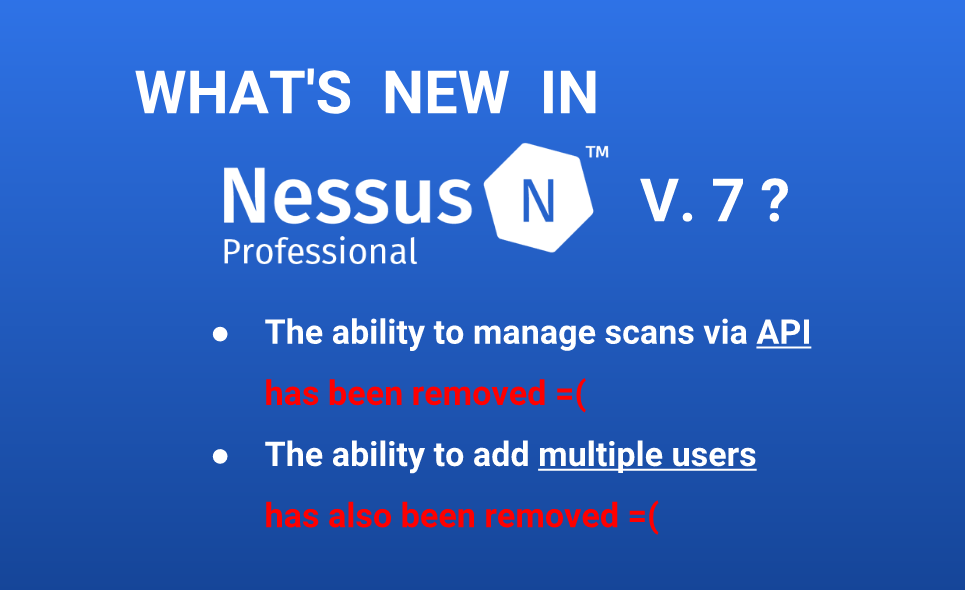
And what is even more sad is that Tenable does not mention disabling the API and multi-user function in the main Nessus 7 marketing, as it never was, as if it’s not very important. Just look at “Announcing Nessus Professional v7” – not a word  about “API” or users. Only in additional link:

get more information Nessus7

Only there, in the text (not a video) there is an information about removed features.

The nice little things like “Easily transferable license” and “Emailed scan reports and custom report name / logo” do not make it any better.

So, what next?

Continue reading

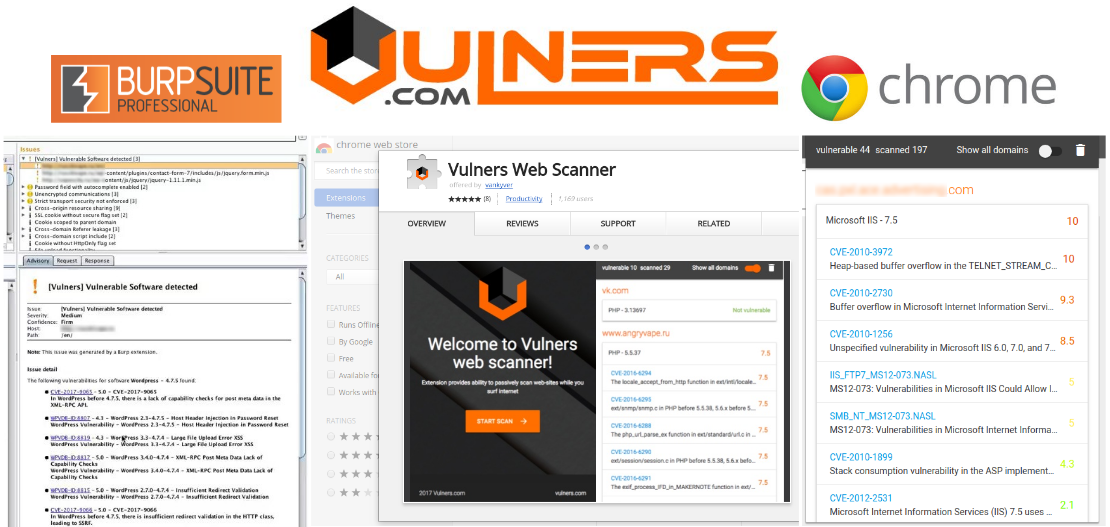
Vulners.com vulnerability detection plugins for Burp Suite and Google Chrome

Vulners.com vulnerability detection plugins for Burp Suite and Google Chrome. What is the main idea of version-based vulnerability detection, especially for Web Applications? With an access to the HTTP response (html, headers, scripts, etc.), you can get the name and version of some standards web application (e.g. CMS, CRM, wiki, task tracker) or names and versions of software components that this web application uses: web server, libraries, frameworks, and so on.

Vulners plugins for Burp Suite Professional and Google Chrome

Next step is to get all known vulnerabilities and exploits  for this software. This is the typical task for Vulners.com – largest database and security content searching system (see “Vulners – Google for hacker“).

So, guys from Vulners Team made a set of useful regular expressions for detecting software names and versions – https://vulners.com/api/v3/burp/rules.  You can use this rules in your own scripts and if you want something that will work out of the box, you can try existing plugins for Burp Suite and Google Chrome.

In this post I would like to show how the detection rules work, present new Vulners Burp API and vulnerability detection plugins for Burp Suite and Google Chrome.

Continue reading

Vulnerability Management for Network Perimeter

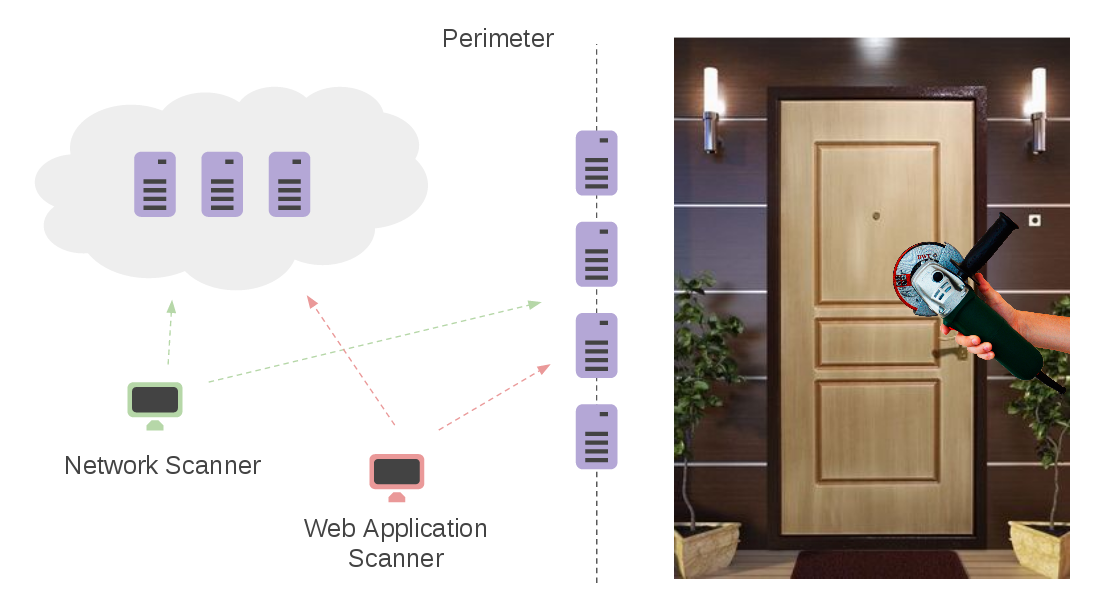
Vulnerability Management for Network Perimeter. Network Perimeter is like a door to your organization. It is accessible to everyone and vulnerability exploitation does not require any human interactions, unlike, for example, phishing attacks. Potential attacker can automate most of his actions searching for an easy target. It’s important not to be such of target. 😉

Vulnerability Management for Network Perimeter

What does it mean to control the network perimeter? Well, practically this process consist of two main parts:

  • Assessing network hosts that are facing Internet using some Network Scanner (Nessus, OpenVAS, Qualys, MaxPatrol. F-Secure Radar, etc.)
  • Assessing application servers, e.g. Web Servers, on these hosts using some special tools, e.g. Web Application Scanners (Acunetix, Burp Suite, Qualys WAS, Tenable.io WAS, High-Tech Bridge ImmuniWeb, etc.)

Active scanning is a good method of perimeter assessment. Dynamics of the assets is relatively low, comparing with the Office Network. Perimeter hosts usually stays active all the time, including the time when you are going to scan scanning them. 😉

Most of the dangerous vulnerabilities can be detected without authorization: problems with encryption (OpenSSL Heartbleed, Poodle, etc.). RCE and DoS of web servers and frameworks (Apache Struts and Equifax case)

The best results can be achieved with scanners deployed outside of your network. Thus, you will see your Network Perimeter the same way a potential attacker sees it. But certainly, you will be in a better position:

  • You can ask your IT administrators to add your network and WAS scanners in white list, so they will not be banned.
  • You can check and correlate scan results of remote scanner with (authenticated?) scan results produced by the scanner deployed in your organization’s network and thus filtering false positives.

What about the targets for scanning? How should you get them?

Continue reading

ZeroNights 2017: back to the cyber 80s

ZeroNights 2017: back to the cyber 80s. Last Friday, 17th of November, I attended the ZeroNights 2017 conference in Moscow. And it was pretty awesome. Thanks to the organizers! Here I would like to share some of my impressions.

my photo ZeroNights 2017

First of all, I want to say that two main Moscow events for information security practitioners, PHDays and ZeroNights, provide an excellent opportunity to meet all of the colleagues at once and to synchronize current views on important information security issues, including, of course, Vulnerability Management, the most relevant for me. My opinion is that this year’s behind-the-scene conversations were especially good. And this is the most valuable characteristic for the event.

Every ZeroNights event has it’s own style. This time it was some geeky cyber retro from 1980s, like in popular cult movie Kung Fury. The place was also changed from familiar Cosmos Hotel  to ZIL Culture Centre. It is the largest Palace of Culture from the Soviet Moscow times. The combination of US 80s cultural artifacts, RETROWAVE music with Soviet-style interiors (including, for example, statue of Lenin) made a pretty weird combination, but I liked it =)

I was unintentionally taking photos using some strange mode in camera and recorded a very short video fragment (3-5 seconds) for each photo. I decided to combine this fragments in a small video. This does not make much sense, but, perhaps, someone will find this “time-lapse” interesting 😉

Among the great presentations and workshops, there were also a small exhibition. This year there was two Vulnerability Management vendors: Beyond Security and Qualys.

Continue reading

Vulnerability Management vendors and massive Malware attacks (following the Bad Rabbit)

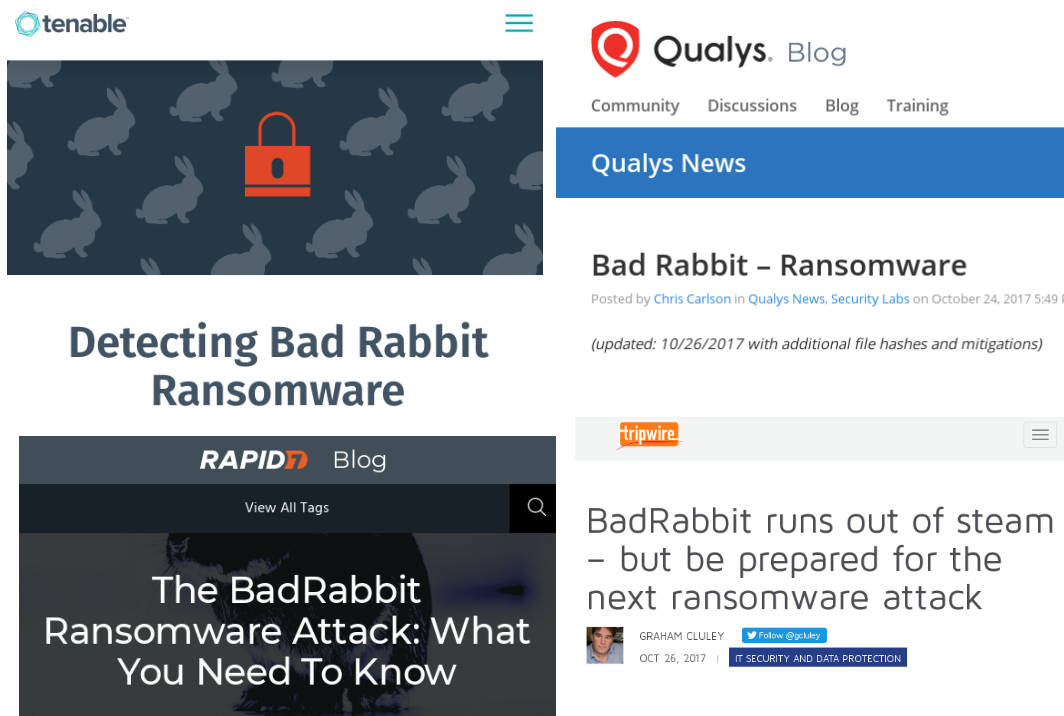
Vulnerability Management vendors and massive Malware attacks (following the Bad Rabbit). After the latest Bad Rabbit ransomware attack all Top VM vendors Qualys, Tenable, Rapid7 wrote blog posts on this topic on the same day. Two days later Tripwire also published own  review. Why do they care? They do not make antiviruses, endpoint protection or firewalls – the common tools against this kind of threats. So, what’s the point?

VM vendors BadRabbit

Well, they do it is obviously to promote their products and services. But how exactly?

Continue reading

Study Vulnerability Assessment in Tenable University for free

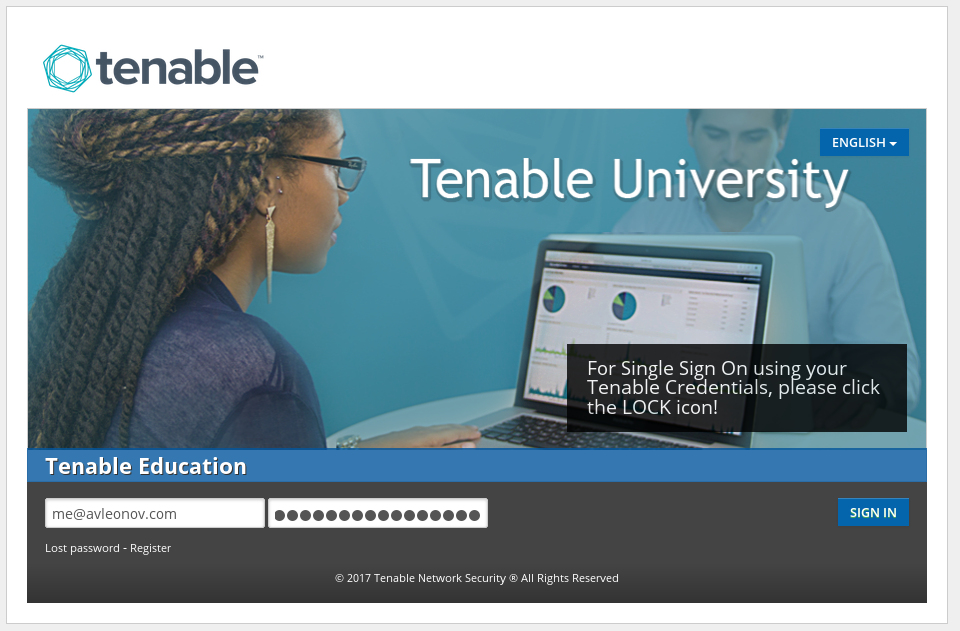
Study Vulnerability Assessment in Tenable University for free. Not so long ago, Tenable presented renewed online training platform – Tenable University. It is publicly available even for non-customers, for example, for Nessus Home users. However, not all courses are available in this case.

Login screen

I decided to check it out, registering as non-customer.

Sign up

Continue reading