
Author Archives: Alexander Leonov

About Alexander Leonov

Hi! My name is Alexander and I am a Vulnerability Management specialist. You can read more about me here. Currently, the best way to follow me is my Telegram channel @avleonovcom. You can discuss my posts or ask questions at @avleonovchat. А всех русскоязычных я приглашаю подписаться на мой канал @avleonovrus "Управление Уязвимостями и прочее" в MAX или в Telegram.

Starting/stopping Amazon EC2 instances using CLI and Python SDK

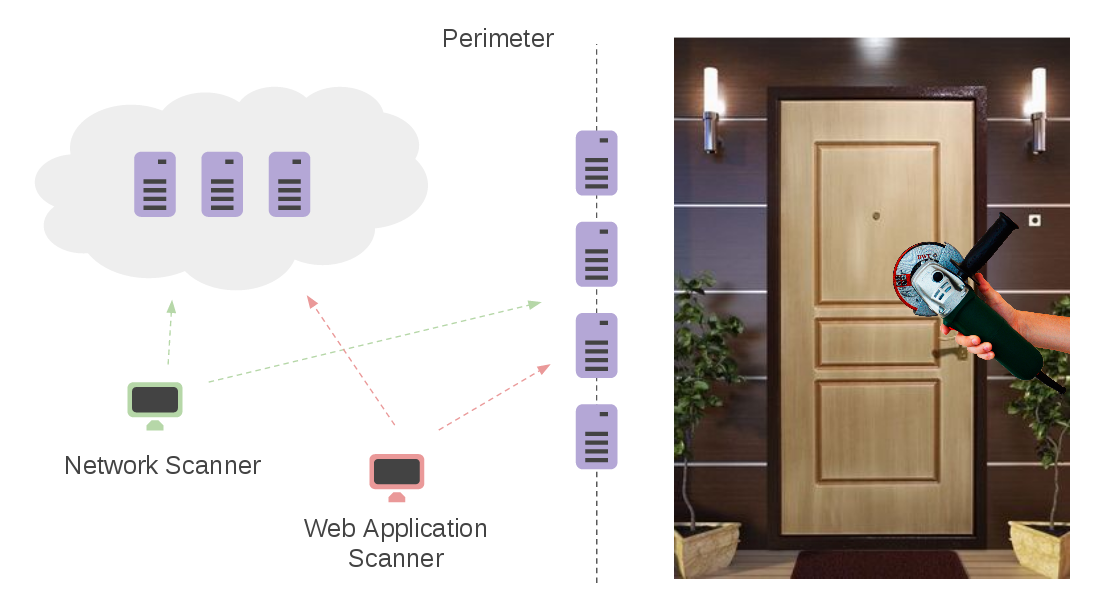
Starting/stopping Amazon EC2 instances using CLI and Python SDK. It’s a very good practice to scan your perimeter from the outside of your network, simulating an attacker. However, you will need to deploy the scanners somewhere to do this. Hosting on Amazon EC2 can be a good and cost-effective option, especially if you start instances with vulnerability scanners only when it’s necessary and keep them stopped at other time.

Amazon AWS python

So, in this post I will give some examples of how to manage Amazon instances automatically using the AWS CLI or Python SDK (boto3): start/stop the instance and get public ip address.

Continue reading

ISACA Moscow Vulnerability Management Meetup 2017

ISACA Moscow Vulnerability Management Meetup 2017. Last Thursday, I attended a very interesting event entirely dedicated to Vulnerability Management – open ISACA Moscow meetup. Me and my former colleague from Mail.Ru Group Dmitry Chernobaj presented there our joint report “Enterprise Vulnerability Management: fancy marketing brochures and the real-life troubles”.

The number of registered participants totaled 120. As I can tell looking at the photo below, there were about 80 people in the hall after the second presentation. For a highly focused local information security event, it’s a lot. According to the organizers, it was the largest ISACA Moscow meetup. Thanks to everyone who came!

ISACA VM Meetup Auditorium

I would like to mention a well-structured agenda. There were 4 presentations arranged in order: from the most theoretical / methodical to the most practical. And our presentation was the last one.

Oleg Boyko started the event. He was talking about the place of Vulnerability Management in COBIT 5 framework. I don’t know COBIT good enough to comment on this. The main thing I’ve noticed is that among the 37 COBIT 5 processes, there is no a process for managing the vulnerabilities, such as Manage Assets or Manage Configurations.

Continue reading

CWEs in NVD CVE feed: analysis and complaints

CWEs in NVD CVE feed: analysis and complaints. As you probably know, one of the ways to describe the nature of some software vulnerability is to provide corresponding CWE (Common Weakness Enumeration) ids. Let’s see the CWE links in NVD CVE base.

NVD CWEs

I have already wrote earlier how to deal with NVD feed using python in “Downloading and analyzing NVD CVE feed“. You can easily get CWEs ids iterating over cve_dict['CVE_Items'].

Continue reading

Vulners NASL Plugin Feeds for OpenVAS 9

Vulners NASL Plugin Feeds for OpenVAS 9. As I already wrote earlier, you can easily add third party nasl plugins to OpenVAS. So, my friends from Vulners.com realised generation of NASL plugins for OpenVAS using own security content. I’ve tested it for scanning CentOS 7 host. And it works =)

Vulners OpenVAS vulnerabilities

Let’s see the whole process.

Continue reading

VirtualBox GuestAdditions for Linux Guest OS

VirtualBox GuestAdditions for Linux Guest OS. I often work with VirtualBox virtual machines and need to install GuestAdditions to use GUI applications comfortably. So, I decided to collect here some configuration scripts.

VirtualBox GuestAdditions

CentOS 8

See the section about VirtualBox in “CentOS 8 with IceWM Desktop Environment”

CentOS 7

In the configuration a new VirtualBox machine I add 2 network adapters:

  • Host Only Network
  • NAT

Installing clean CentOS (CentOS-7-x86_64-DVD-1611)

Activating network connections using `nmtui` and set the activation automatically

Continue reading

Downloading and analyzing NVD CVE feed

Downloading and analyzing NVD CVE feed. In previous post “New National Vulnerability Database visualizations and feeds” I mentioned JSON NVD feed.

NVD JSON feed parse python

Let’s see what data it contains, how to download and analyse it. First of all, we need to download all files with CVEs from NVD database and save them to some directory.

nvd feed json download

Unfortunately, there is no way to download all the content at once. Only one year archives. We need to get urls first. Url looks like this: https://static.nvd.nist.gov/feeds/json/cve/1.0/nvdcve-1.0-2017.json.zip. Then we will download them all.

Continue reading

New National Vulnerability Database visualizations and feeds

New National Vulnerability Database visualizations and feeds. Recently, the National Institute of Standards and Technology (NIST) introduced a new version of National Vulnerability Database (NVD) website.

NIST NVD new site

I will not say that I liked this redesign:

new NVD website

IMHO, old website with US flag was much prettier and useful:

old NVD website

But the very fact that the site is developing, I really like very much. Let’s see what’s new there.

Continue reading