Tag Archives: Lazarus

About Elevation of Privilege - Windows Ancillary Function Driver for WinSock (CVE-2026-68820) vulnerability

About Elevation of Privilege - Windows Ancillary Function Driver for WinSock (CVE-2026-68820) vulnerability

About Elevation of Privilege - Windows Ancillary Function Driver for WinSock (CVE-2026-68820) vulnerability. The Ancillary Function Driver (AFD) is a Windows component that supports Windows Sockets applications and is contained in the afd.sys file. The afd.sys driver runs in kernel mode and manages the Winsock TCP/IP communications protocol. This vulnerability is from the August Microsoft Patch Tuesday. Use-after-free (CWE-416) in the Windows Ancillary Function Driver for WinSock allows an authorized attacker to elevate privileges locally to SYSTEM level. Successful exploitation requires an attacker to win the race condition. As a result, the attacker can gain full control over the Windows host, execute commands with SYSTEM-level privileges, disable security protections, install malware, and access other users' data.

👾 The vulnerability was already being exploited in the wild when it was disclosed as part of Microsoft's August Patch Tuesday on August 11. That same day, it was added to the CISA KEV catalog. Notably, Microsoft listed the Exploit Code Maturity in the CVSS as "Unproven". 🤷‍♂️ Microsoft credited researchers from Check Point for reporting the vulnerability.

Details on how the vulnerability was exploited in attacks were published in a Check Point blog post on August 11. The vulnerability was exploited as part of the "Operation Dream Job" campaign, which targeted organizations worldwide, with a particular focus on the defense sector in Europe and India. The campaign is linked to the Lazarus Group. The campaign begins with targeted phishing messages offering victims attractive job opportunities at well-known companies in the defense, aerospace, and aviation industries. Victims are lured into opening a PDF decoy masquerading as a Lockheed Martin job description. This triggers the execution of a lightweight in-memory loader - MISTPEN. The loader uses the Microsoft Graph API to access OneDrive, from which it retrieves additional modules and runs them in memory. During the initial stages of the infection, the attacker deploys several reconnaissance modules that gather information about the system and running processes. Once the target is deemed of interest, MISTPEN retrieves an additional persistence module, which installs the malware on disk and ensures that MISTPEN is automatically launched after a system reboot. After establishing persistence, MISTPEN loads an in-memory module designed to exploit the CVE-2026-68820 vulnerability. Check Point researchers believe that this vulnerability was already being exploited in the "Operation Dream Job" campaign in early July 2026. Successful exploitation enables the malware to launch FudModule, a Lazarus kernel-level rootkit, with SYSTEM privileges. The final backdoor delivered by MISTPEN - ForestTiger - provides attackers with remote access to the compromised system, allowing them to execute commands, collect host information, and download additional malicious components.

🛠 No public exploits have been observed so far. Some people are offering exploits for sale, but they don't look reliable.

⚙️ Security updates are available for Windows 10, Windows 11, and Windows Server 2019.
August episode of "In The Trend of VM": 5 vulnerabilities in Microsoft Windows and one in WordPress

August episode of "In The Trend of VM": 5 vulnerabilities in Microsoft Windows and one in WordPress. We have branched off from Seclab news videos and started releasing separate episodes. Hooray! 🥳😎 If we get enough views, we will continue to release them in the future. It's up to you, please follow the link to the video platform and click "Like" button and/or leave a comment. 🥺

📹 Video "In The Trend of VM" on YouTube
🗞 A post on Habr (rus) a slightly expanded script of the video
🗒 A compact digest (rus) on the official PT website

List of vulnerabilities:

🔻 00:48 Remote Code Execution - Windows Remote Desktop Licensing Service "MadLicense" (CVE-2024-38077)
🔻 02:22 Security Feature Bypass - Windows Mark of the Web "Copy2Pwn" (CVE-2024-38213)
🔻 03:23 Elevation of Privilege - Windows Ancillary Function Driver for WinSock (CVE-2024-38193), Windows Kernel (CVE-2024-38106), Windows Power Dependency Coordinator (CVE-2024-38107)
🔻 04:50 Unauthenticated Elevation of Privilege - WordPress LiteSpeed Cache Plugin (CVE-2024-28000)

English voice over was generated by my open source utility subtivo (subtitles to voice over)

06:39 Check out the final jingle I generated using AI services 😉 (ToolBaz for lyrics and Suno for music)

На русском

About Elevation of Privilege - Windows Ancillary Function Driver for WinSock (CVE-2024-38193) and other Windows EoP vulnerabilities from August Patch Tuesday

About Elevation of Privilege - Windows Ancillary Function Driver for WinSock (CVE-2024-38193) and other Windows EoP vulnerabilities from August Patch Tuesday

About Elevation of Privilege - Windows Ancillary Function Driver for WinSock (CVE-2024-38193) and other Windows EoP vulnerabilities from August Patch Tuesday. In total, in the August MSPT there were 3 EoPs with signs of exploitation in the wild. They have identical descriptions: an attacker can elevate privileges on the host to SYSTEM level. The vulnerability in Windows Kernel is more difficult to exploit, because it is necessary to win a race condition.

We only know the names of the attackers who exploited the EoP vulnerability in the Windows Ancillary Functions Driver (AFD.sys). It is exploited by the well-known group Lazarus. This was reported in a press release from Gen Digital, the company that owns Avira and Avast antiviruses. To neutralize information security products during an attack, Lazarus attackers use the Fudmodule rootkit. So, even if EDR is installed on the host, the host should be updated. 😏

На русском

Last Week’s Security news: PrintNightmare patches and Metasploit, Kaseya CVEs, Morgan Stanley Accellion FTA, Cisco BPA and WSA, Philips Vue PACS, CISA RVAs, Lazarus job offers

Last Week’s Security news: PrintNightmare patches and Metasploit, Kaseya CVEs, Morgan Stanley Accellion FTA, Cisco BPA and WSA, Philips Vue PACS, CISA RVAs, Lazarus job offers. Hello guys! The third episode of Last Week’s Security news, July 5 – July 11. There was a lot of news last week. Most of them was again about PrintNightmare and Kaseya.

The updates for PrintNightmare (CVE-2021-34527) were finally released mid-week. It became possible not only to disable the service, but also to update the hosts. This is especially important for desktops that need to print something. But the problem is that these patches can be bypassed. “If you have a system where PointAndPrint NoWarningNoElevationOnInstall = 1, then Microsoft’s patch for #PrintNightmare CVE-2021-34527 does nothing to prevent either LPE or RCE”. Microsoft has updated their security update guide after that: “if you set this reg key to = 1 then the system is vulnerable by design”. It seems that solving this problem requires hardening and registry monitoring.

Continue reading

MIPT/PhysTech guest lecture: Vulnerabilities, Money and People

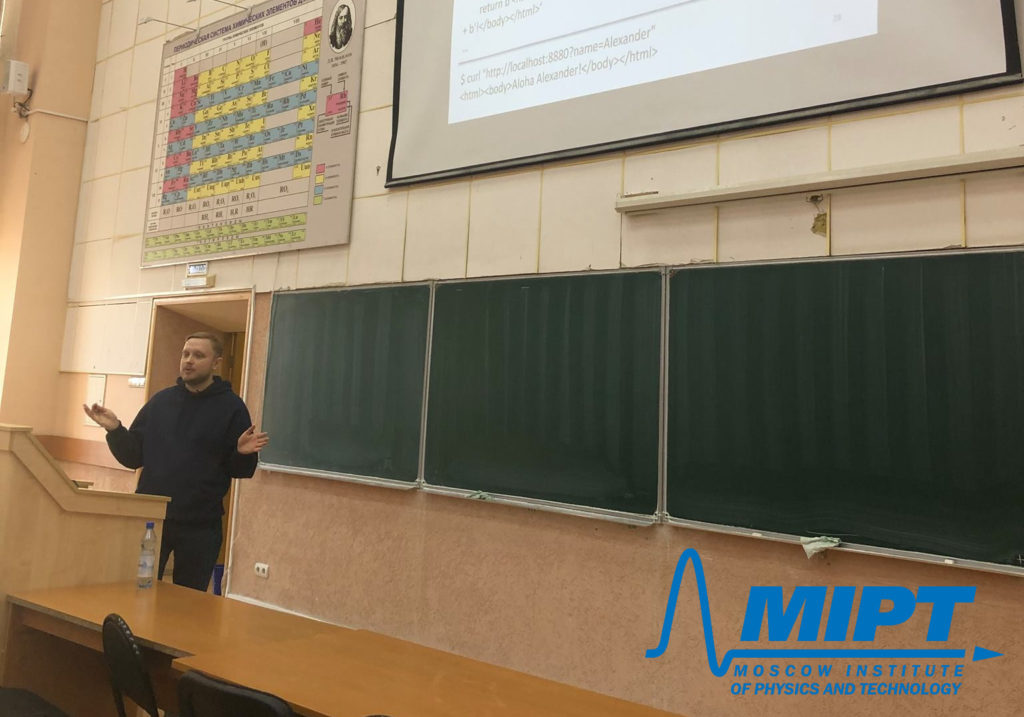
MIPT/PhysTech guest lecture: Vulnerabilities, Money and People. On December 1, I gave a lecture at the Moscow Institute of Physics and Technology (informally known as PhysTech). This is a very famous and prestigious university in Russia. In Soviet times, it trained personnel for Research Institutes and Experimental Design Bureaus, in particular for the Soviet nuclear program.

MIPT open lecture about vulnerabilities

Nowadays MIPT closely cooperates with Russian and foreign companies, trains business people, software developers and great scientists. For example, the researchers who discovered Graphene and won Nobel Prize for this in 2010 were once MIPT graduates.

This is a very interesting place with a rich history. So it was a great honor for me to speak there.

Continue reading