Category Archives: Vulnerability Management

Gartner’s view on Vulnerability Management market

Gartner’s view on Vulnerability Management market. Not so long time ago Gartner’s report “Vulnerability Management an essential piece of the security puzzle” has become publicly available. Now you can read it for free by filling out a questionnaire on F-Secure website.
Gartner VM Market Guide

At the bottom of the document there is a reference to Gartner G00294756 from 05 December 2016. This document is quite fresh, especially for not very dynamic VM market ;-), and pretty expensive. Thanks for F-secure, we can read it now for free. If you are wondering why this anti-virus company is sponsoring Gartner VM reports: year ago they have bought Finnish VM vendor nScence, and I even did a small review of this product (F-Secure Radar Vulnerability Management solution, F-Secure Radar basic reporting, F-Secure Radar ticketing, F-Secure API for scanning).

Talking about the document, I would like, firstly, to thank Gartner. Do you know who writes most articles about VM? Of course, VM vendors. And we all understand that their main goal is to promote their own products. Reports of independent consulting firms, primarily IDC, Forrester and Gartner, allow us to get some balanced view from the side. It is very important.

Here I would like to comment some theses of the text.
Continue reading

What’s actually new in Tenable.io VM application

What’s actually new in Tenable.io VM application. My last post was about the structure of a new Tenable.io cloud platform. Now, let’s see what is actually new in Tenable.io Vulnerability Management application.

Tenable.io VM is obviously based on Nessus Cloud, which in its turn had features similar to Nessus Manager briefly reviewed earlier. So, today I want to concentrate only on new features.

Tenable.io VM

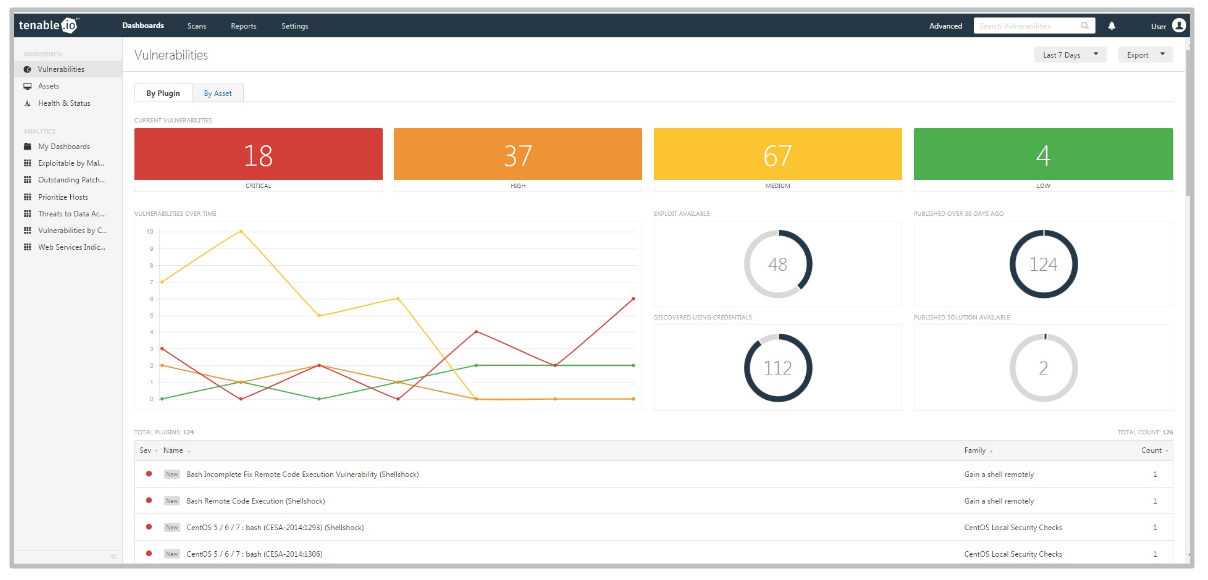
According to the public interface screenshots and Tenable.io datasheets, it will have some new dashboards and reports, free integration with PVS and Nessus deployed on-premise, and something very new in asset management.

Continue reading

Bye-bye Nessus Cloud, hello Tenable.io

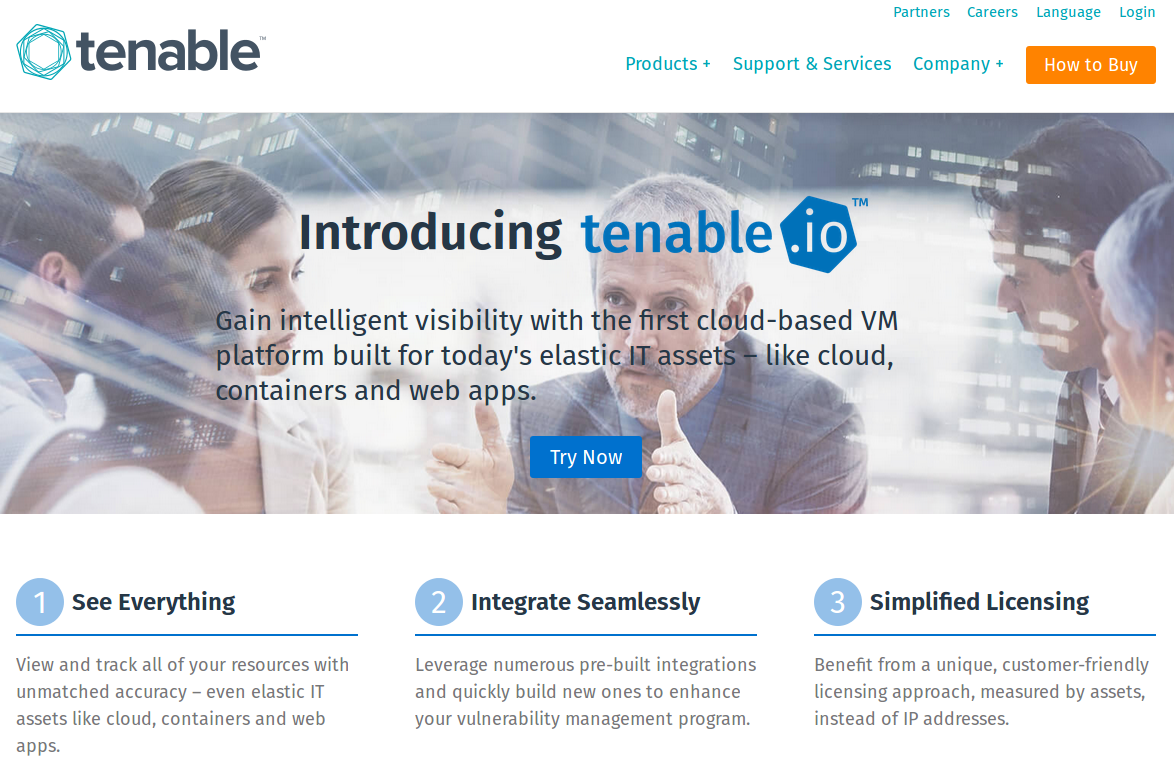
Bye-bye Nessus Cloud, hello Tenable.io. Tenable Network Security has announced today a new cloud platform – Tenable.io. Let’s see what it’s all about.

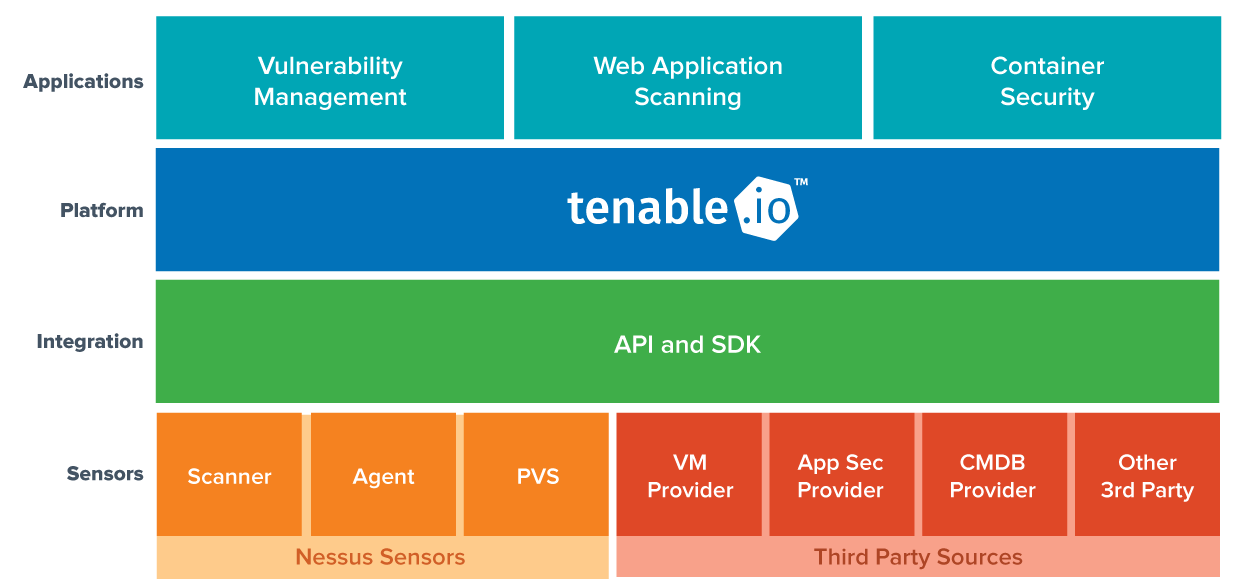
Applications

As you can see on this figure there will be three applications available for the platform: familiar Vulnerability Management (the new name of Nessus Cloud), new Container Security (Tenable bought FlawCheck service last October) and the long-awaited Web Application Security (not available yet).

It’s not clear yet how closely these services will be integrated with each other. But now even  trial versions of Container Security and Vulnerability Management should be requested separately.

Continue reading

Automated task processing with JIRA API

Automated task processing with JIRA API. It’s no secret that task tracker is one of the most critical resources of any big organization. The whole working process can be represented as creating, processing and closing various tasks. Without task tracker there will be complete disaster, collapse and anarchy. So, it’s very important to work with this instrument efficiently. And when I write efficiently, I mean in automated way. It’s a blog about security automation after all. 😉

This post will be about Jira task tracker. I have already wrote how Jira can be used in VM Remediation process. That post was mainly about the main principles and how remediation tasks look in Jira WEB-GUI. Now, I will go further and show how to use it as a source of important information and easily deal with daily routine tasks using some trivial scripting. It is all possible because of advanced Jira Rest API.

Let’s say we have some regular tasks of some type. For example, to detect vulnerabilities on some hosts using Nessus and make a comment about founded vulnerabilities in the task. You can make a script that we will search for this kind of tasks in Jira, process them, add scan results to the comment and close the task. Of course it works the best when these tasks are also were created with in some automated way, in this case parsing will be much easier.

“Issue”, is the right name for the task in Jira; but I frequently use “issue”, “task” and “ticket” interchangeably. Sorry for this.

So, we need to take this steps:

  • Authorization
  • Search for existing Jira issues using some search request
  • View description, data and comments of the issue
  • Download files attached to the issue
  • Make some task processing
  • Add a new comment to the issue
  • Change status of the issue

Continue reading

Who wants to be a PCI ASV?

Who wants to be a PCI ASV? I think, most of financial and trade companies know about vulnerability scanning mainly because of PCI DSS. Vulnerability Assessment is, of course, an important issue, but when regular scanning is prescribed in some critical standard it become much more important for businesses.

This post will be about PCI ASV from the point of view of a scanning vendor. I decided to figure out what technical requirements exist for ASV solutions and how difficult/expensive it is to become an ASV.

Perimeter scanning

Basically, PCI ASV scan is a form of automated network perimeter control, performed by an external organization. All Internet-facing hosts of merchants and service providers should be checked 4 times a year (quarterly) with Vulnerability Scanner by PCI ASV (PCI DSS Requirement 11.2.2.). It is necessary to check the effectiveness of patch management and other security measures that improve protection against Internet attacks.

Continue reading

Installing Nessus for SecurityCenter on laptop

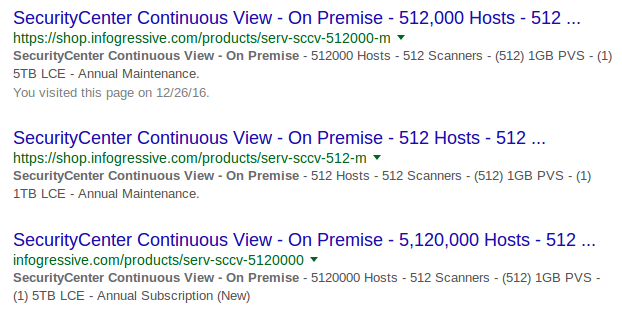
Installing Nessus for SecurityCenter on laptop. The great thing about Tenable SecurityCenter: when you buy it you also get hundreds of licenses for Nessus.  You can google different types of SecurityCenter bundles with “SecurityCenter Continuous View – On Premise” request. “Scanners” here mean SC scanners:

You will need these scanner licenses to deploy Nessus hosts on your network, connect them to your Tenable SecurityCenter and manage scan process using SecurityCenter via graphical user interface or API. Of course, with all the restrictions on amount of IP addresses that you can scan.

At the same time, these Nessus for SecurityCenter servers are fully functional. Technically this servers are the same as Nessus Professional. Nessus for SecurityCenter has the same web interface, where you can create multiple user accounts, manage the scans in GUI and API, scan any amount of IP addresses. Scan data will be stored locally on your Nessus server and your SecurityCenter will not see it or use it in any way. This is really great. And I hope it is a feature and not a bug.

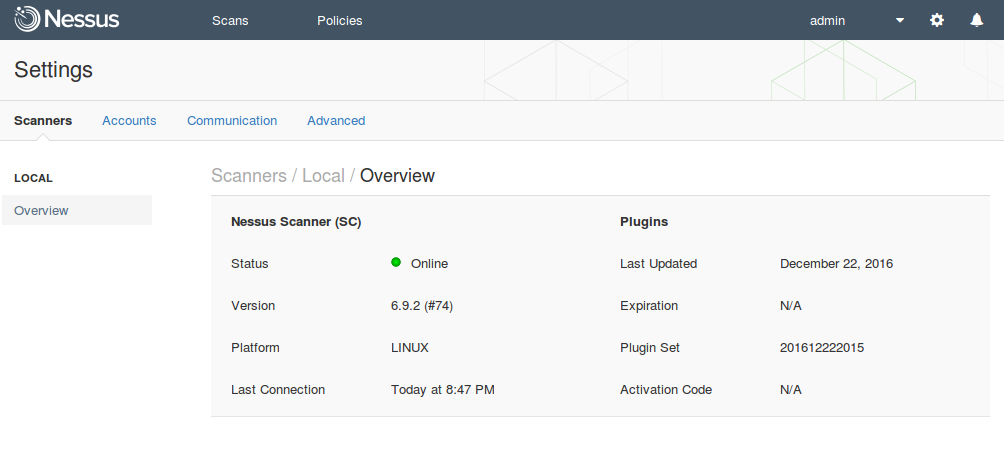
However, there are some differences. Nessus Professional downloads security plugins and makes activation using remote Tenable severs. Nessus for SecurityCenter does these things using SecurityCenter in your network.

So, when you have such a great amount of Nessus licenses you may want to install one on your own laptop. It might be really useful for debugging. For example, when you are developing your own nasl scripts, to enable them in Nessus, you will need to restart it. And you will not probably want to do it on the Nessus server where dozens of scanning jobs are running.

In this post I will try to install Nessus on Centos 7 in VirtualBox, configure port forwarding, activate and update Nessus plugins with SecurityCenter.

Continue reading

ZeroNights16: Enterprise Vulnerability Management

ZeroNights16: Enterprise Vulnerability Management. 17-18 November I was at the great event  Zero Nights security conference in Moscow. For the first time as a speaker. Being a part of such famous and prestigious security event was very exciting. I was talking mainly about VM solution problems and custom reporting/ticketing, Ekaterina shared some experience in using Tenable SecurityCenter for Vulnerability and Compliance management.

Presentation was recorded and some time later video will be available on YouTube. However, I suppose audio will be only in Russian not earlier than February 2017. So I think it will be a much more useful to share some points of the presentation right now. Lucky here I don’t have any time restrictions. =)

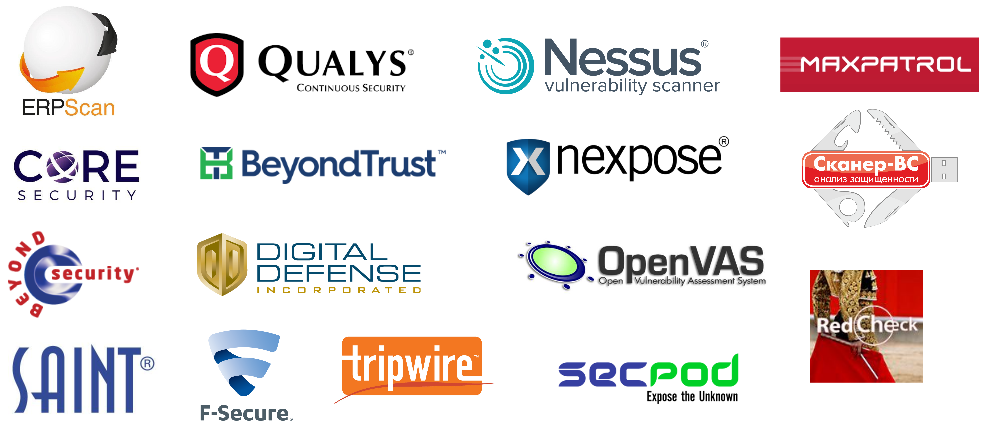
The first thing to say about Vulnerability Scanners and Vulnerability Management product is that there are plenty of them. On this picture I mentioned some of the products/vendors.

Vulnerability Scanners and Vendors

Some of them are highly specialized, like ErpScan for SAP, others are universal. Some of them are presented globally: Tenable Nessus / SecurityCenter, Rapid 7 Nexpose, Qualys, F-Secure etc., others are known mainly in Russia: Positivie Technologies Maxpatrol, Altx-Soft RedCheck, Echelon Scaner-VS. Some products are expansive, some of them not and even have versions available for free: OpenVAS, SecPod Saner Personal, Altx-Soft ComplianceCheck, Qualys SSL labsHigh-Tech Bridge SSL Server Security Test, etc.

In my opinion the main problems of VM solutions are expansiveness and low reliability of the scan results.

Continue reading